Thimphu
Cloister.
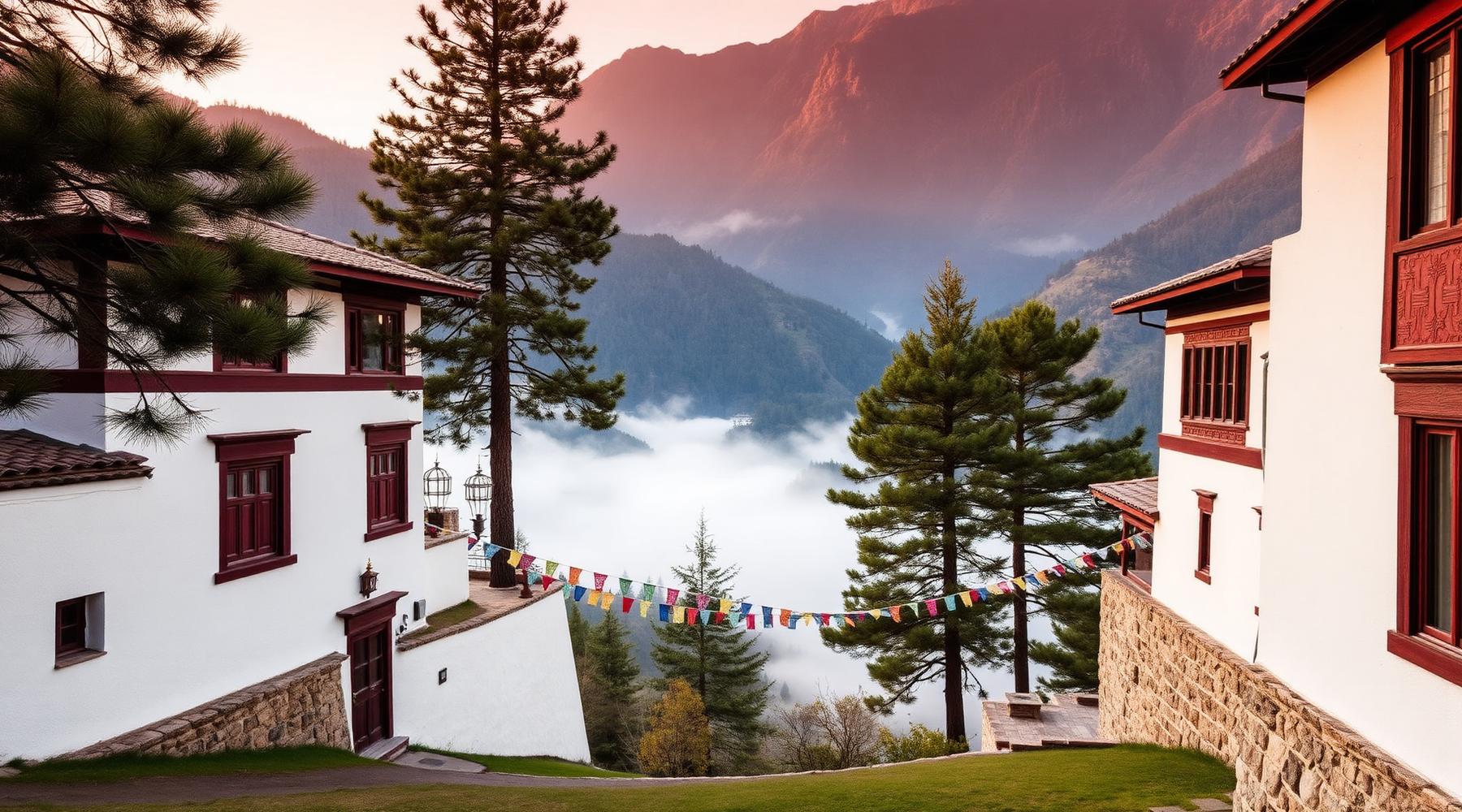
Twelve hand-rammed earthen pavilions on a private pine-forest ridge above the Thimphu valley, in the only nation on earth that measures itself by Gross National Happiness.
Coordinates
27.4728° N, 89.6390° E
Setting
Motithang ridge, Thimphu valley, western Bhutan
Keys
12 rammed-earth pavilions · 2,650 m elevation · private cloister
Season
March–May and September–November (Tshechu festival in October)
"Bhutan does not open itself easily. It asks first that you slow down — to the speed of a prayer wheel, of butter melting in tea, of a long climb through the pines to a monastery on a cliff."
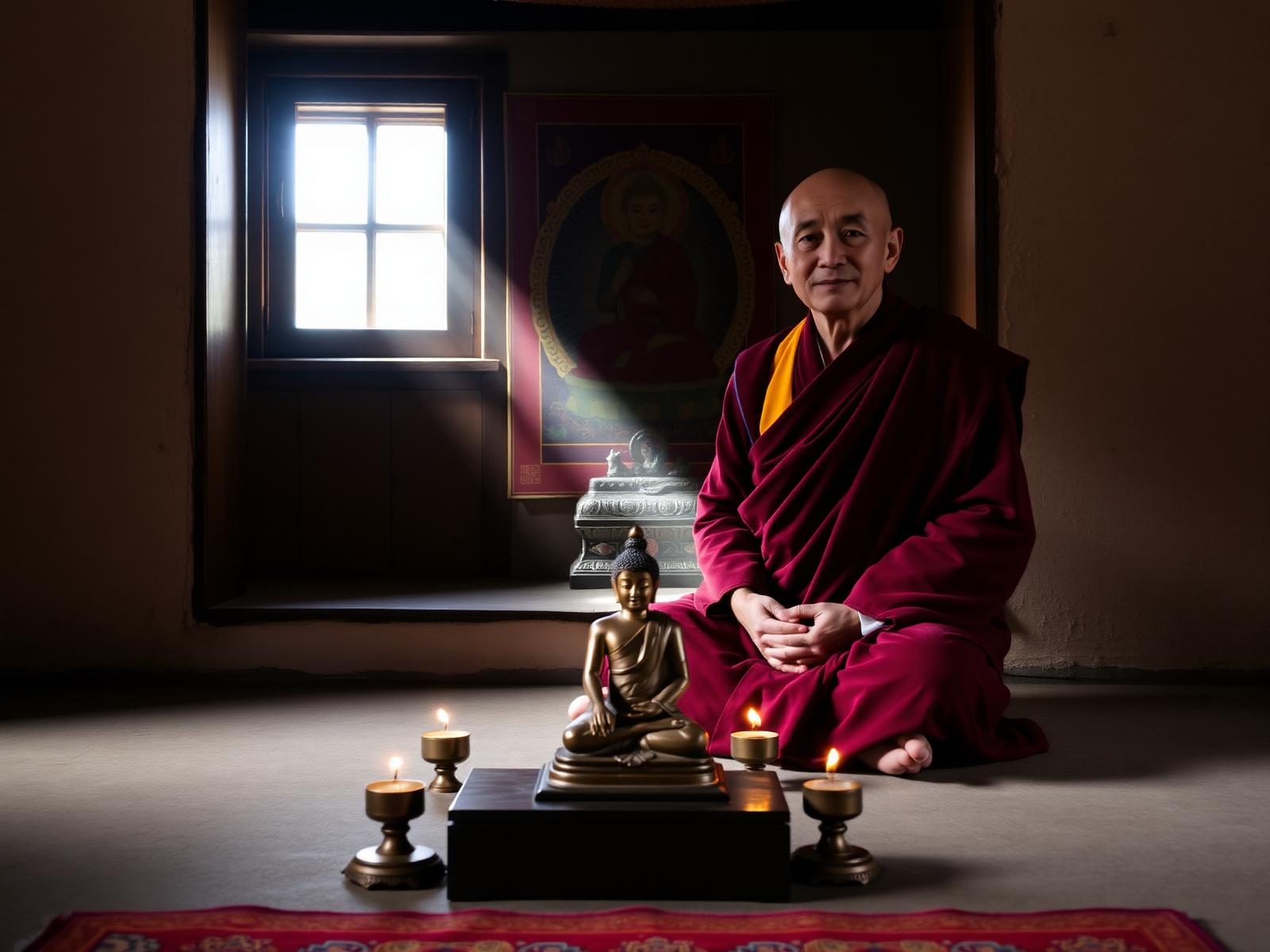
Thimphu Cloister stands on a private fourteen-hectare ridge of blue pine and rhododendron above the Thimphu valley, on land granted in perpetuity by the Wangchuck monarchy for the preservation of the dzong-building craft. Twelve pavilions are built by the last working master of the rammed-earth technique that raised the great dzongs of Punakha and Paro — whitewashed walls eighty centimetres thick, hand-painted timber lintels of cloud and lotus, soapstone bukhari stoves, slate roofs weighted with river stone. A small consecrated lhakhang at the heart of the property holds a seventeenth-century gilt-bronze Maitreya, and a Drukpa Kagyu master from the Tango monastery is in residence for the silent retreats. Twenty per cent of every residency funds the restoration of the kingdom's wooden bridge network and a scholarship for novice monks at the Tango shedra.
Twelve pavilions of the old craft.
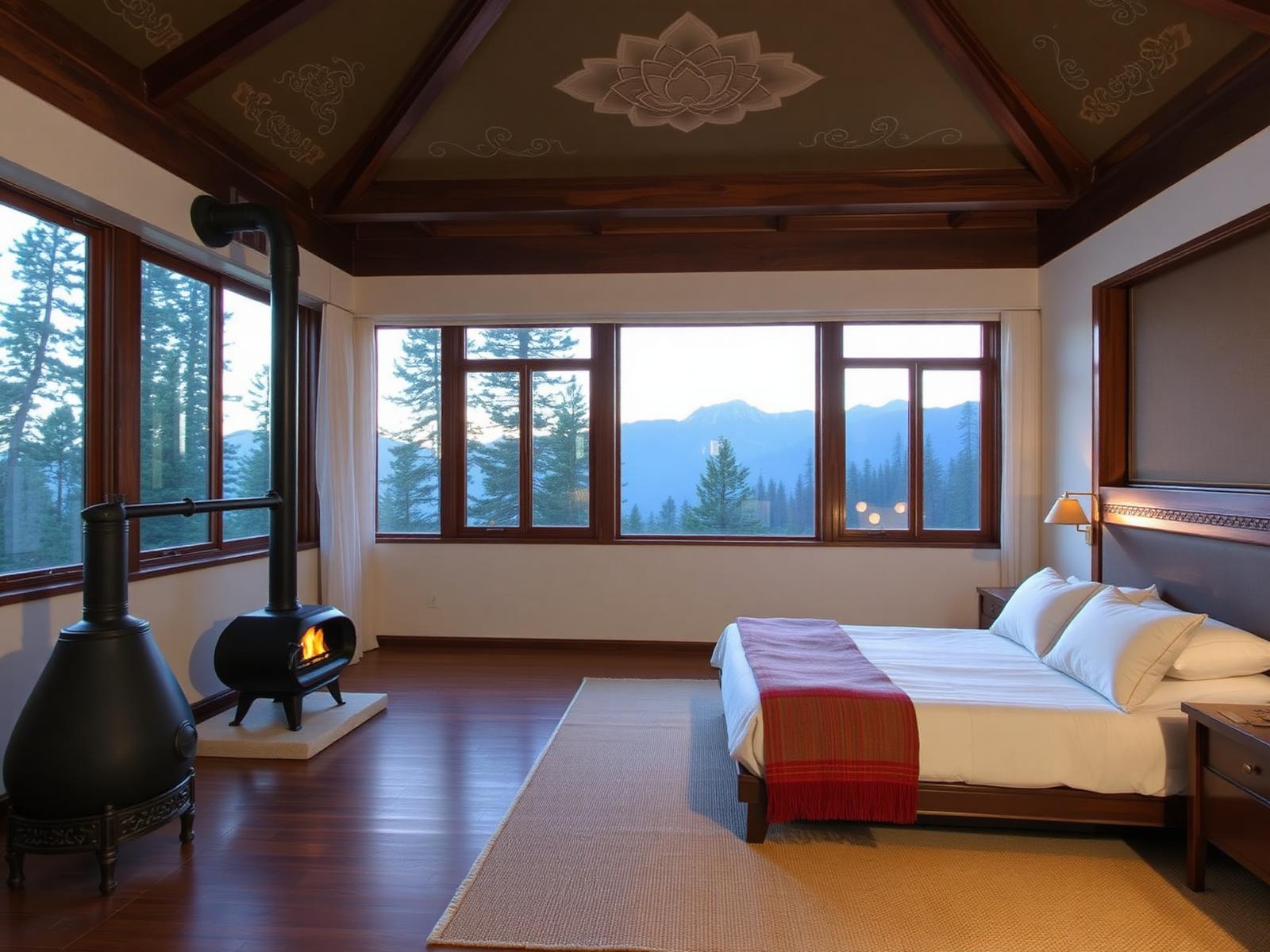
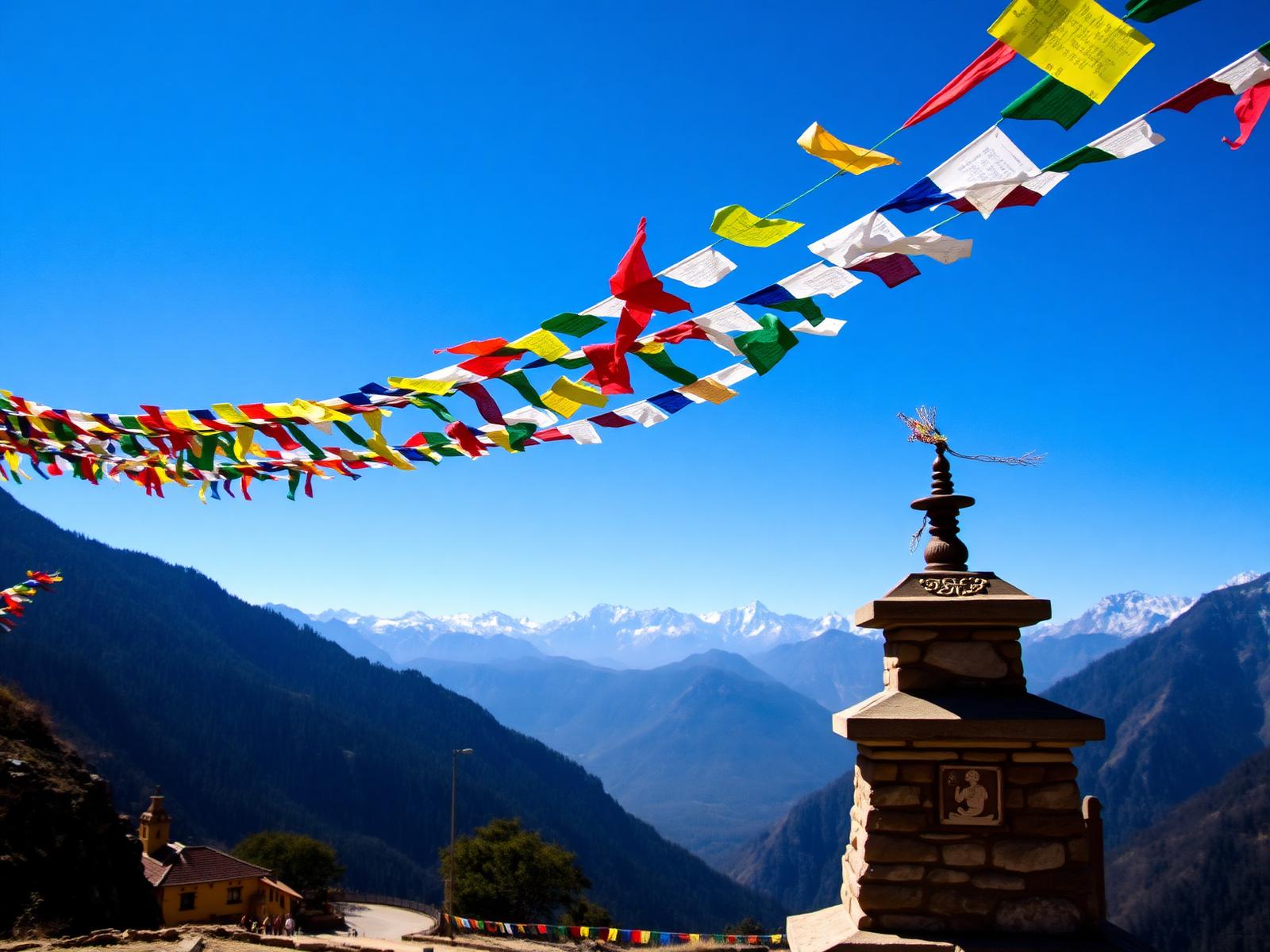
Each pavilion is a single chamber of hand-rammed earth, hand-painted timber and oiled local pine — a low king bed in undyed Bhutanese linen with a hand-woven yathra wool throw from the Bumthang weavers, a black-iron bukhari stove for the cold mountain nights, polished pine floors with a thick yathra rug, and deep-set windows on three sides framing pine forest, prayer flags and the snow line of the Jhomolhari range. A copper soaking tub on the private veranda, a small altar with a butter lamp and a hand-bound prayer book, single-origin Bumthang buckwheat tea on the writing desk, and the slow drift of incense from the lhakhang at dusk.
- i
Pine Pavilion
75 m² · Pine forest, valley below, prayer flag line
from USD 1,400 - ii
Dzong Pavilion
110 m² · Hand-painted ceiling, copper tub, Jhomolhari view
from USD 2,200 - iii
Lhakhang Pavilion
150 m² · Private altar, walled garden, fire pit
from USD 3,200 - iv
The Dragon House
280 m² · Two-pavilion compound, study, chef, lama for the silent retreat
from USD 6,800
A Drukpa Kagyu master in residence, and the masked Cham dances of Tshechu.
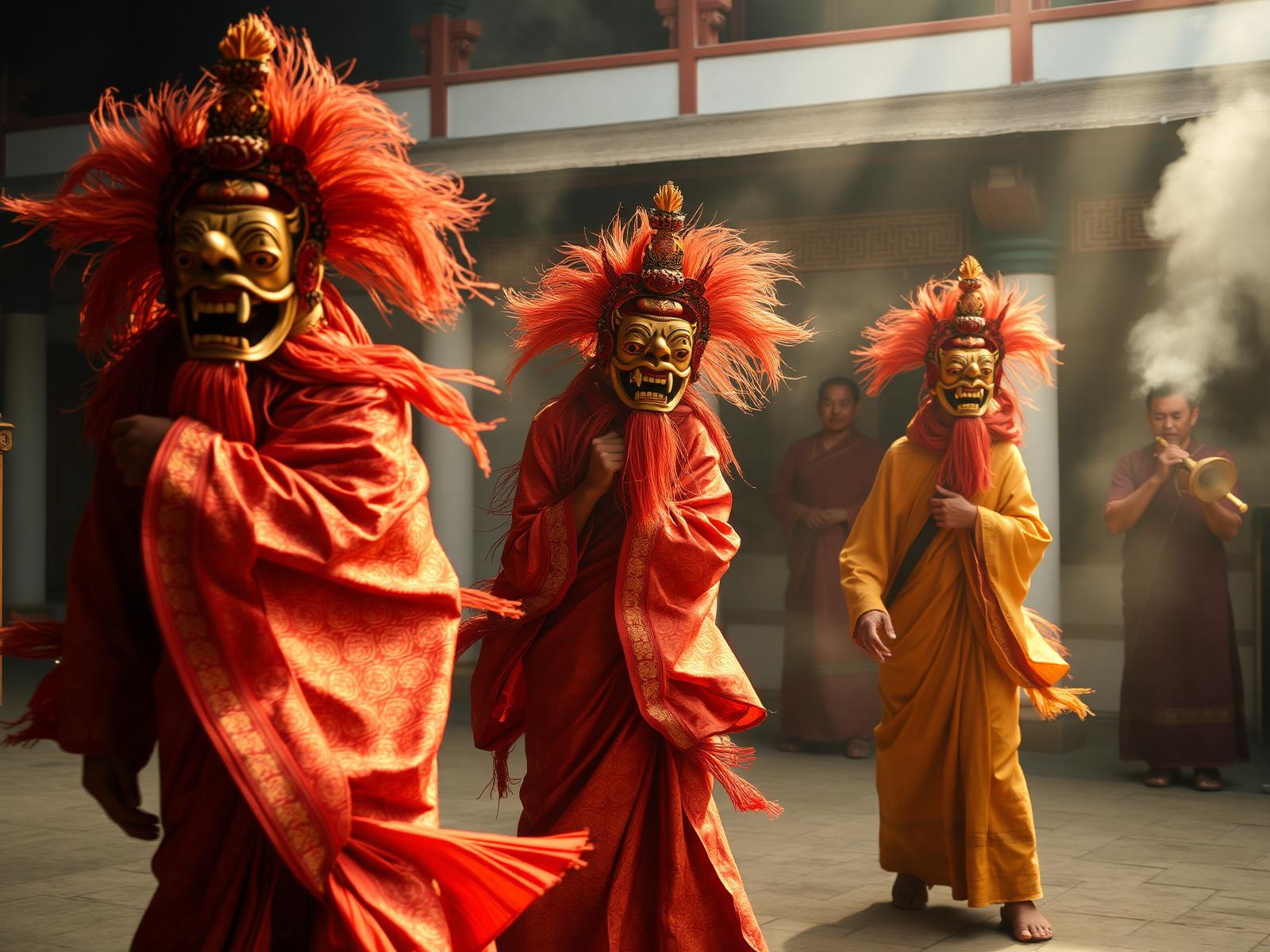
The cloister keeps a slow rhythm — a dawn puja in the lhakhang led by the resident lama, a mid-morning hour of mindfulness archery on the practice ground, an afternoon walk through the pines to the Wangditse goemba above the property. In October the valley fills for the Thimphu Tshechu — three days of masked Cham dances in the courtyard of the great Tashichho Dzong, the wrathful deities of the Guru Rinpoche cycle whirling in saffron and crimson brocade to the long horns and cymbals of the monks. Our guests are seated in the inner courtyard among the royal family's invited guests, and return at dusk to a quiet supper on the ridge.
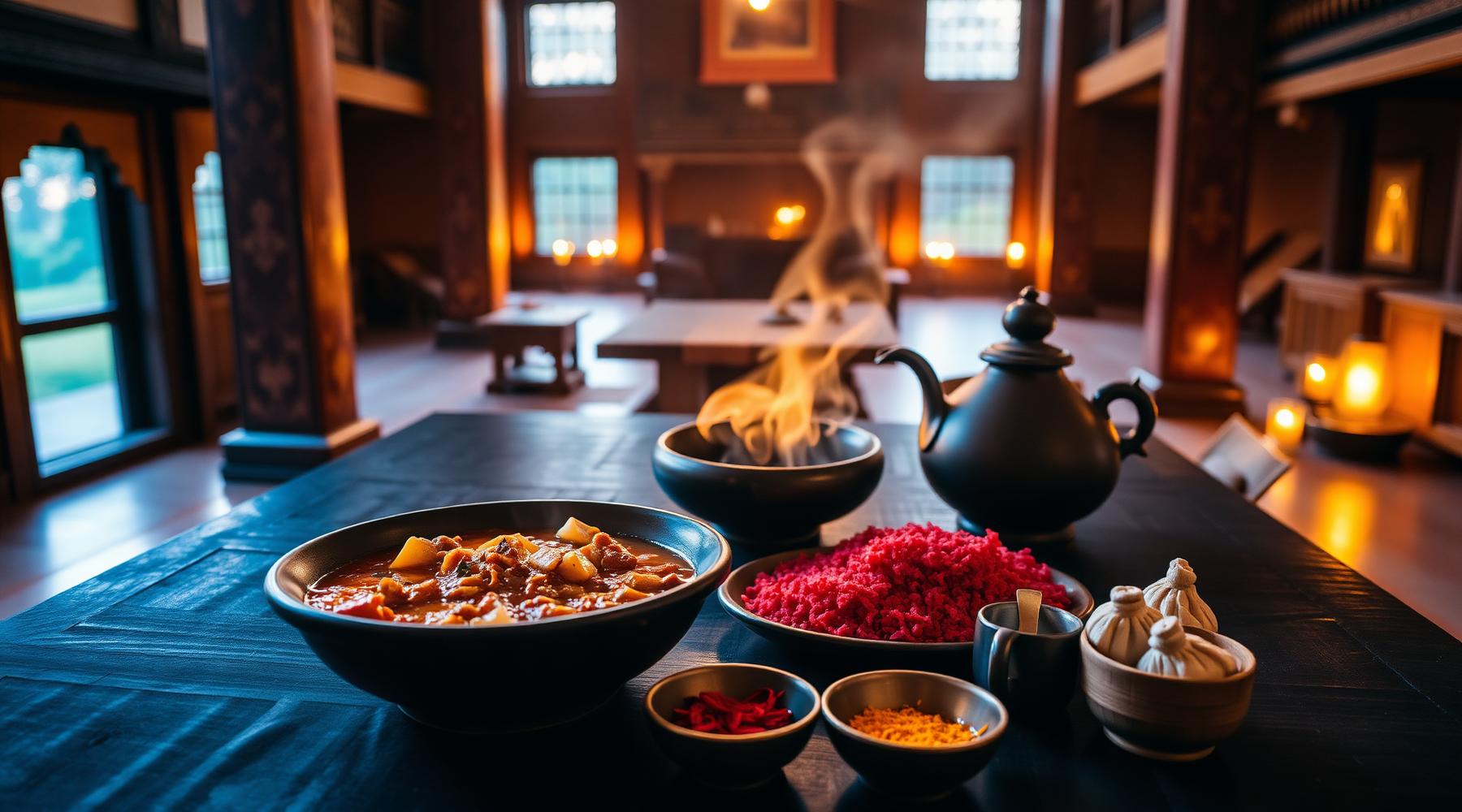
Ema datshi from the kitchen garden, red rice from Paro, suja at dawn.
Chef Karma Wangchuk — born in the Bumthang valley, trained at the royal household kitchens in Thimphu — keeps a quiet nightly menu rooted in the high valleys: ema datshi with cloud-forest chillies and yak cheese, jasha maru of free-range chicken with wild mountain herbs, pa from cured pork belly with daikon, hand-folded hoentay momos of buckwheat and turnip-greens from Haa, red rice from the terraces of Paro, a closing bowl of zow shungo with poached pear and butter-tea ice cream. Suja churned at dawn from yak butter and Himalayan salt, and ara — the clear millet spirit of the eastern valleys — poured for the long evenings around the bukhari.
- 01
Taktsang at dawn
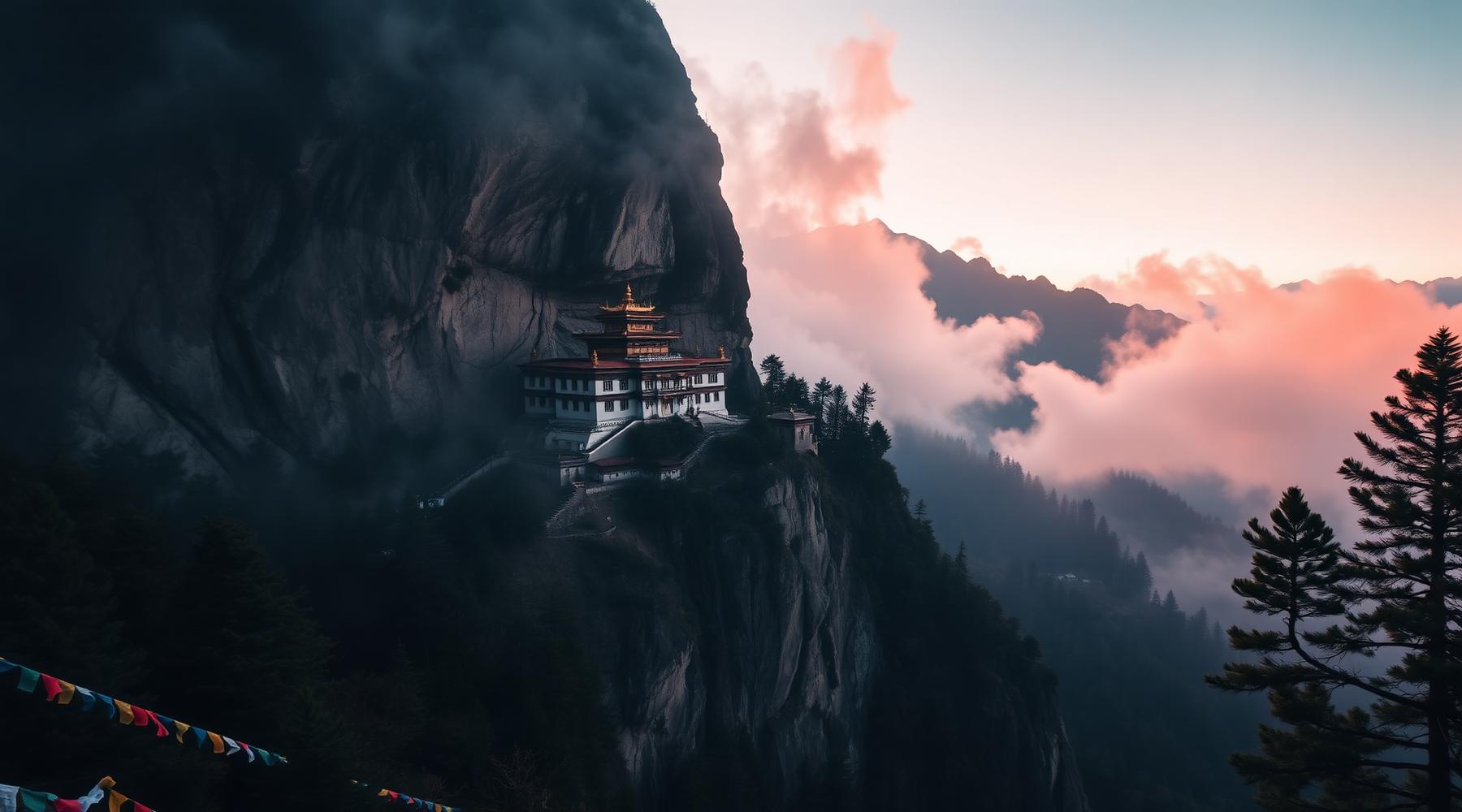
A pre-dawn drive to Paro and the long climb through the pines to Tiger's Nest — the monastery of Guru Rinpoche clinging to a sheer cliff at three thousand metres, the mist below, a private audience with the resident lama in the inner sanctum, butter tea and red rice at the half-way teahouse.
- 02
Punakha and the Pho Chhu suspension bridge
A full day across the Dochu La pass — one hundred and eight chortens in the snow, the great winter dzong of Punakha at the confluence of the male and female rivers, a private blessing at the Druk Wangyal lhakhang, and the long swaying walk across the longest suspension bridge in the kingdom.
- 03
Mindfulness archery on the ridge
A morning on the private practice ground with the kingdom's national sport — bamboo bows of the old style, painted targets at a hundred and forty metres, the slow breath between draw and release, taught by a former member of the royal team.
- 04
The Thimphu Tshechu (October)
Three days of masked Cham dances at the Tashichho Dzong — the wrathful deities of the Guru Rinpoche cycle, the Black Hat dance, the unfurling of the great thongdrel at dawn on the final morning, seated among the royal family's invited guests.
- 05
A five-day caravan to the Phobjikha cranes
A four-by-four convoy east across the Dochu La and Pele La passes to the glacial U-shape of the Phobjikha valley — the wintering ground of the black-necked cranes from the Tibetan plateau, an evening at the Gangtey goemba, a single night in a heated farmhouse of the Nyingma school.
- 06
Silent retreat with the resident lama
Three days in the cloister's small hermitage above the lhakhang — instruction in shamatha and tonglen from a Drukpa Kagyu master of the Tango monastery, simple meals of red rice and dal taken in silence, the kettle and the wind the only sound.
- 07
The hot stone bath
An evening in the private menchu — river stones heated red in a wood fire and dropped into a cedar tub of mineral water and artemisia leaves, a deep mountain remedy for the body and the altitude, followed by a small cup of ara on the veranda.
- 08
Bumthang and the burning lake
A short flight east to the spiritual heartland of Bhutan — the Jakar dzong, the Jambay and Kurjey lhakhangs, a walk to the Mebar Tsho where Pema Lingpa drew the hidden treasures from the water, a night at our small farmhouse annexe on the Chamkhar river.
How one arrives.
i. Fly to Paro via Delhi, Kathmandu, Bangkok or Singapore.
Drukair and Bhutan Airlines are the only carriers permitted into the kingdom — a dramatic banked approach between the Himalayan peaks, considered one of the most demanding commercial landings in the world. A welcome of khada scarves and a hot ginger-and-lemongrass tea on the tarmac.
ii. Up the valley to the Motithang ridge.
An hour and a half by private Land Cruiser northeast from Paro through the Thimphu valley — past the great Tashichho Dzong, the slow river, the small capital with no traffic lights, and the long climb through the blue pines to the ridge. A first hot stone bath at arrival, a butter lamp lit in your name at the lhakhang.
iii. Into the silence.
The cloister keeps the rhythm of the bell — a dawn puja, breakfast on the veranda, a long mid-morning walk with the resident lama, suja and biscuits at four, supper at seven, the wind in the pines after dark. No televisions; the wifi reaches the library only.
A residency begins at seven nights — ten to include the Tiger's Nest and Punakha, fourteen for the Phobjikha caravan and the Bumthang valley.
Our keepers compose each stay by correspondence — a single conversation, often by letter, never by form.