Okavango
Mokoro.
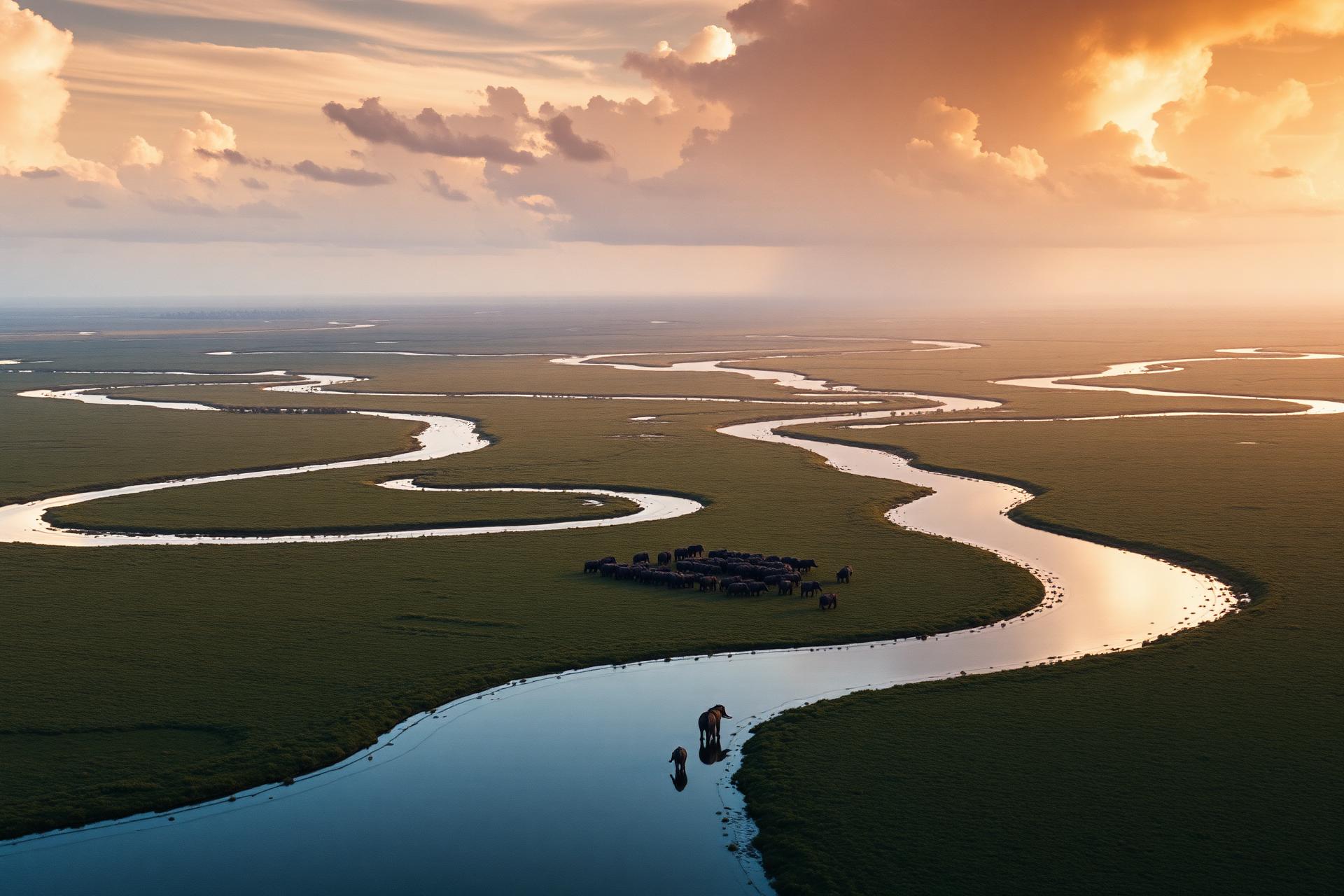
Ten tents on a private floodplain the size of a small country. The water comes from Angola; the lions are unfenced; nothing here has changed in ten thousand years.
Coordinates
19.2833° S, 22.8500° E
Setting
Private Okavango concession
Keys
10 tented pavilions
Season
May–October (flood) · November–April (green)
"We hold a long lease, not a deed. The delta belongs to the elephants and the water; we simply ask to stay a while."
Okavango Mokoro is set within a 250,000-acre private wildlife concession leased from the Okavango Community Trust and operated in partnership with the local Bayei and Hambukushu communities. Twenty-eight per cent of every residency funds the trust directly — anti-poaching, the village school at Seronga, and the elephant corridor that links our channel to Moremi. The camp is fully solar; canvas, decking and joinery are flown in by light aircraft and removed at the end of each fifteen-year cycle. The land returns to itself.
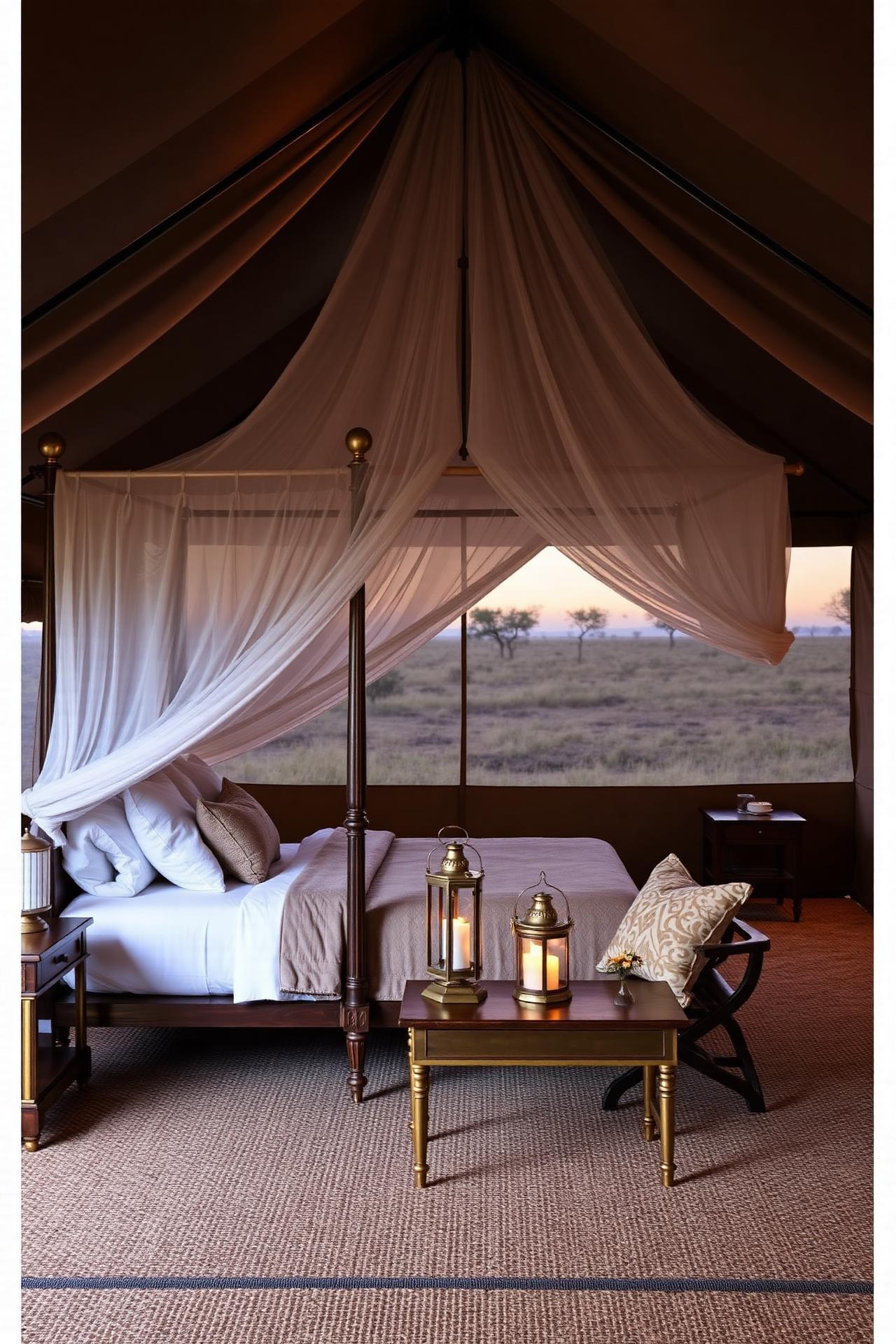
Ten tents, all on the water's edge.
Each pavilion is a single high-volume canvas room on a raised hardwood deck — antique brass campaign furniture, a copper bath set into the floor, a four-poster swathed in mosquito netting, and a private viewing platform that drops to the floodplain. Walls roll up entirely. There are no internal doors. The line between inside and the delta is intentional and porous.
- i
Floodplain Tent
85 m² · Open delta, eastern light
from USD 2,400 - ii
Channel Tent
110 m² · Private waterway and bird hide
from USD 3,100 - iii
Island Tent
140 m² · Set on its own palm island, plunge
from USD 4,200 - iv
The Mokoro Camp
260 m² · Two tents, study, private chef
from USD 8,400
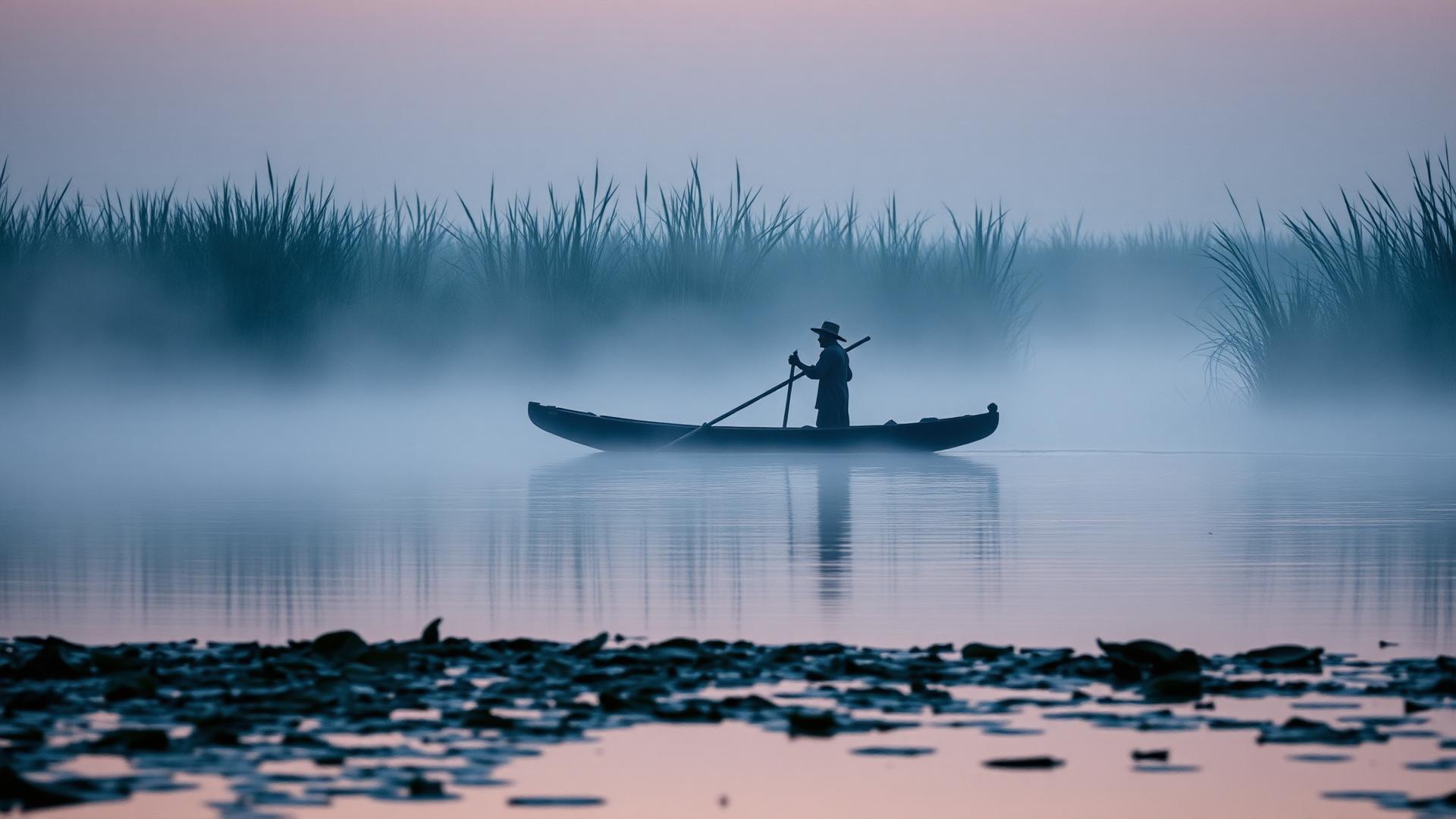
A dugout, a pole, and the oldest road in the delta.
Each morning a Bayei poler walks down from the boatyard at first light, pushes the mokoro from its mooring, and offers a hand into the bow. The channels are narrow enough to touch the reeds; the silence is broken only by the splash of a reed-frog and the slow draw of the pole. No engines are permitted in the concession.
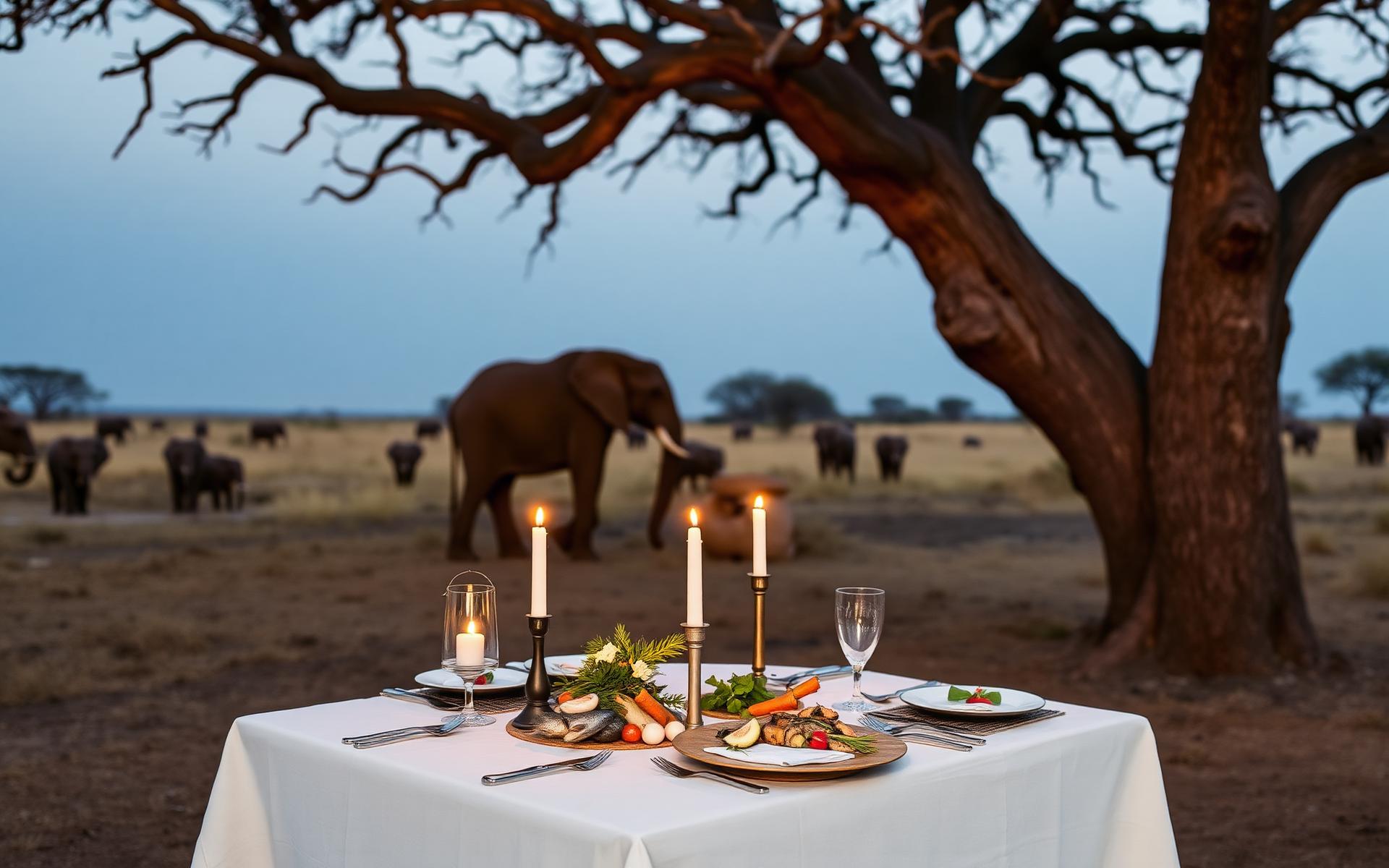
Dinner under an acacia, the herd at fifty paces.
Chef Tumelo Khama cooks a five-course menu nightly — line-caught bream from the channel, samp and morogo from the Tswana kitchen, springbok carpaccio cured in our own salt from the Makgadikgadi, baobab sorbet. The cellar leans toward South African chenin and old-vine cinsault. The table is set wherever the wind and the herds permit.
- 01
Walking with a San tracker
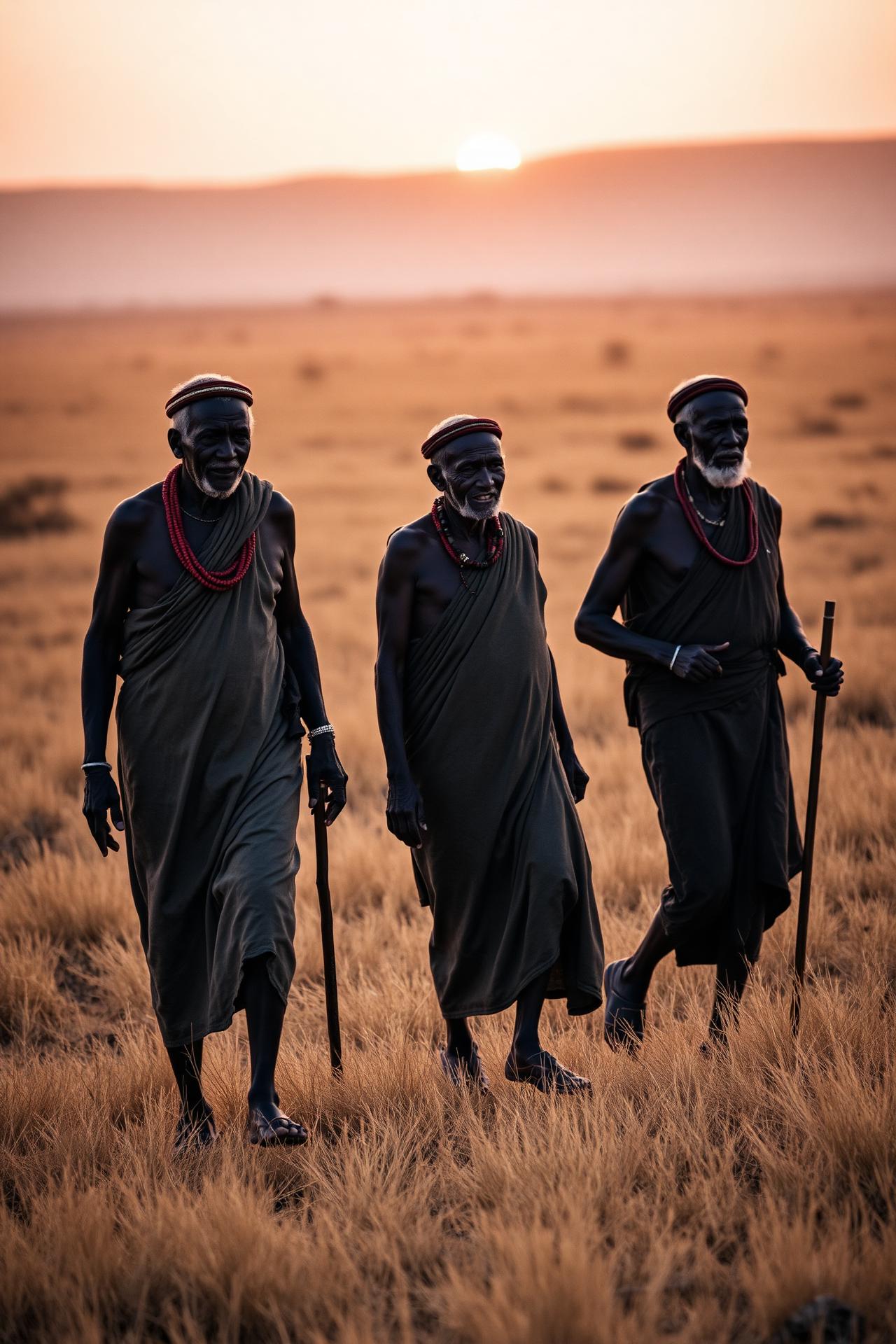
A morning on foot with elders from the D'Kar community — not as performance, as instruction. The oldest knowledge on the continent.
- 02
Predator drive at first light
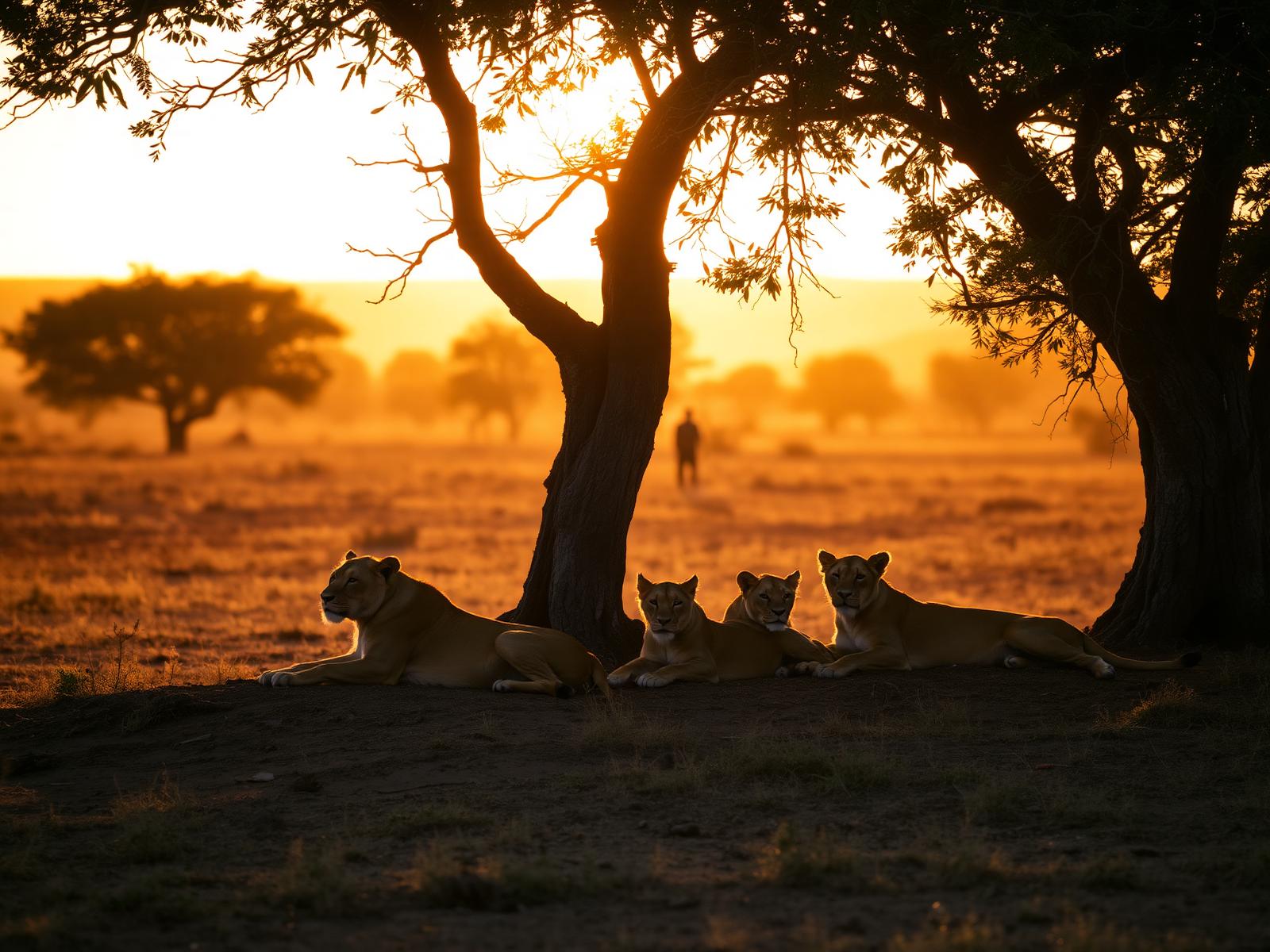
Lion, leopard, wild dog and cheetah all hold territory in the concession. Our guides are among the most experienced in southern Africa.
- 03
Mokoro at dawn
Two hours of complete silence through the lily pads with a Bayei poler. Coffee is set on a sandbank at the turn.
- 04
Makgadikgadi by balloon
A fly-camp expedition south to the salt pans — a hot-air balloon at dawn over a horizon of pure white. Quad-bikes after dark to the meerkat warrens.
- 05
Photographic hide at the channel
A sunken hide at eye level with the waterline — elephants drinking at one metre, hippos at three. Built for the patient camera.
- 06
Sleep-out under the southern sky
A single brass bed dragged onto the open deck of a remote sleep-out. A guard with a rifle at the foot of the stair. The Milky Way overhead, unbroken.
How one arrives.
i. Fly to Maun.
Direct from Johannesburg and Cape Town; via Johannesburg from London, Frankfurt, and Dubai. We meet you airside with cold rooibos and a chilled towel.
ii. A bush plane, forty minutes.
A six-seat Cessna 206 crosses the delta to our private airstrip — a single mowed cut of floodplain. The pilot drops low over the herds on the approach.
iii. By Land Cruiser, then mokoro.
Twenty minutes by open Land Cruiser through the mopane, then a final crossing of the channel to camp by mokoro. Cold gin and tonic on the deck.
A residency begins at four nights, ideally seven.
Our keepers compose each stay by correspondence — a single conversation, often by letter, never by form.