Mustang
Cloister.
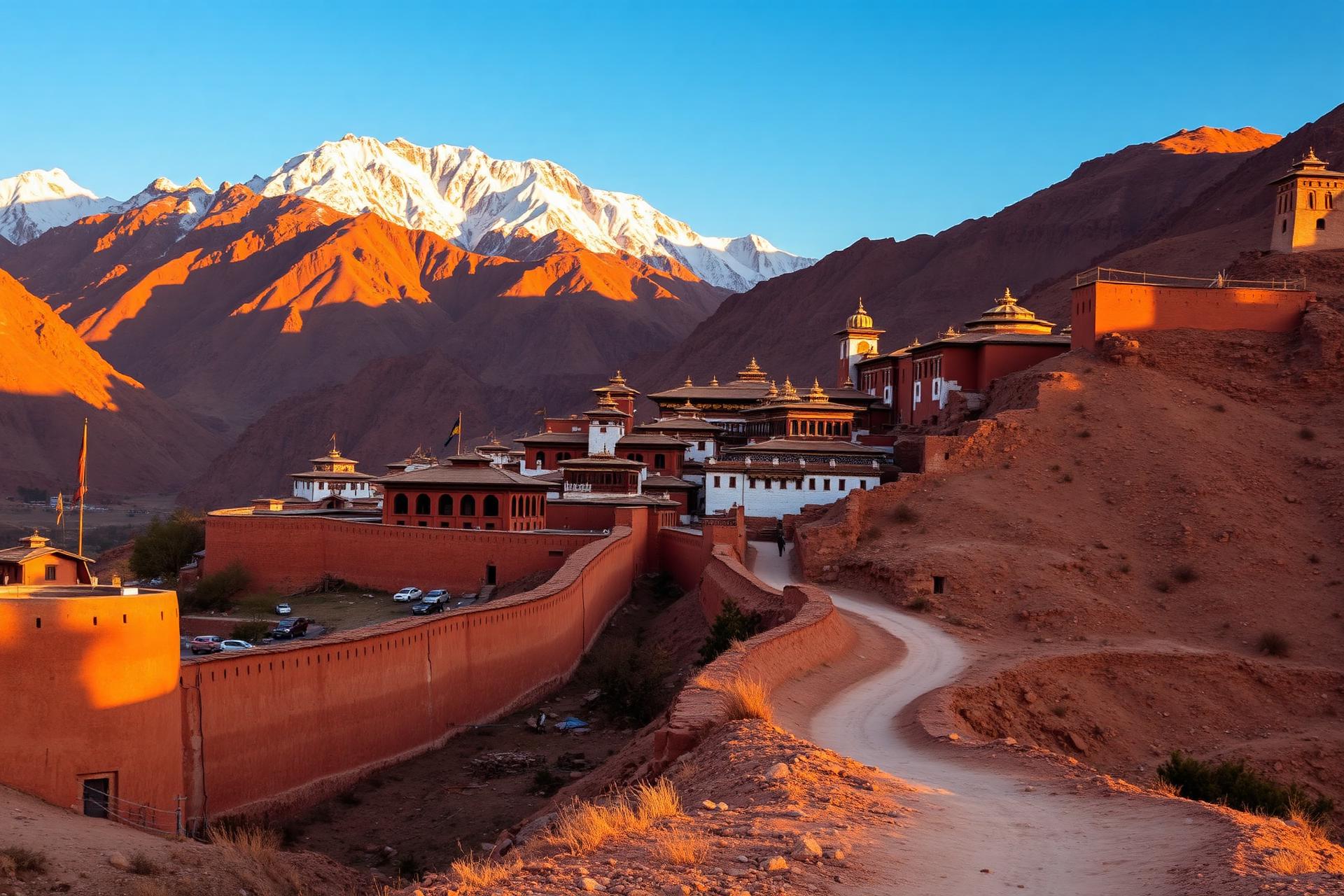
Fourteen rammed-earth pavilions inside the medieval walled kingdom of Lo Manthang — and a private Buddhist cloister of our own, held in trust by a Sakya lineage at 3,840 metres in the rain-shadow of the Annapurna.
Coordinates
29.1816° N, 83.9572° E
Setting
Walled city of Lo Manthang, Upper Mustang
Keys
14 earthen pavilions · private gompa
Season
April–early November (Tiji festival in May)
"Mustang is not a place one visits. It is a place one is permitted to enter — and so we built quietly, with the hands of the village, in the colour of the cliffs."
Mustang Cloister stands inside the walled city of Lo Manthang, the last living kingdom of the Tibetan plateau, sealed off from the world until 1992. Every pavilion is hand-rammed in the local terra-rossa earth, raised by master mistris from the village of Tsarang and oriented by the gompa's resident astrologer. The cloister itself is consecrated — a private prayer hall holding a fifteenth-century gilt Maitreya recovered from the ruins of Ghar Gompa, lit by a hundred yak-butter lamps every dawn. Thirty per cent of every residency funds the Lo Gyalpo Jigme Foundation, which restores the kingdom's threatened cave-frescoes and trains the next generation of thangka painters and choe-pa monks.
Fourteen pavilions, raised in the earth they stand on.
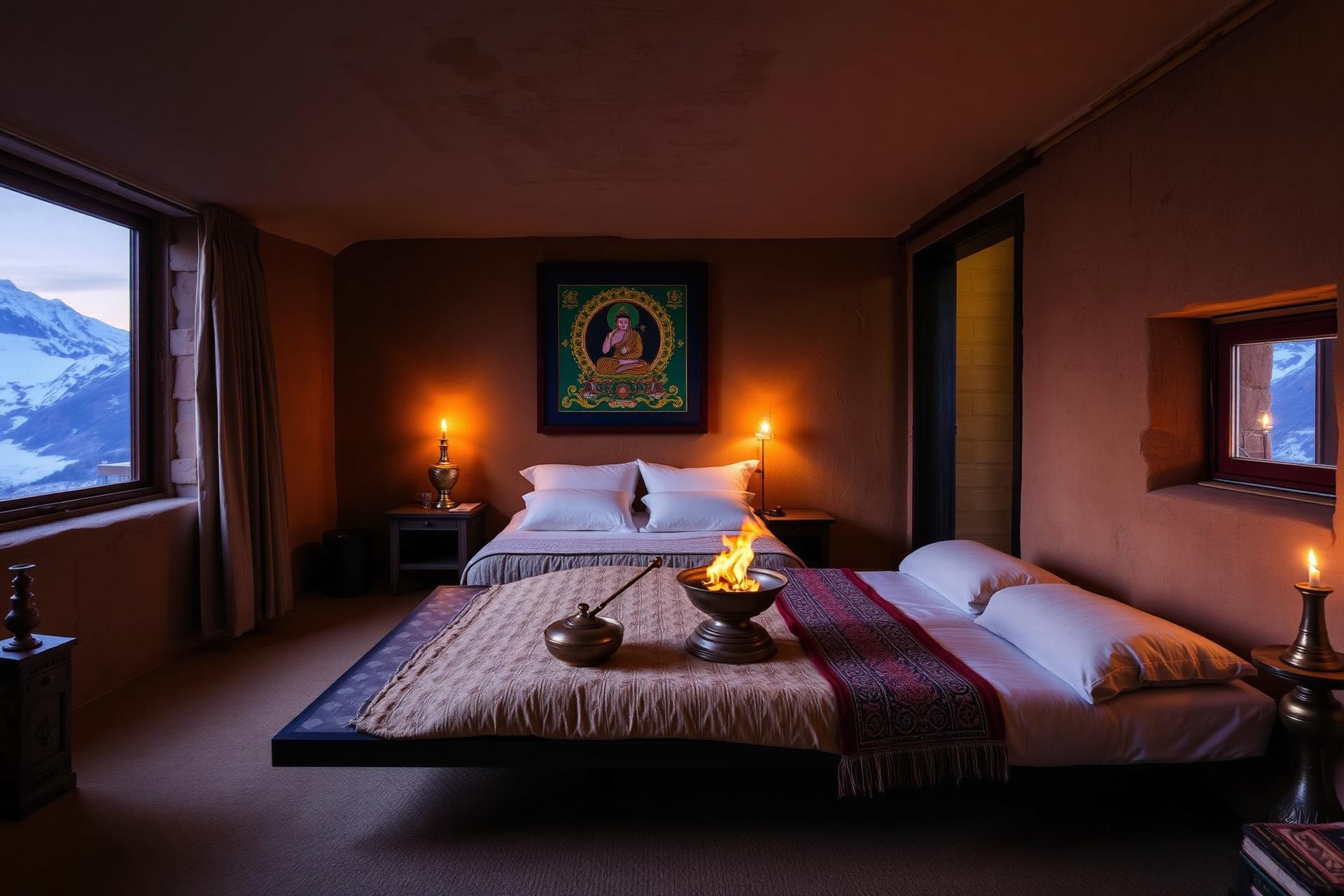
Every pavilion is a single rammed-earth structure with a low ceiling of poplar beams and willow lattice, walls a foot thick to hold the mountain warmth, a platform bed in raw yak-wool and a quilt of indigo Bhutanese silk, a hand-painted thangka above the headboard, and a wood-burning Bukhari stove fed at dusk by the houseman. No televisions, no curtains — only a single deep-set window framing the ochre cliffs of Chhoser and the snow line of Nilgiri.
- i
Earthen Pavilion
70 m² · Inner courtyard, kitchen garden, eastern wall
from USD 1,400 - ii
Choeten Pavilion
95 m² · Ancient chorten, prayer-flag line, Nilgiri
from USD 1,950 - iii
Cliffside Pavilion
140 m² · Ochre cliffs of Chhoser, private terrace, brazier
from USD 2,800 - iv
The King's Residence
260 m² · Two pavilions, library, private gompa access, butler
from USD 6,800
A private gompa, a Sakya lineage, and the oldest prayer in the Himalaya.
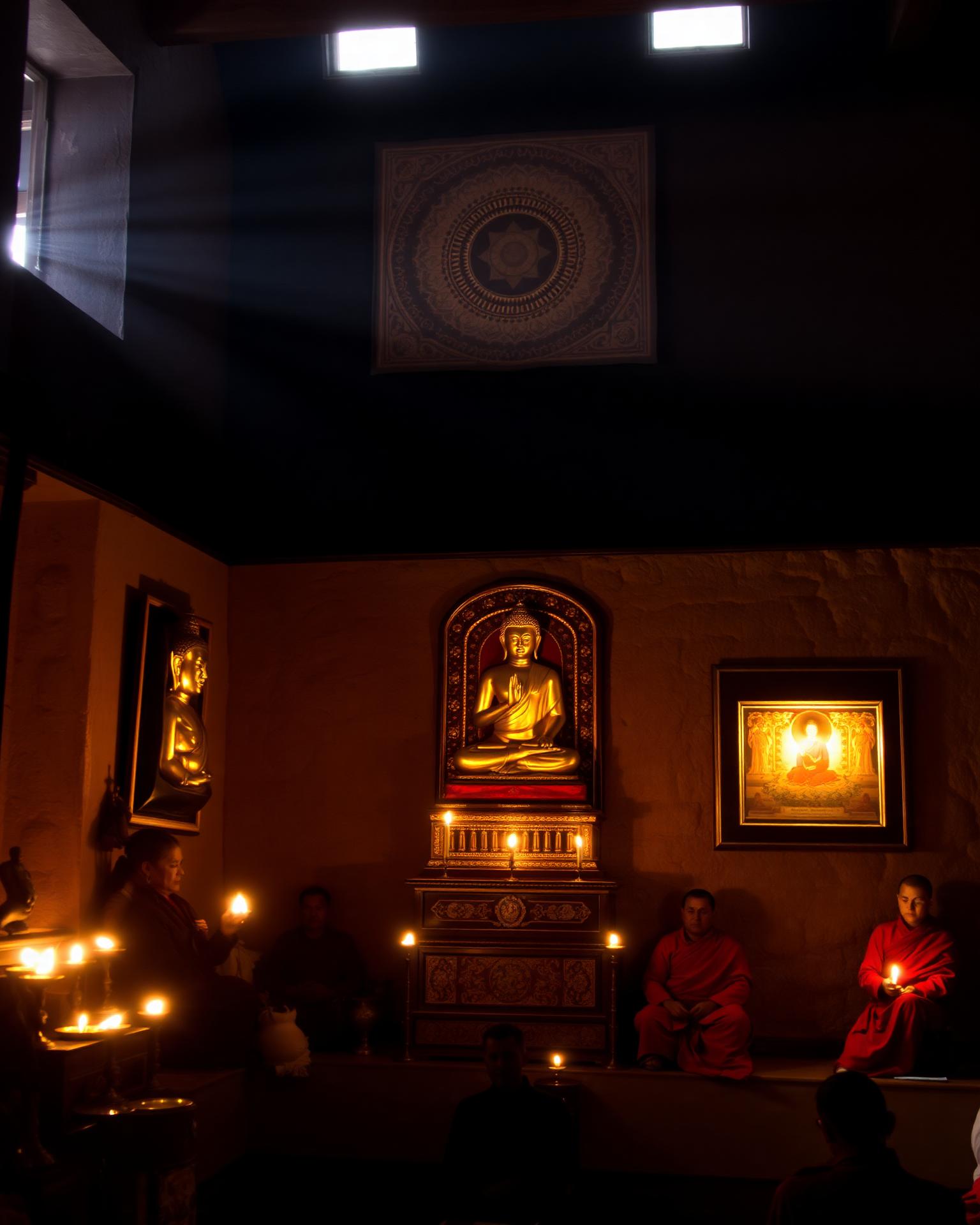
The cloister is the soul of the house — a small, perfectly proportioned prayer hall built around a fifteenth-century gilt Maitreya, lit only by butter lamps. Khenpo Tenzin Norbu, a Sakya master from Namgyal Gompa, is in residence for eight months of the year. Guests are welcome at the 5 a.m. and 6 p.m. pujas, and a private seven-day silent retreat with Khenpo — shamatha and tonglen, an hour of teaching at dawn, a single meal in silence at noon — is offered to those who ask. Every guest leaves with a blessed mala of yak-bone and turquoise.
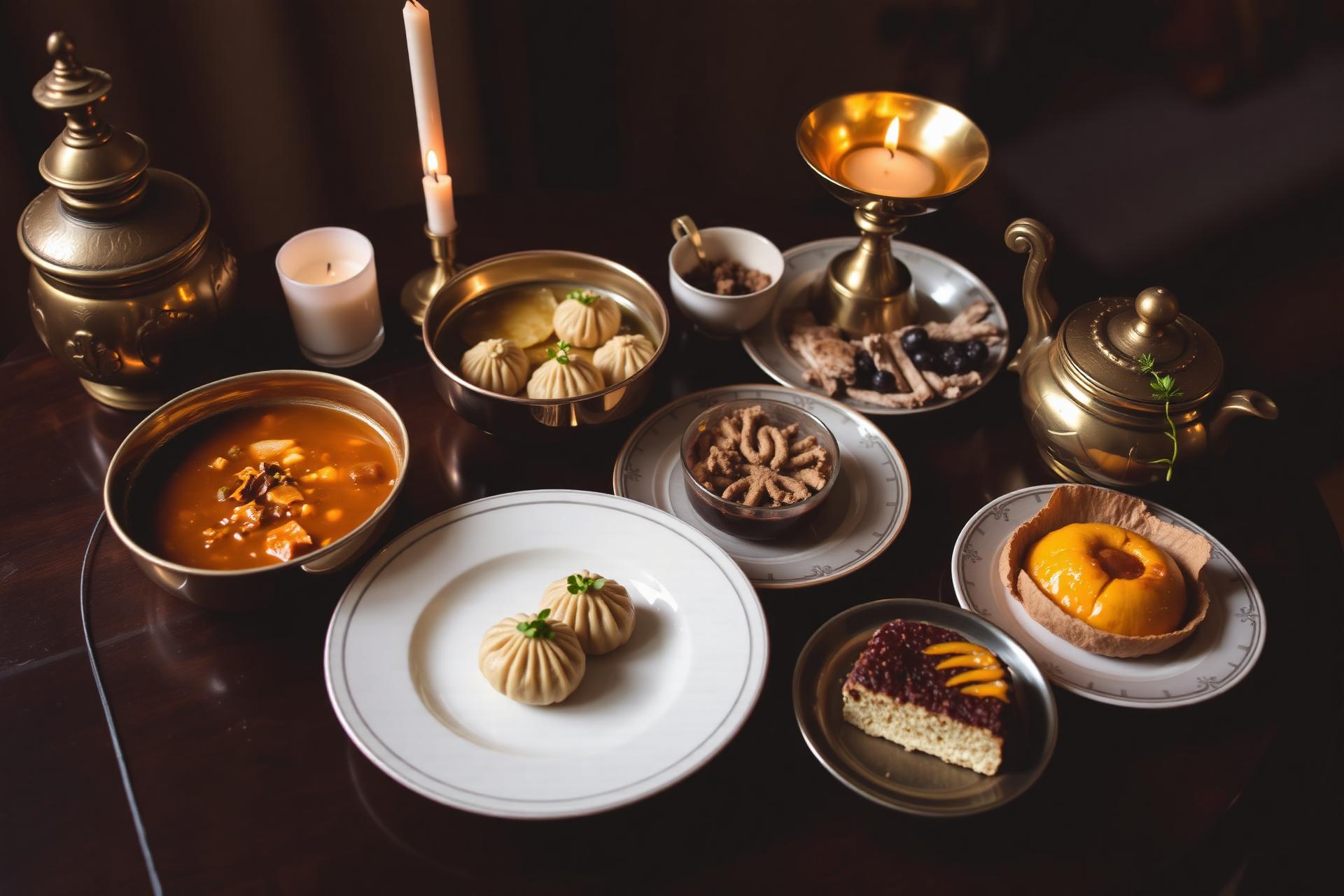
Momo folded at the table, thukpa simmered with the kitchen's own yak.
Chef Pasang Sherpa — born to a teahouse family on the Annapurna Circuit — sets a nightly menu rooted in the high passes: hand-folded momo of yak and wild chive; a long-simmered thukpa noodle of toasted barley; sha balep flatbread blistered on the bukhari; a closing tart of Mustang's late-summer apples with sea-buckthorn caramel. Sundown is yak-butter tea churned at the table in a hand-carved chu, and a small library of high-altitude Riesling and a quiet collection of Himalayan single-malt for the cold hour after the bell.
- 01
Sunrise puja in the cloister
Five a.m. in the private gompa with Khenpo Tenzin — a hundred butter lamps lit one by one, the morning prayer of Tara, a cup of salt-butter tea on the threshold as the cliffs turn gold.
- 02
The cave-monasteries of Chhoser
A guided morning by horseback to the sky-caves of Jhong — five storeys carved into a sheer cliff, eleventh-century frescoes restored under the Lo Gyalpo Foundation, a private picnic on the canyon rim.
- 03
Tiji festival
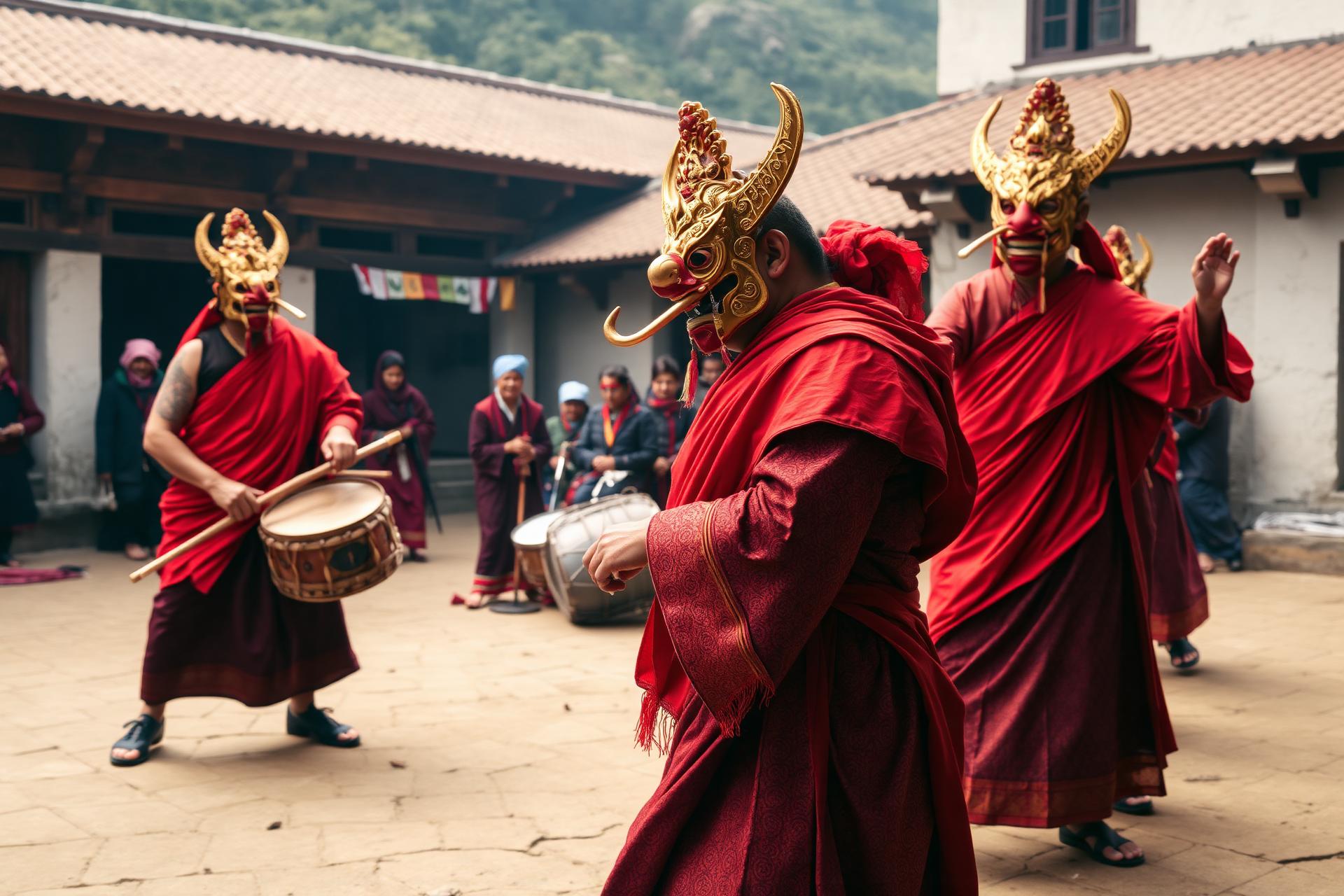
Three days in the courtyard of the King's Palace each May — masked Cham dances of the Dorje Sonam Wangpo cycle, the long horns echoing off the walls. Reserved seating in the royal gallery, by invitation of the king.
- 04
The Kali Gandaki by horseback
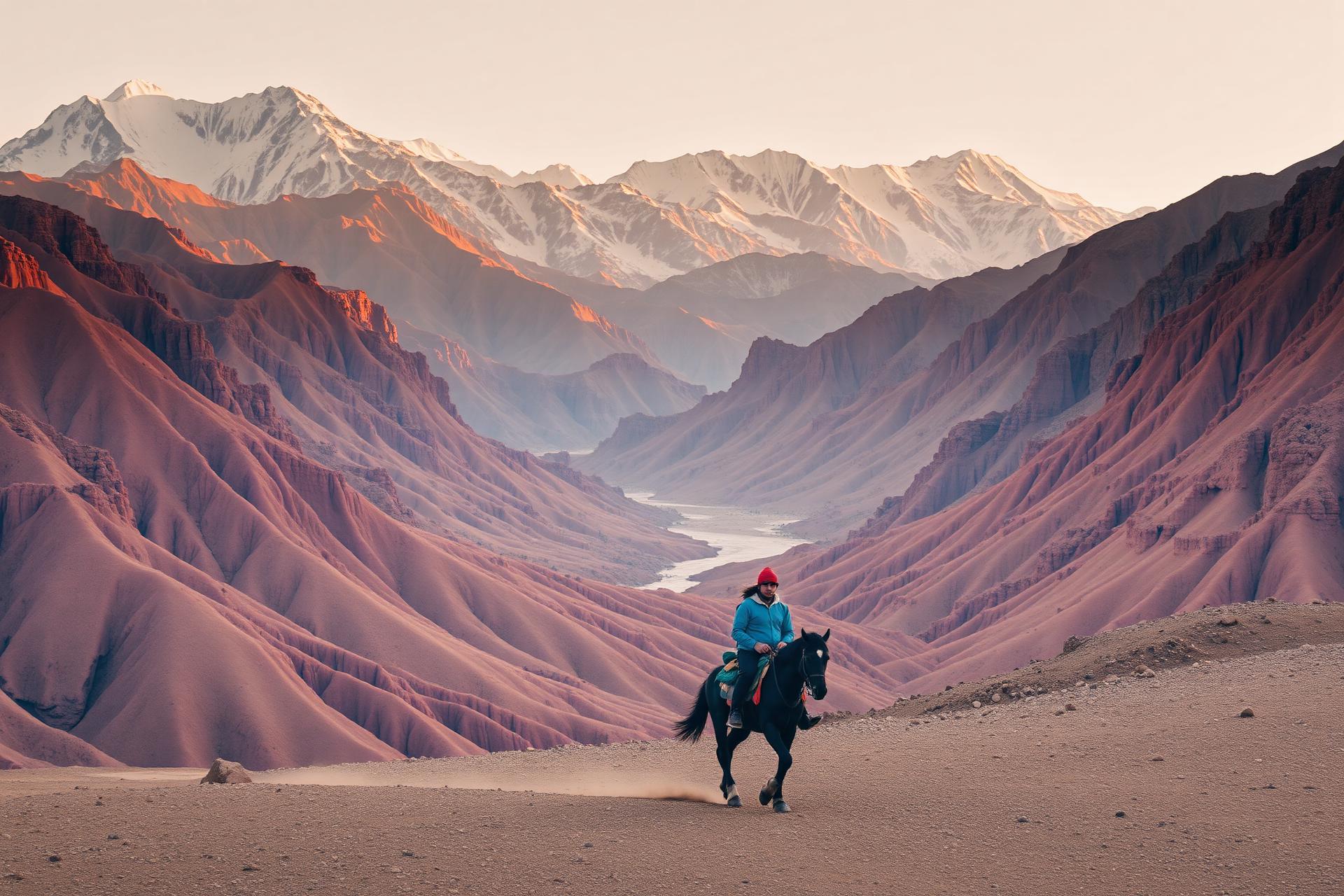
A four-day caravan on Mustang ponies down the world's deepest river canyon to the cliff-monastery of Ghar Gompa — wool tents at Ghami, picnic lunches on the river stones, two guides and a cook in convoy.
- 05
Thangka with the master
An afternoon in the studio of Tashi Norbu, head painter of the Lo Gyalpo restoration — mineral pigment ground at the stone, gold-leaf laid with a hare's-whisker brush, the first lines of your own small thangka.
- 06
Tea with the King of Mustang
By private arrangement, an audience in the royal palace with HRH Jigme Singi Palbar Bista — a cup of butter tea, an hour of quiet conversation on the history of the kingdom.
- 07
Manaslu prayer-flag pass
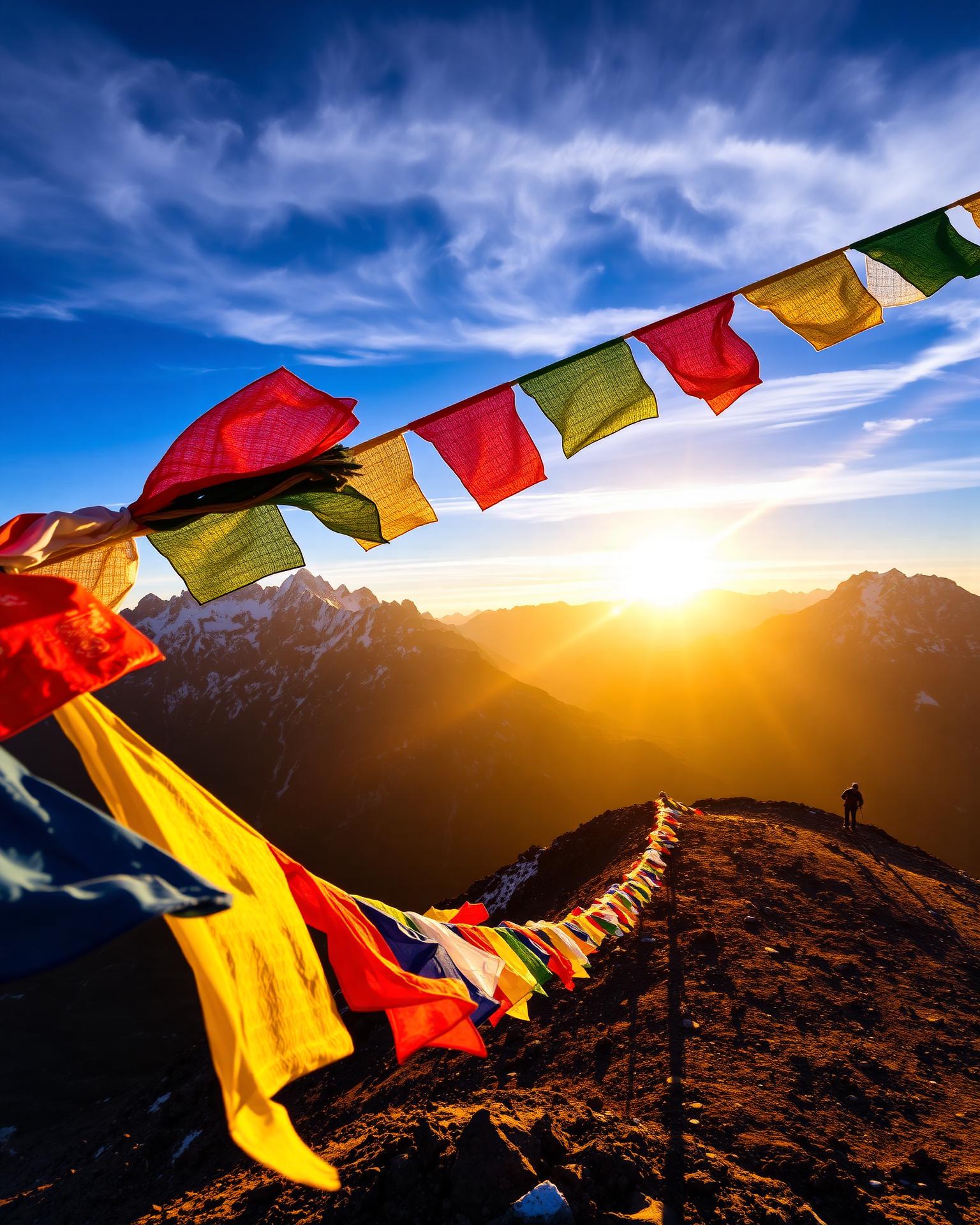
A two-day acclimatised trek to the Lo La pass at 4,200 metres — a fresh string of prayer flags strung by your own hand, with views to Dhaulagiri, Annapurna and the Tibetan plateau.
- 08
Lumbini pilgrimage
A private day by helicopter to the birthplace of the Buddha — the Maya Devi temple, the Ashokan pillar, and a slow circumambulation of the sacred pond at dusk.
How one arrives.
i. Fly to Kathmandu.
Direct from Delhi, Singapore, Doha, Dubai, Bangkok and Hong Kong into Tribhuvan. A private night at our city hostel in the Patan Durbar quarter — a courtyard of carved Newar wood, a soak, a Newari supper, the sound of evening bells from Bouddhanath.
ii. Onward to Pokhara, then Jomsom.
A scenic dawn flight beneath the Annapurna ridge to Pokhara, followed by the legendary twenty-minute hop through the gorge to Jomsom at 2,743 metres. A cold ginger tea, a damp cloth, and a Land Cruiser north.
iii. Up the Kali Gandaki to Lo Manthang.
Five hours through the world's deepest canyon — past the apple orchards of Marpha, the wind-carved cliffs of Chuksang, the sky-burial site at Drakmar — into the walled gate of Lo Manthang at dusk. A single brass bell sounded for your arrival, butter lamps in the courtyard, the long-horn carried up to the rampart.
A residency begins at six nights — seven for the silent retreat with Khenpo, ten for the Kali Gandaki caravan.
Our keepers compose each stay by correspondence — a single conversation, often by letter, never by form.