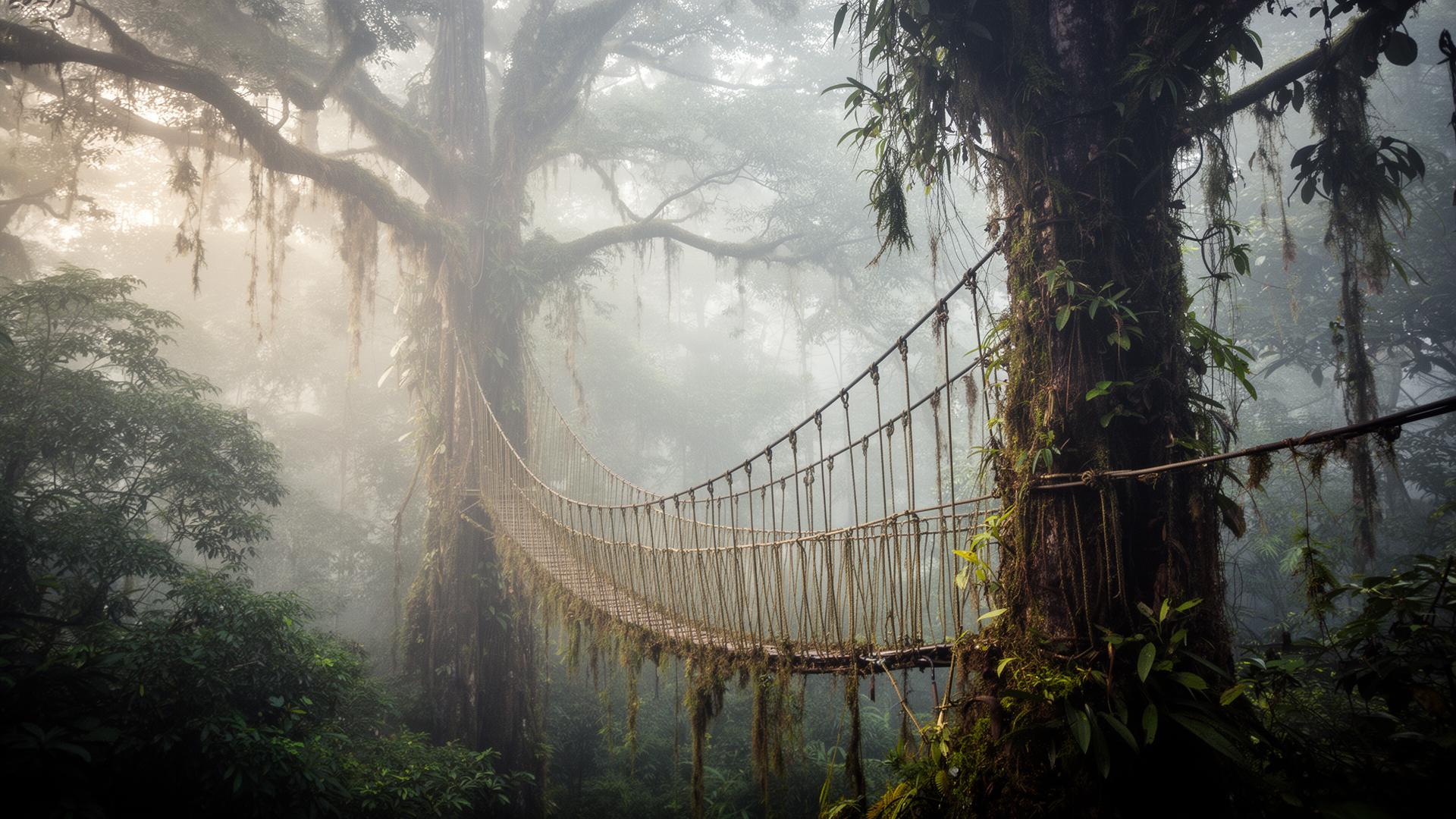
Monteverde
Canopy.
Fourteen suspended pavilions in the eternal mist of the Monteverde cloud forest — a thousand hectares of private reserve straddling the continental divide, where the Pacific and Atlantic weather systems collide in a perpetual soft rain.
Coordinates
10.3000° N, 84.8000° W
Setting
Monteverde Cloud Forest Reserve, Cordillera de Tilarán
Keys
14 canopy pavilions · 1,450 m elevation · private reserve
Season
Year-round (dry season Dec–Apr, misty season May–Nov)
"The cloud forest does not reward haste. It rewards stillness — the kind of stillness that lets a quetzal drift into frame, that lets bioluminescence paint the forest floor at midnight, that lets the mist teach you patience one drop at a time."
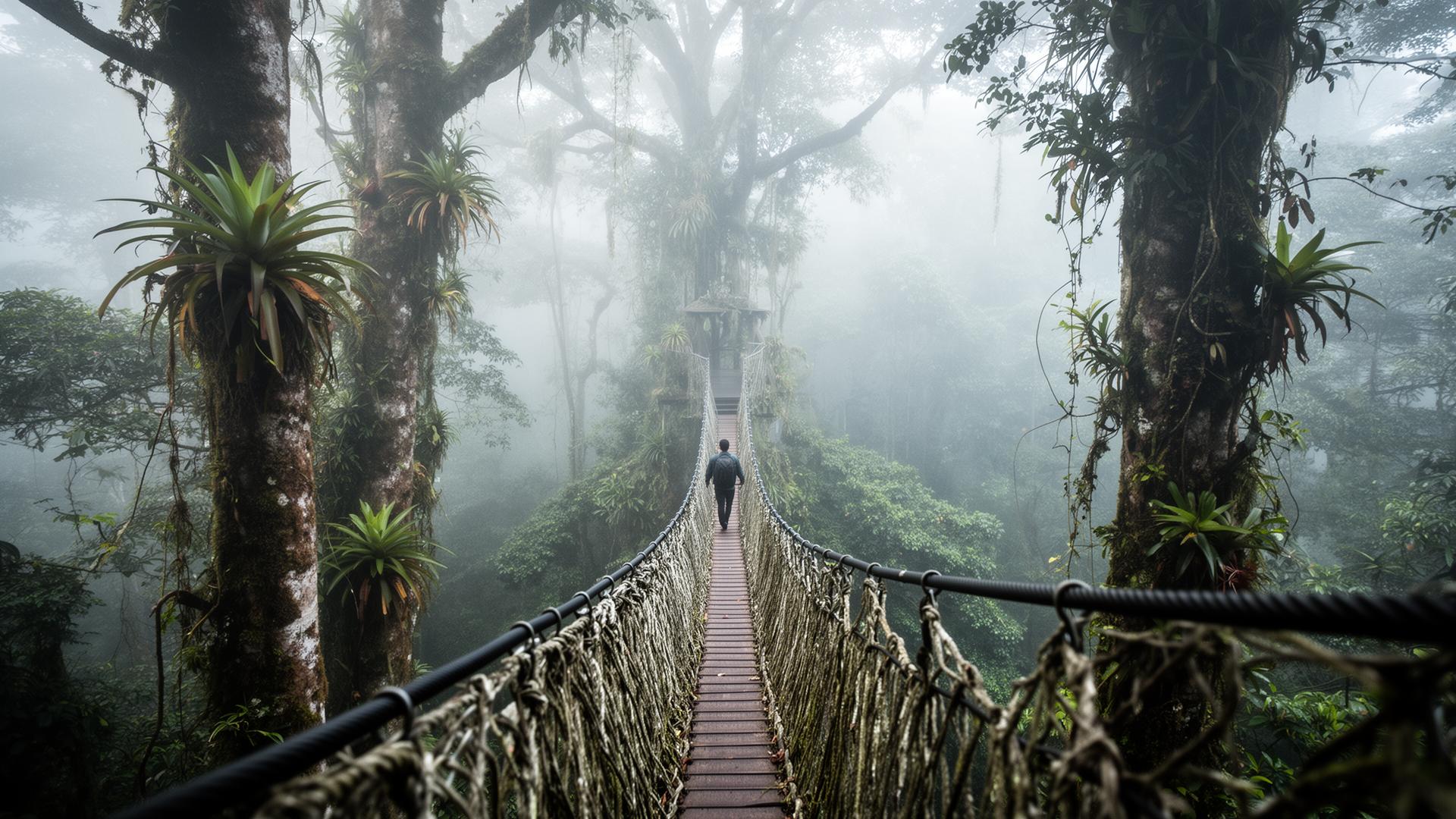
Monteverde Canopy is suspended in the private upper canopy of a thousand-hectare reserve on the Caribbean-facing slope of the Cordillera de Tilarán — one of the most biodiverse fragments of montane forest on earth, home to four hundred species of orchid, a hundred species of mammal, and more than a thousand species of butterfly. Every pavilion is a timber-and-glass box cantilevered from a living tree — a single massive ceiba or ficus — wrapped in reclaimed hardwood, with a private suspension bridge to a wraparound deck at the level of the epiphyte layer. The reserve is held in permanent conservation easement with the Monteverde Institute; twenty per cent of every residency funds the reforestation of the San Luis valley below and the long-term monitoring of the three-wattled bellbird migration corridor.
Fourteen pavilions, in the canopy itself.
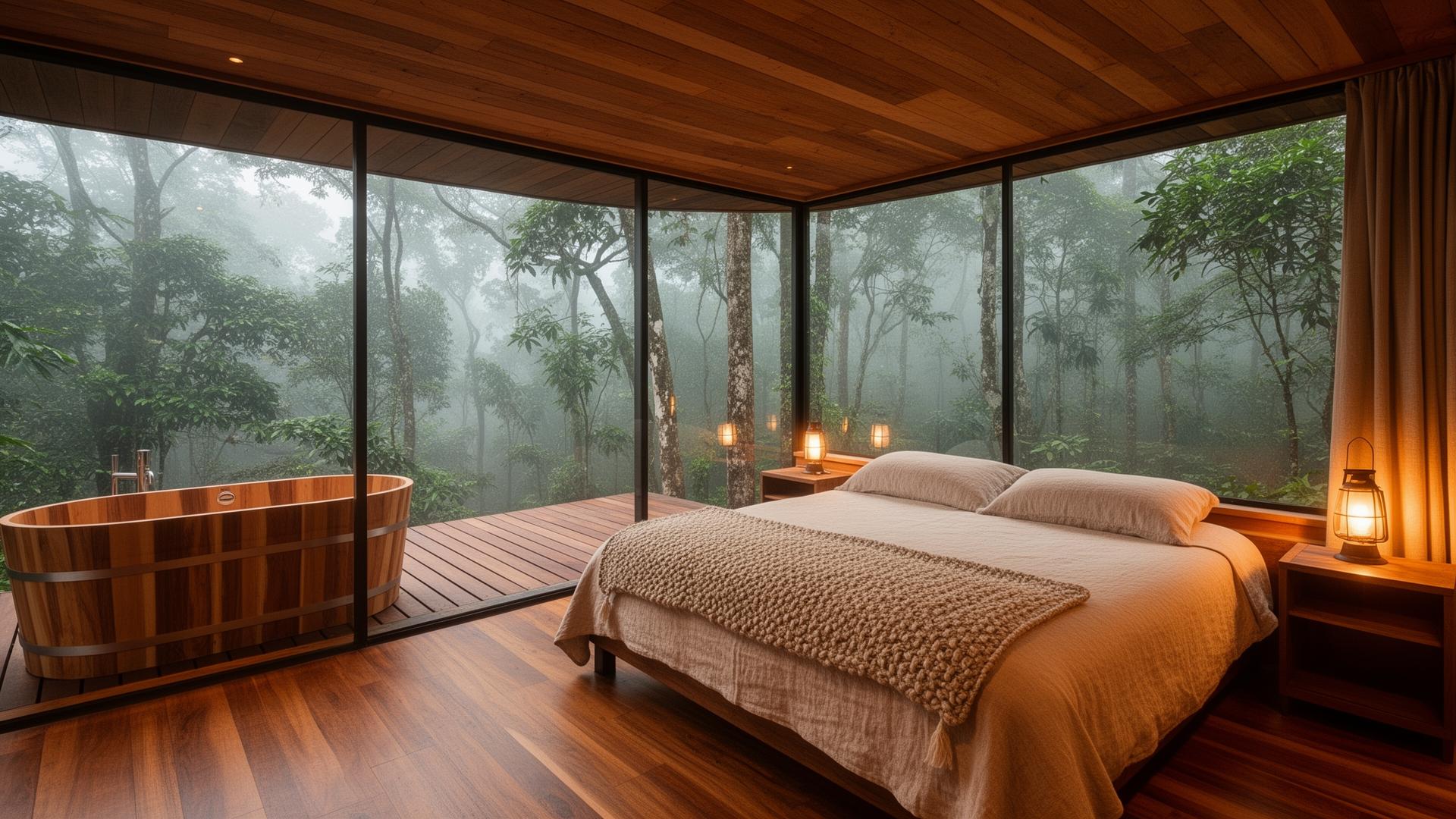
Each pavilion is a single room of reclaimed teak, cedar and glass — a king bed in undyed linen with a handwoven wool throw from the highland weavers of Santa Elena, a wood-burning stove of local soapstone for the cool mountain evenings, polished hardwood floors with woven palm matting, and floor-to-ceiling windows on three sides that place you inside the canopy at the level of the monkeys and the quetzals. A deep cedar soaking tub on the private deck, fed by a solar-heated gravity tank, looks out into the mist and the movement of the leaves. A small pour-over station with single-origin Tarrazú coffee, a hand-bound journal, and a pair of binoculars on the writing desk.
- i
Ceiba Pavilion
70 m² · Canopy level, suspension bridge, epiphyte layer
from USD 1,200 - ii
Ficus Pavilion
100 m² · Double height, private sky bridge, mist valley
from USD 1,800 - iii
Bellbird Pavilion
140 m² · Highest canopy position, outdoor tub, observation deck
from USD 2,800 - iv
The Resplendent House
260 m² · Two pavilions linked by bridge, study, private guide, chef
from USD 5,800
A thousand hectares of cloud forest, the continental divide, and four hundred orchids.
The Monteverde Cloud Forest Reserve sits astride the crest of the Cordillera de Tilarán — the point where the moist Caribbean air meets the dry Pacific winds, producing a perpetual soft rain and a mist that drapes every branch in moss, lichen and epiphyte. Three kilometres of private suspended walkways run through the upper canopy at heights of up to forty metres, connecting the pavilions to observation platforms, a research station, and the trailhead for the continental divide itself. Our head naturalist Carlos, born in the valley below and trained at the Tropical Science Center, leads dawn walks to the lek of the three-wattled bellbird, night walks to the bioluminescent fungi, and slow silent hours on the suspension bridges as the mist lifts and the forest reveals itself.
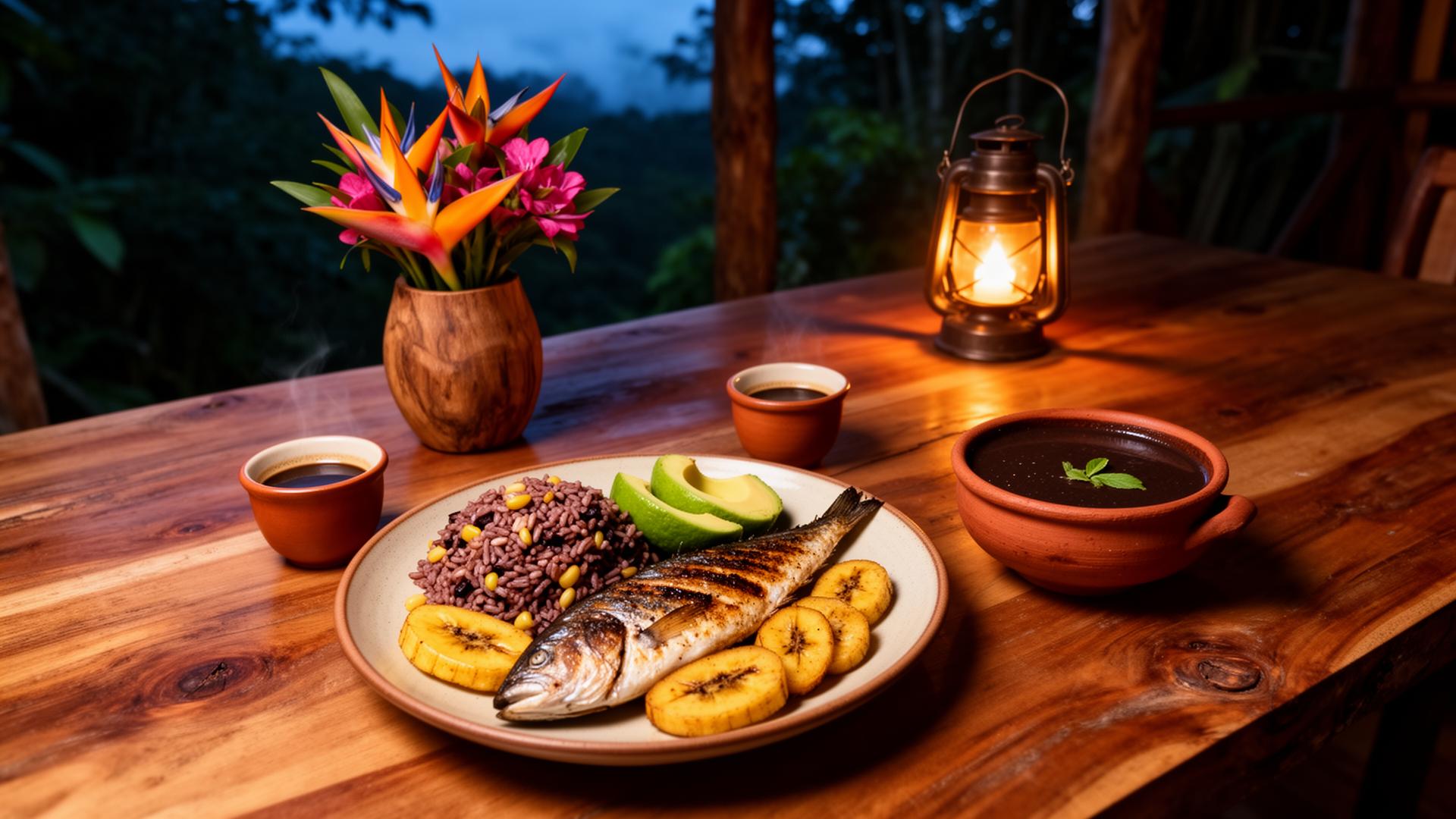
Casado from the valley, gallo pinto at dawn, coffee from the finca next door.
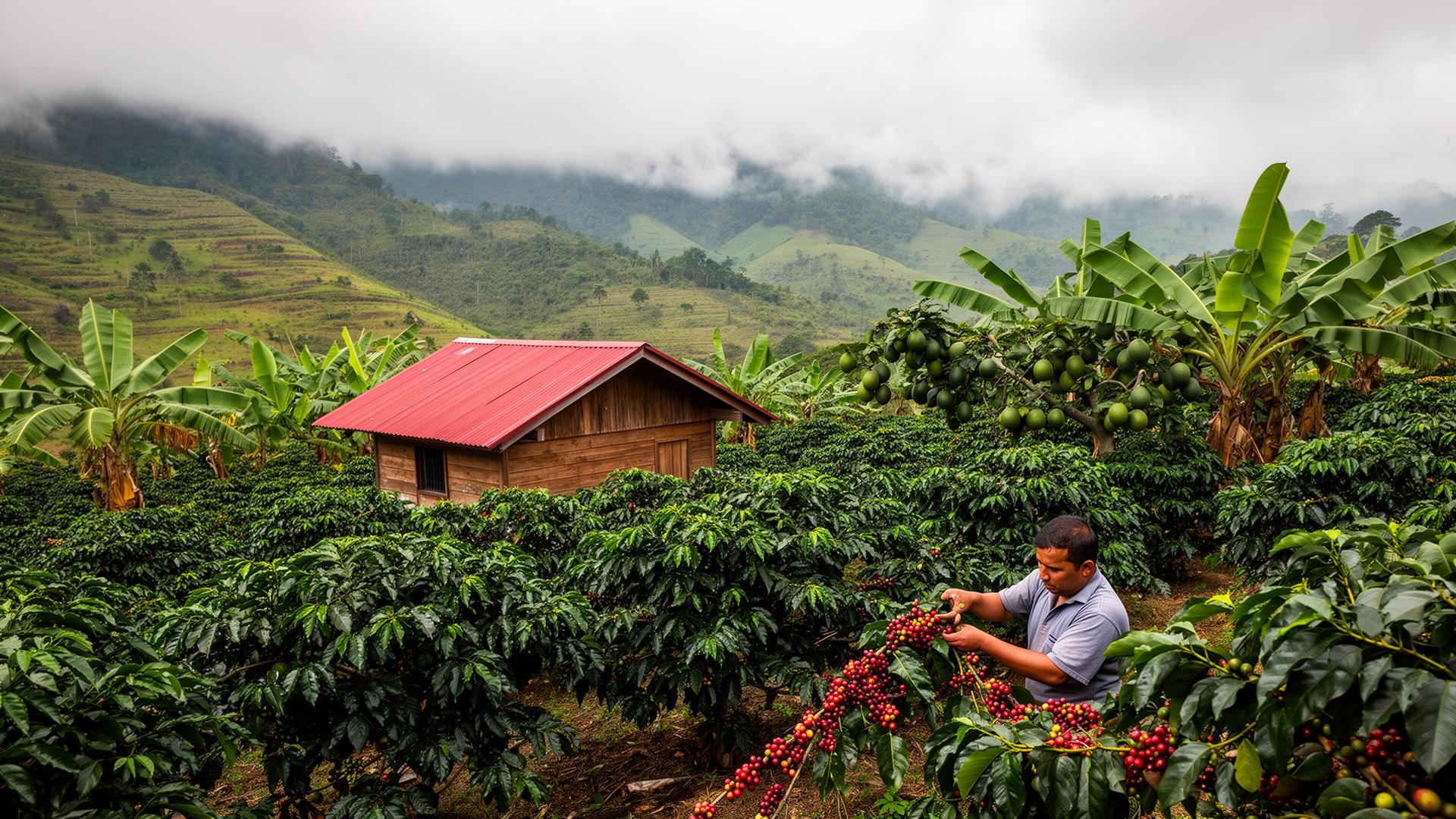
Chef María Elena Chavarría — born in the San Luis valley, trained at Le Cordon Bleu in Lima — sets a nightly menu rooted in the cloud forest and the Pacific coast: casado with grilled corvina and picadillo, gallo pinto with natilla and plantain at breakfast, sopa negra with poached eggs on cool evenings, hearts of palm ceviche with wild cashew and lime, a closing tres leches with cloud-forest vanilla and caramelised panela. The coffee is roasted on-site from beans grown on the neighbouring Finca La Bella, harvested by hand, washed in the mountain spring, and poured through a ceramic dripper at your bedside each dawn.
- 01
Quetzal tracking at dawn
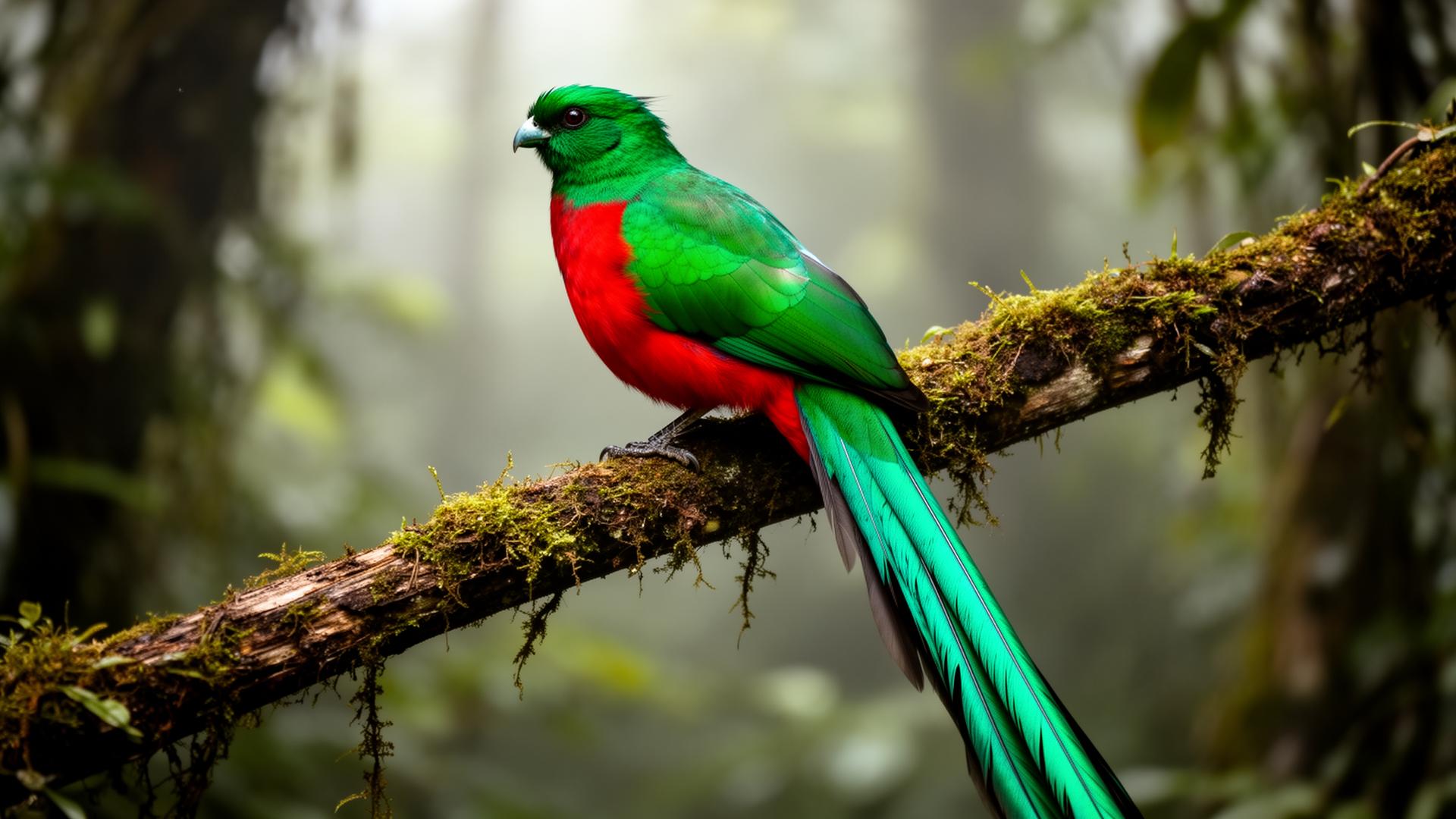
Five a.m. with Carlos along the Sendero Río — the best hour for the resplendent quetzal, feeding on wild avocado in the canopy, its emerald and crimson plumage flashing through the mist. A flask of Tarrazú coffee and gallo pinto wrapped in banana leaf at the river crossing.
- 02
Suspended bridge walk at sunrise
A two-hour traverse of the full canopy walkway system — eight bridges at heights up to forty metres, the mist still below you, the sun breaking through in shafts of gold, howler monkeys calling from the valley, a pair of bare-faced curassows on the forest floor.
- 03
Bioluminescent night walk
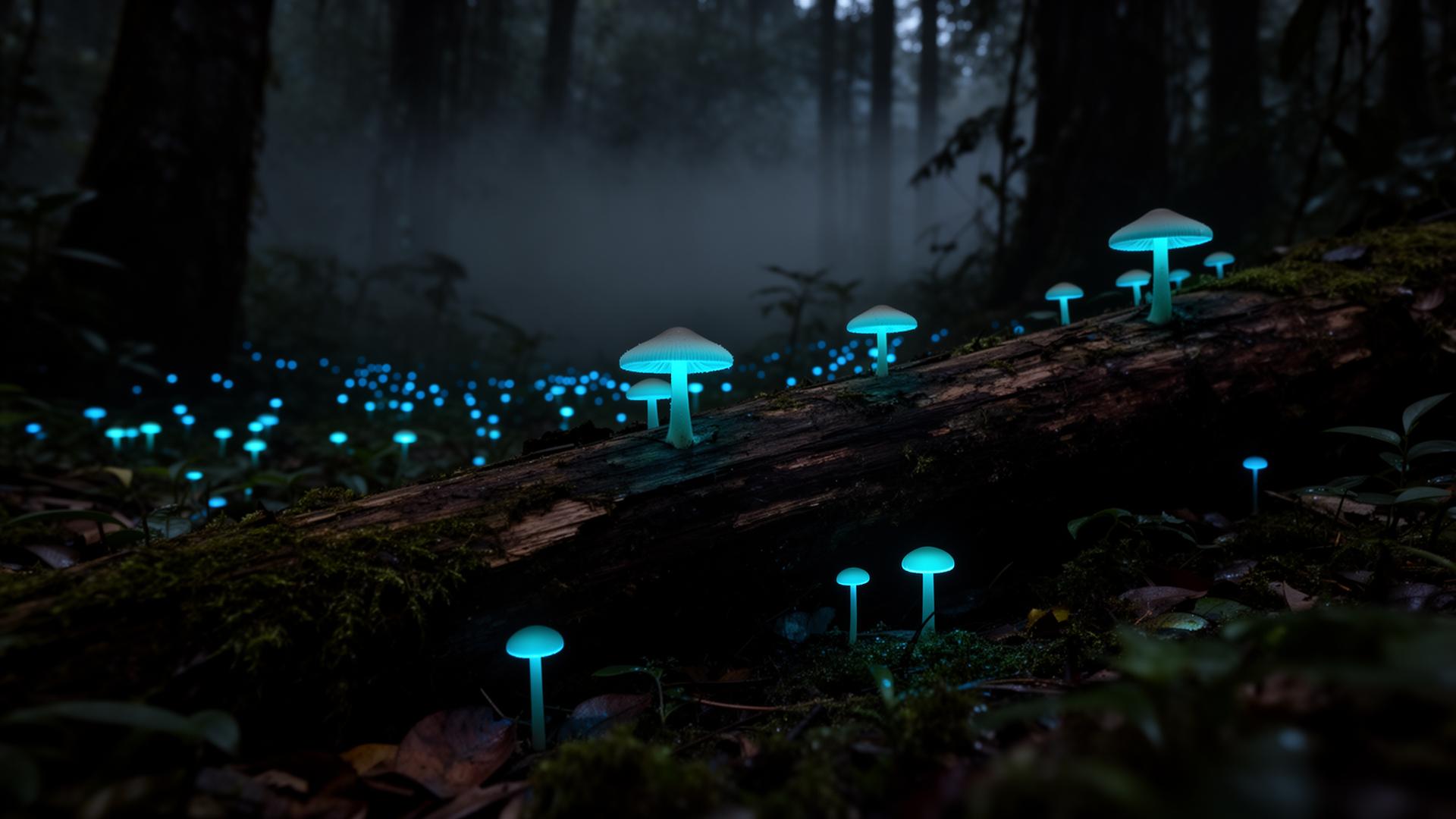
Eight p.m. with a UV lamp and a naturalist — the forest floor glowing with bioluminescent fungi, the eye-shine of a kinkajou in the canopy, the deep call of the smoky jungle frog, a thermos of hot chocolate with cinnamon at the turnaround point.
- 04
The Santa Elena reserve and the continental divide
A morning's hike through the neighbouring Santa Elena reserve to the signpost at the continental divide — one foot in the Atlantic watershed, one in the Pacific, the vegetation changing character in a single step, a picnic of fresh cheese and guava paste at the marker.
- 05
Finca La Bella coffee harvest
A full morning at the neighbouring coffee finca — the red cherry harvest by hand, the depulping and washing in the mountain spring, a cupping session with the farm's head roaster, a small bag of your own lot to take home. Available November through February.
- 06
Canopy zip-line and rappel
A private morning on the reserve's own zip-line system — twelve platforms and three kilometres of cable through the upper canopy, ending with a controlled rappel from a forty-metre ficus tree, a cold pipa fria (young coconut) at the base.
- 07
The Monteverde orchid garden
An afternoon in the private orchid collection of the Tropical Science Center — four hundred species, many endemic, guided by the centre's senior botanist, followed by a lecture and a glass of guaro sour on the veranda.
- 08
Night at the frog pond
A guided evening at the reserve's private research pond — the red-eyed tree frog in full display, the glass frog on its leaf above the water, the deep rumble of the smoky jungle frog, a closing cup of valerian tea at the field station.
How one arrives.
i. Fly to San José or Liberia.
Direct on Avianca, United, Delta, American, Copa or LATAM into Juan Santamaría International (SJO) or Daniel Oduber Quirós (LIR) from most major North American and Latin American cities. A private night at our courtyard guesthouse in the Escazú hills above San José — a converted finca with valley views, a supper of chifrijo and craft beer, the city lights below.
ii. Up the cordillera to Monteverde.
Three hours northwest by Land Cruiser or Toyota HiAce — the Pan-American Highway to Sardinal, then the long unpaved climb into the Tilarán mountains, the temperature dropping twenty degrees, the vegetation shifting from dry forest to cloud forest, the first mist at a thousand metres.
iii. Into the canopy.
A short walk from the trailhead along a moss-lined path to the first suspension bridge — the pavilions appearing in the trees ahead, each one a warm light in the mist. A welcome of fresh pipa fria, a pair of wellington boots, a brief orientation with Carlos, and the long silence of the forest.
A residency begins at five nights — seven to include the full canopy walk system and the coffee harvest, ten for the quetzal season at its peak in March and April.
Our keepers compose each stay by correspondence — a single conversation, often by letter, never by form.