Malabar
Backwaters.
Fourteen pavilions on a private peninsula of the Vembanad, where the rivers of the Western Ghats slow to a stop and the Arabian Sea begins. The oldest medicine in the world and the quietest water in India.
Coordinates
9.5916° N, 76.5222° E
Setting
Private peninsula, Vembanad Lake
Keys
14 heritage pavilions
Season
October–March (dry) · June–September (monsoon for Ayurveda)
"God's own country, the poets called it. We took the phrase seriously and built only what the land would accept."
Malabar Backwaters occupies a six-hectare peninsula of reclaimed coconut grove on the eastern shore of Vembanad — India's longest lake and a Ramsar-protected wetland. Every pavilion is a tharavadu, a Keralan heritage house dismantled from its original village in Alleppey or Thrissur, sailed in by barge, and rebuilt here board by carved board by the same families that first raised them. The black-oxide floors are polished by hand each morning with a coconut husk. The kitchen draws from a one-hundred-and-twenty-acre organic garden across the channel. Twenty-four per cent of every residency funds the Vembanad Fisherfolk Cooperative — gear, schooling, and the slow restoration of the lake itself.
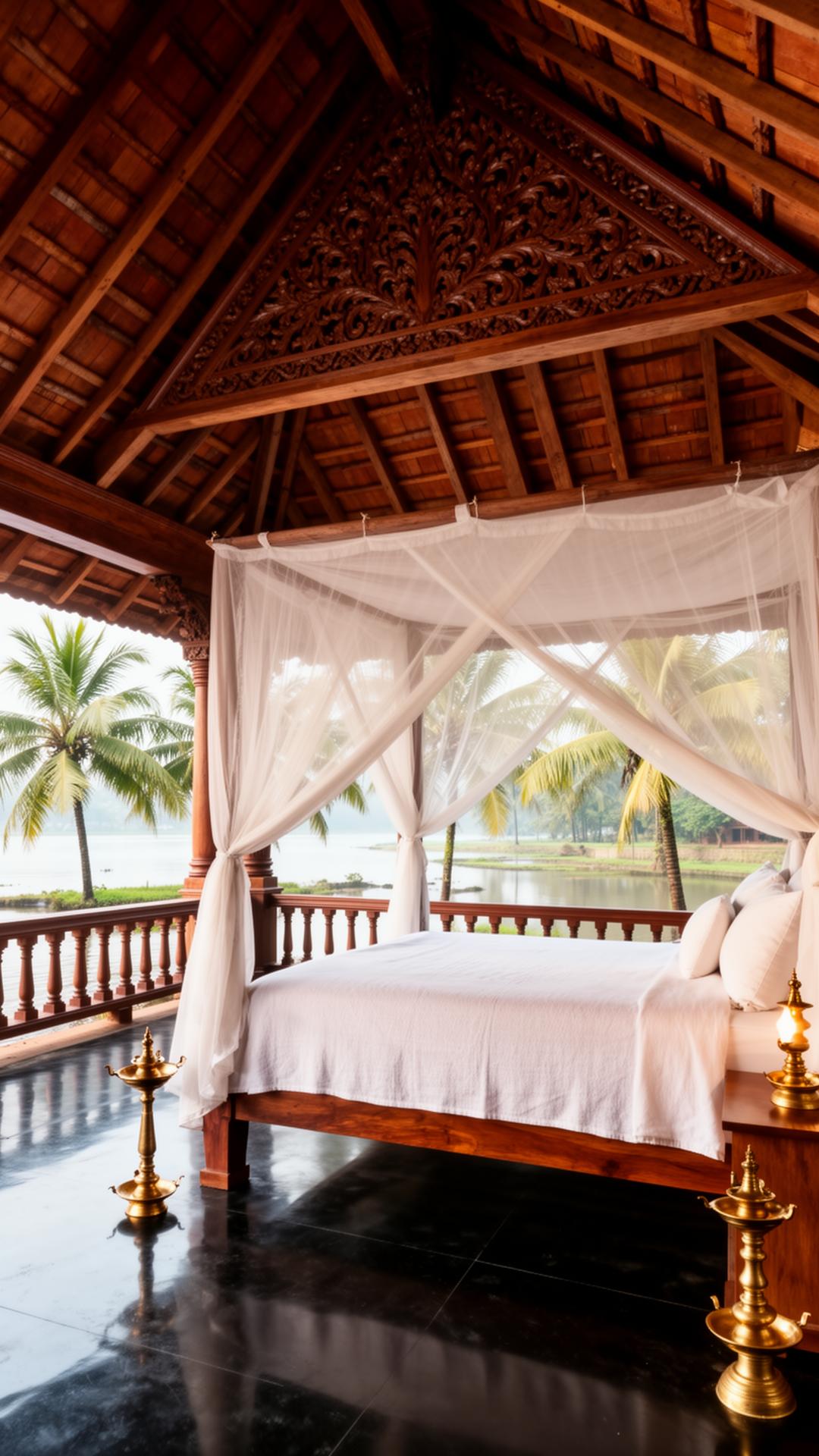
Fourteen heritage houses, each one rebuilt from the village it was born in.
Every pavilion is a single carved-teak structure with a steep tiled roof, a vasti — the open central courtyard — and an outer verandah that runs the full length of the water. Mosquito-netted four-posters, hand-loomed Kannur cotton, brass nilavilakku lamps lit at dusk, copper rain-shower tucked into a private garden of jasmine and curry leaf. No televisions. The only screen is the lake itself.
- i
Coconut Pavilion
95 m² · Coconut grove, lake at the foot of the garden
from USD 1,400 - ii
Backwater Pavilion
130 m² · Private jetty, open lake to the west
from USD 1,950 - iii
Tharavadu Suite
180 m² · Two-storey heritage house, vasti courtyard, plunge
from USD 2,800 - iv
The Kettuvallam Residence
320 m² · Private moored houseboat, two bedrooms, chef and crew
from USD 6,400
A rice barge under sail, ninety feet of bent coconut and coir rope.
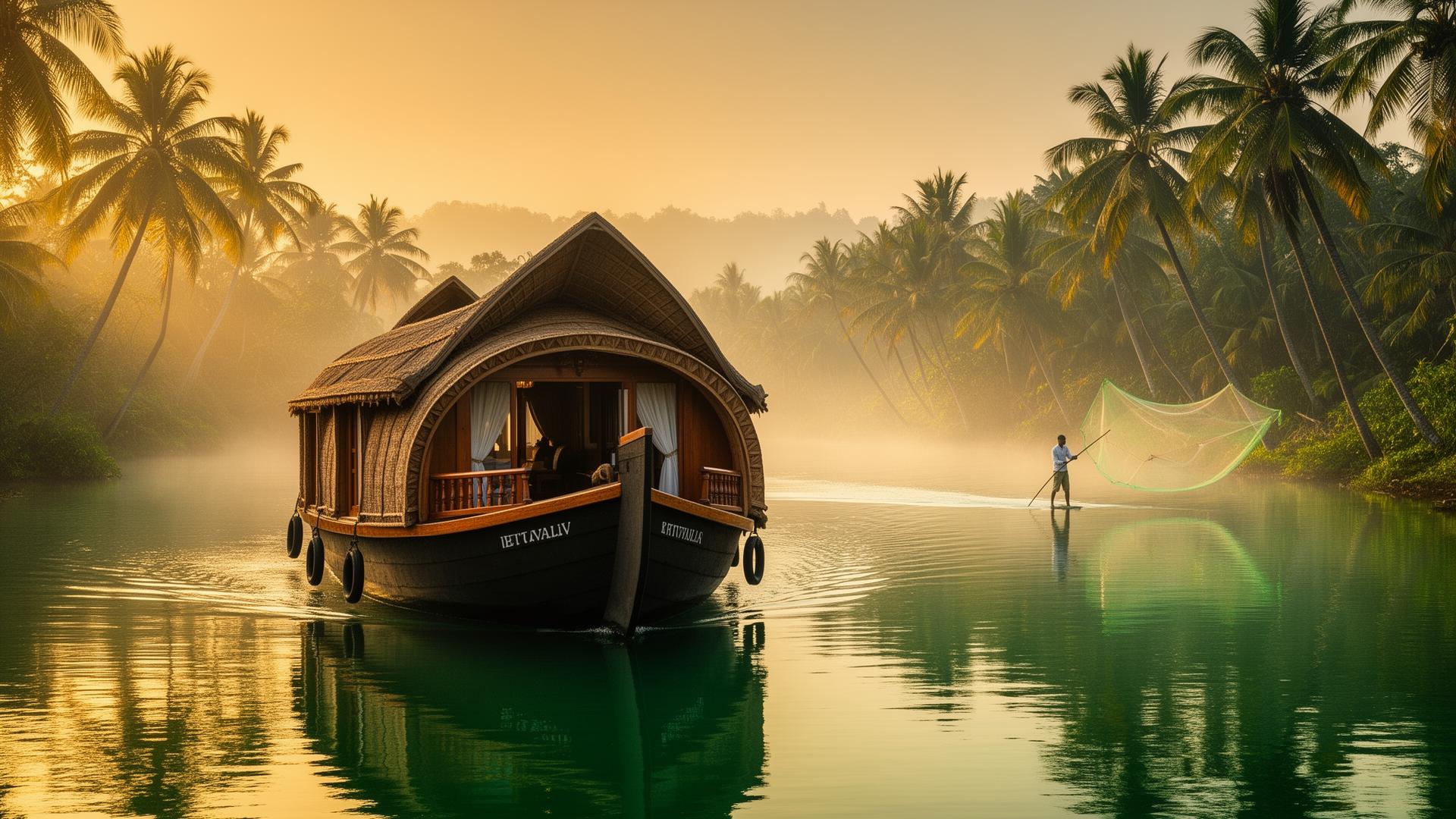
Each pavilion is paired with private use of a restored kettuvallam — the traditional Keralan rice barge, built without a single nail, stitched together with coir rope and sealed with cashew-shell resin. A captain, a poler, and a chef. Cast off after breakfast, drift through the narrow canals of Kumarakom, lunch on the deck under the thatch, return at dusk through a corridor of fireflies.
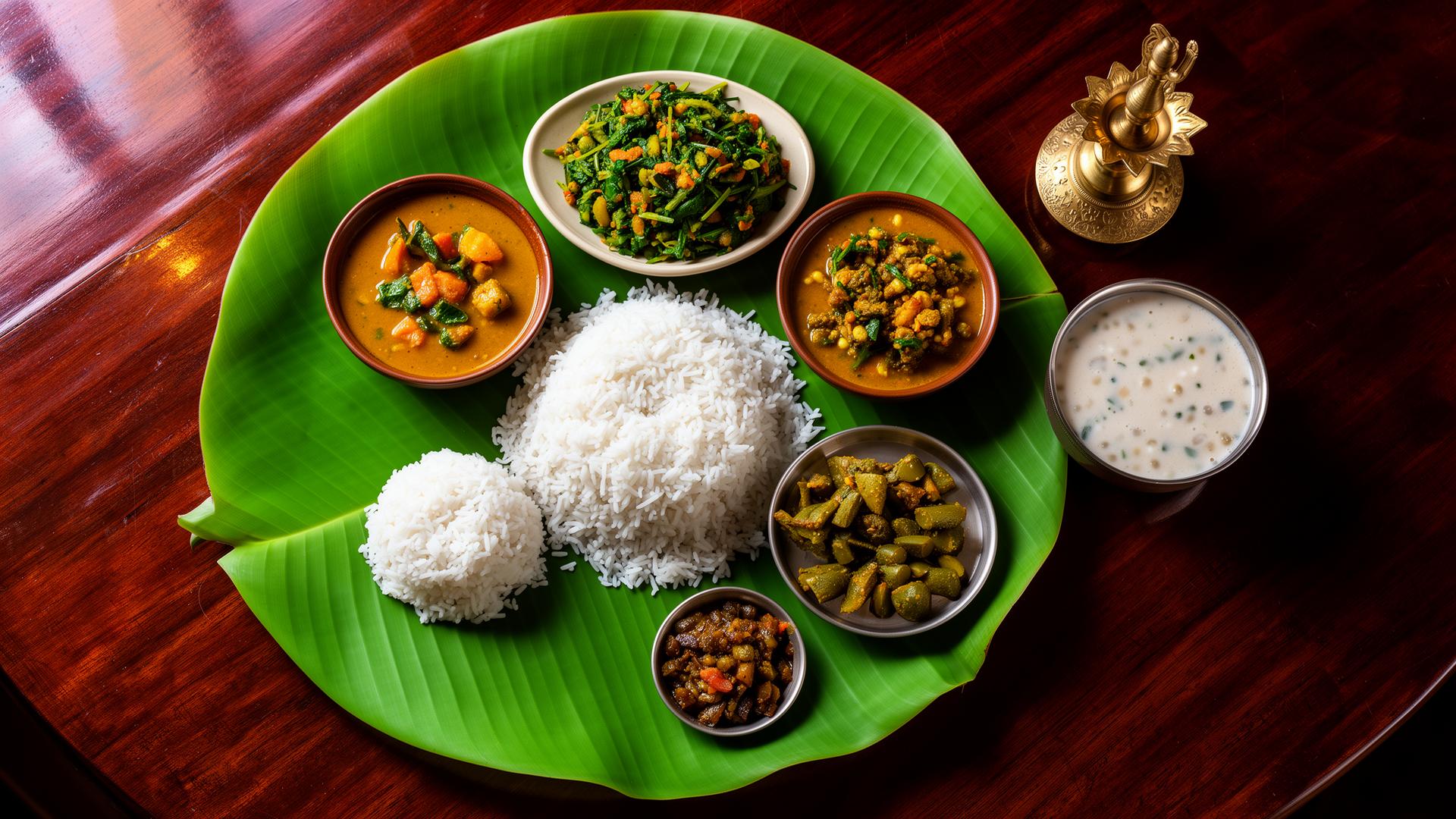
A sadya on a banana leaf, twenty-six dishes, one quiet hour.
Chef Lakshmi Pillai — third-generation cook from a Nair tharavadu in Palakkad — sets a daily sadya at noon: rice from the Kuttanad paddies (the only land in India farmed below sea level), olan in coconut milk, avial, thoran, three pickles, a sambar that takes six hours, and payasam finished with toasted cashew. In the evening, a karimeen pollichathu — pearlspot fish wrapped in banana leaf and roasted over coconut coals — served on the lake-facing deck. The cellar runs to old-vine Riesling and Albariño; the bar to Old Monk, arrack, and a tamarind sour we have spent three years refining.
- 01
Ayurveda by lineage
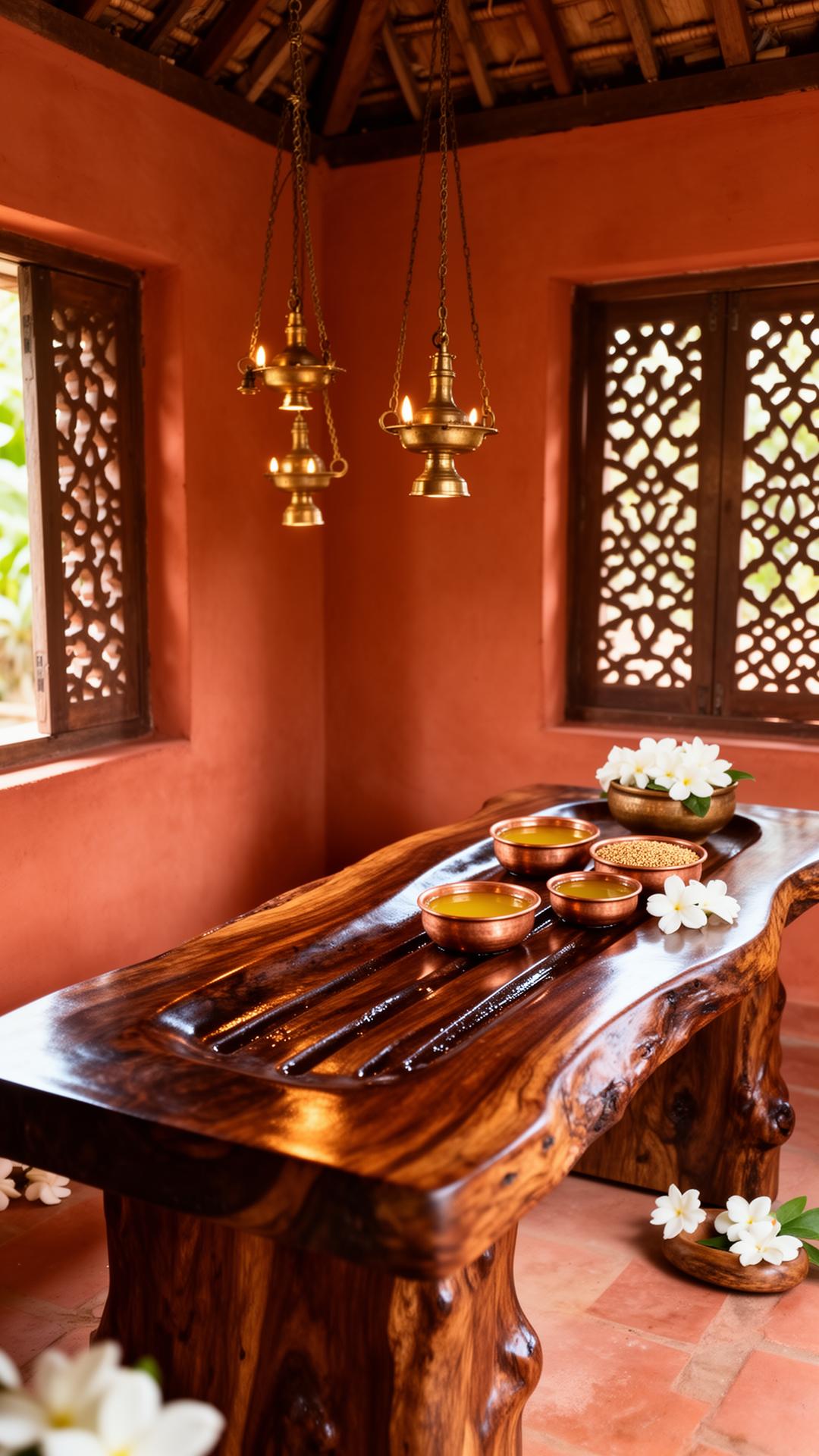
A two-week panchakarma cycle under Vaidya Krishnan Namboothiri, eighth-generation Ashtavaidya from the Kottakkal tradition. Pulse diagnosis at dawn, abhyanga oil massage twice daily, a kitchen that cooks only what your dosha will accept.
- 02
Kettuvallam under sail
An overnight on a private kettuvallam through the Kumarakom canals — cocktails on the upper deck at sunset, dinner at the table, sleep on the water with the doors open to the fireflies.
- 03
Munnar by vintage Ambassador
A two-day excursion into the Western Ghats — driven up the hairpins in a restored 1962 Hindustan Ambassador, tea at a colonial planter's bungalow at Lockhart, dawn over the Anaimudi peak at three thousand metres.
- 04
An evening of Kathakali
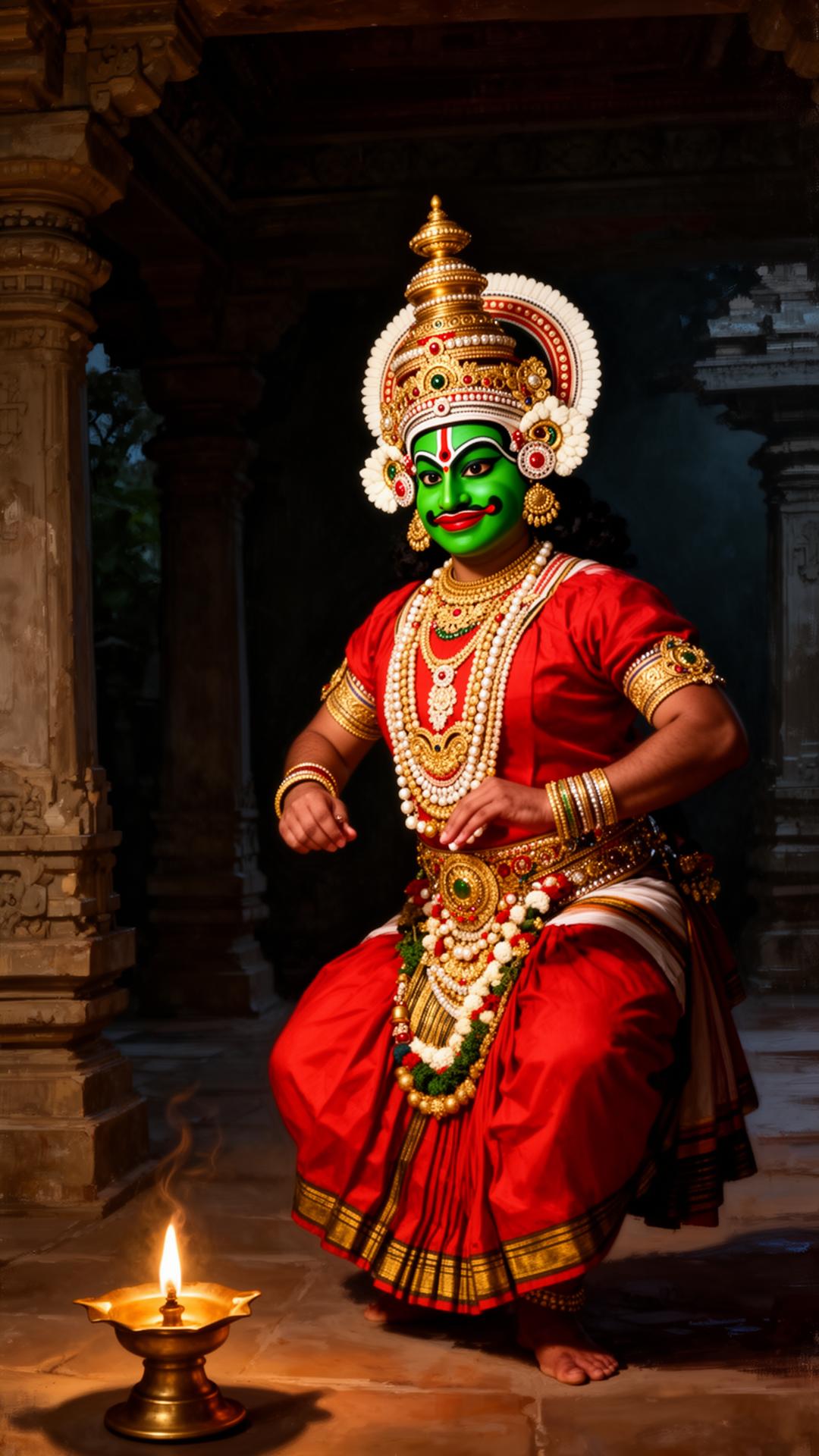
A private performance in the open theatre at dusk — three hours of makeup applied before your eyes, then the Mahabharata told in mudra and footfall, a single brass lamp the only light.
- 05
Periyar at first light
A bamboo-raft crossing of the Periyar reservoir at dawn with a Mannan tribal tracker — wild elephant, gaur, the smallest chance of a tiger, the certainty of a hundred bird-calls before breakfast.
- 06
Spice walk at Kumily
A morning with the cardamom and pepper growers of the Cardamom Hills — the world's finest black pepper, picked from the vine, ground at the gate, sent home in a brass tin with your name on the lid.
- 07
Kalaripayattu at dawn
A private session with Gurukkal Sanjeev in the sunken earthen pit of our kalari — the oldest martial art in the world, taught here in Kerala for two thousand years. One hour of breath, balance, and the long flexible urumi sword.
How one arrives.
i. Fly to Kochi.
Direct from London, Singapore, Dubai and Doha into Cochin International. We meet you airside with cold lime soda, a damp Kannur cotton towel, and a chauffeur in a charcoal-grey Mercedes.
ii. Ninety minutes south, through the coconut country.
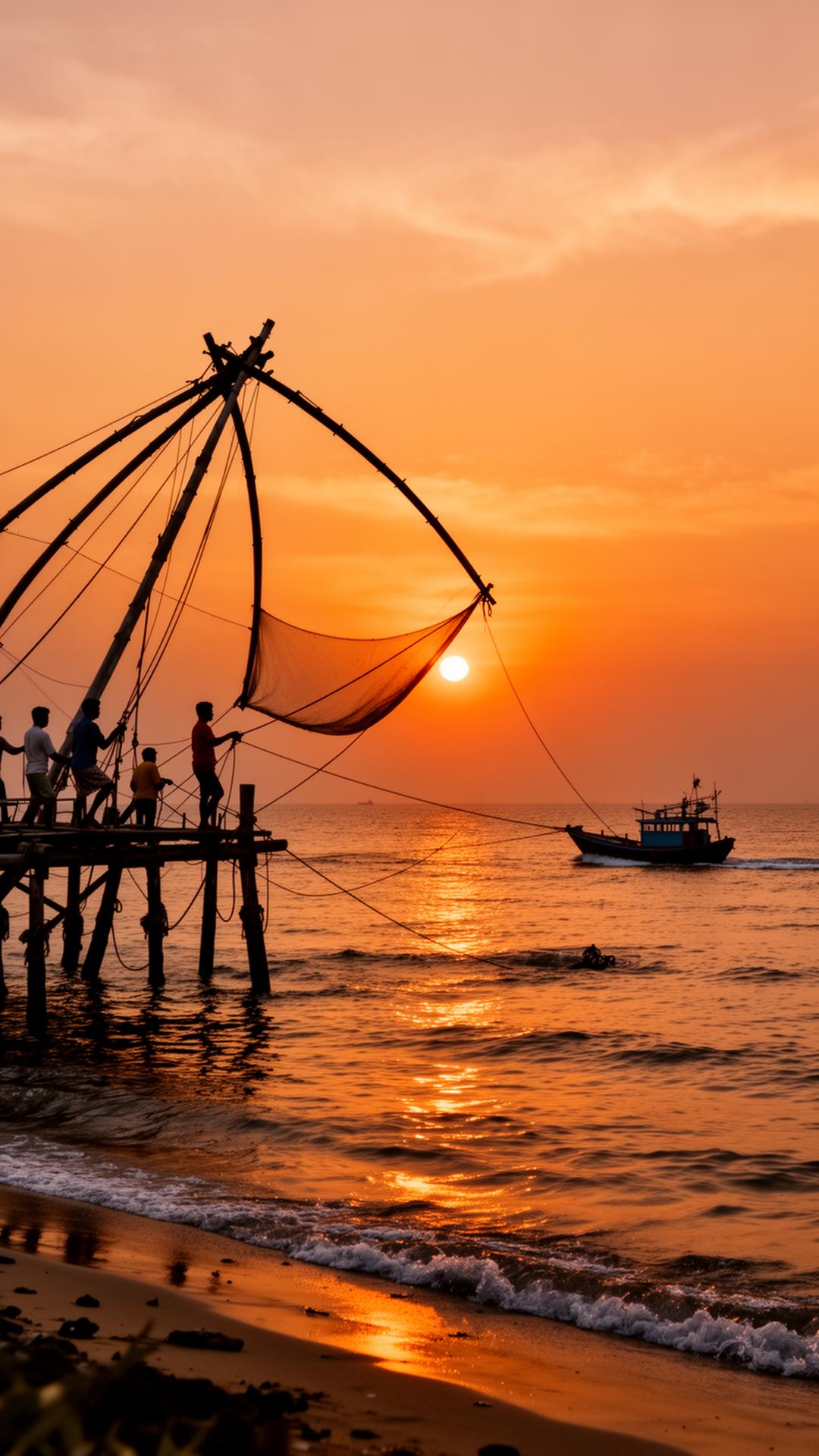
Down the coast road through Alappuzha to the private jetty at Muhamma. Stop at the Chinese fishing nets of Fort Kochi for the photograph; tea and a banana fritter at a roadside chaya kada on the way.
iii. Across the lake by snake-boat.
The final crossing of Vembanad — twenty minutes by chundan vallam, the long, low racing-boat polished in cashew oil. Eight oarsmen in white mundu, a single drum at the stern, the lights of the pavilions ahead through the dusk.
A residency begins at five nights, ideally fourteen for the full Ayurvedic cycle.
Our keepers compose each stay by correspondence — a single conversation, often by letter, never by form.