Hajar
Sanctuary.
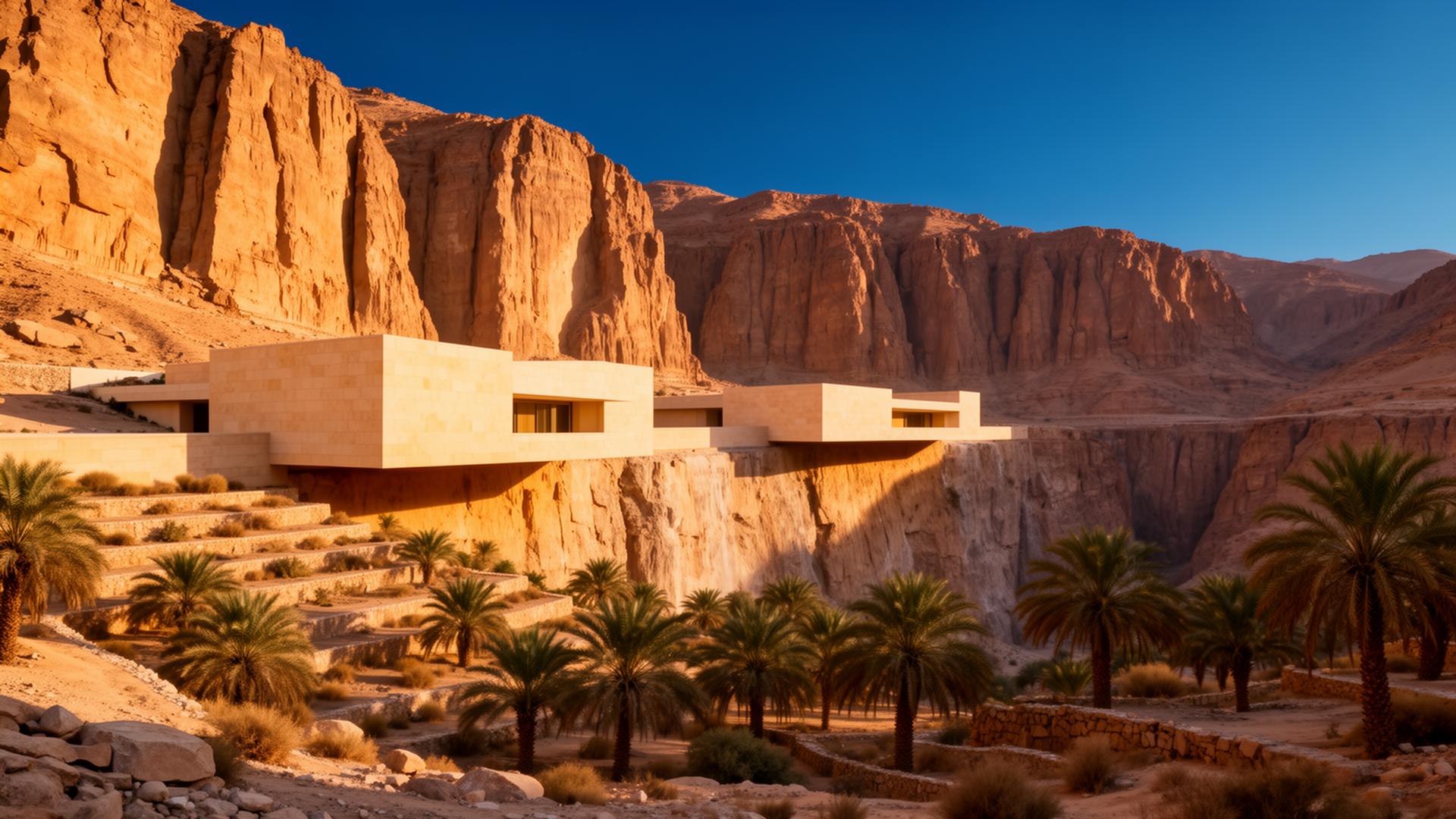
Sixteen pale-stone pavilions cantilevered over a limestone canyon at 2,000 metres on the Saiq Plateau — the green roof of Arabia, walled off from the heat below by the long ridge of the Jebel Akhdar.
Coordinates
23.0742° N, 57.6597° E
Setting
Saiq Plateau, Jebel Akhdar, Al Hajar range
Keys
16 honey-stone pavilions · cliff-edge canyon site
Season
October–April (cool mountain air at 2,000 m)
"The mountain teaches the same lesson the desert does, only more slowly: that silence is a material, and that good architecture is the art of arranging it."
Hajar Sanctuary is built into a private shelf on the southern rim of the Wadi Bani Habib canyon — the deepest cut of the Saiq Plateau, walled in honey-coloured Jurassic limestone and terraced for a thousand years in pomegranate, walnut, damask rose and date. Every pavilion is faced in stone quarried from the spoil of its own foundations, raised by master masons of the Riyam guild and roofed in rammed earth above palm-frond ceiling beams. The plateau is held under a long-term cultural lease with the Ministry of Heritage and the village of Al Aqr; twenty per cent of every residency funds the restoration of the falaj irrigation channels that have watered these terraces since the sixth century and now feed the rose harvest each April.
Sixteen pavilions, in the stone of the mountain itself.
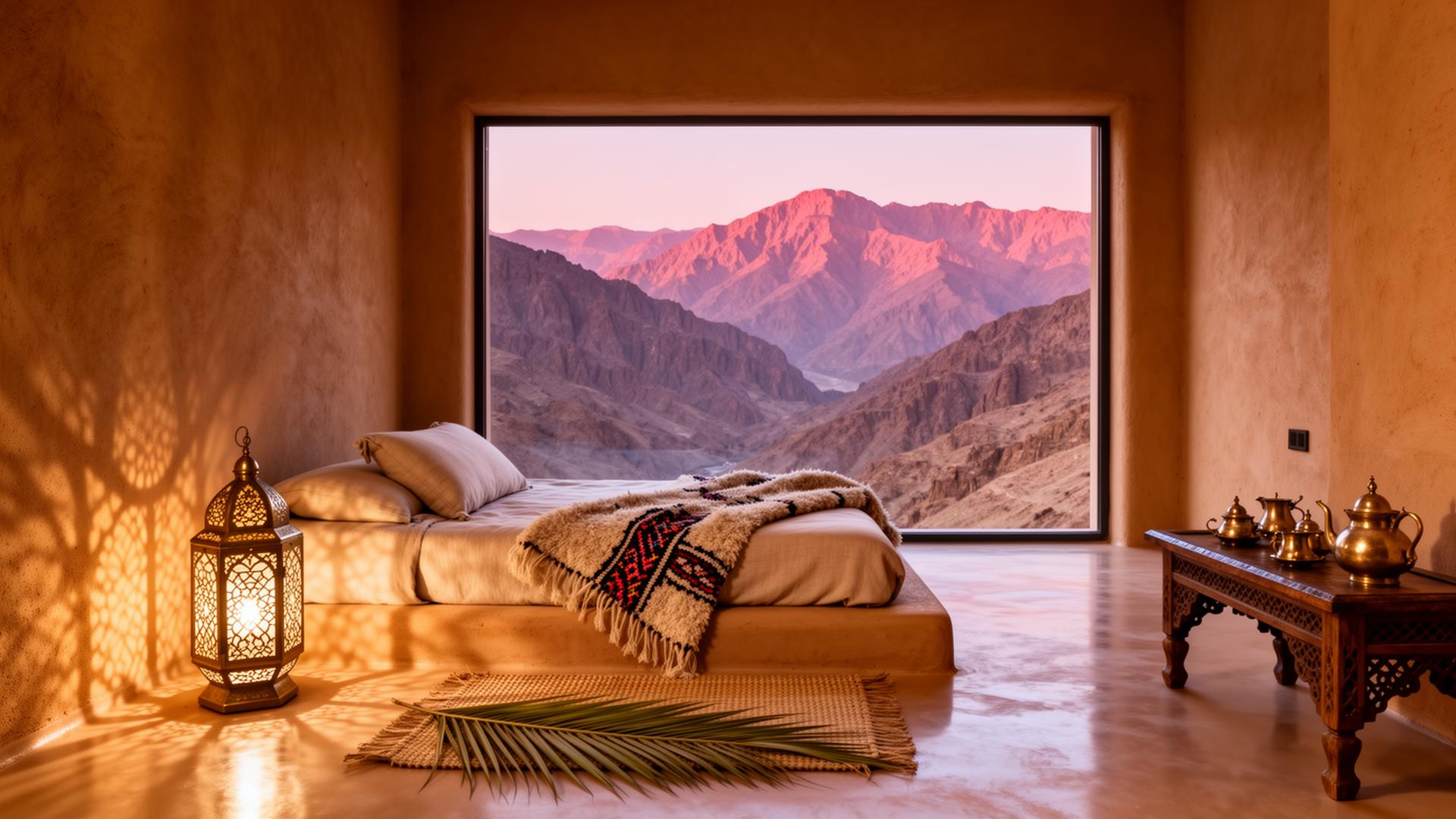
Each pavilion is a single long room of honey-coloured local stone and warm tadelakt — a low platform bed in undyed Egyptian linen and a hand-loomed Bedouin camel-wool throw from the looms of Sur, a brass arabesque lantern from the Mutrah souq casting filigreed shadow at dusk, polished tadelakt floors warmed below, woven palm-frond mats, and a single deep frameless window framing the canyon and the long ridge of Jebel Shams. A carved sidul-wood low table set with a brass coffee dallah and three small cups, a copper rain-shower in a private courtyard cut into the cliff.
- i
Falaj Pavilion
80 m² · Terraced gardens, falaj water channel, walnut grove
from USD 1,500 - ii
Canyon Pavilion
110 m² · Cantilevered over Wadi Bani Habib, plunge in stone
from USD 2,200 - iii
Rose Pavilion
160 m² · Private damask rose garden, hammam, fire courtyard
from USD 3,400 - iv
The Sheikh's Majlis
300 m² · Two pavilions, library, courtyard pool, butler, oud
from USD 7,200
Falaj-watered terraces, the rose harvest, and the oldest gardens in Arabia.
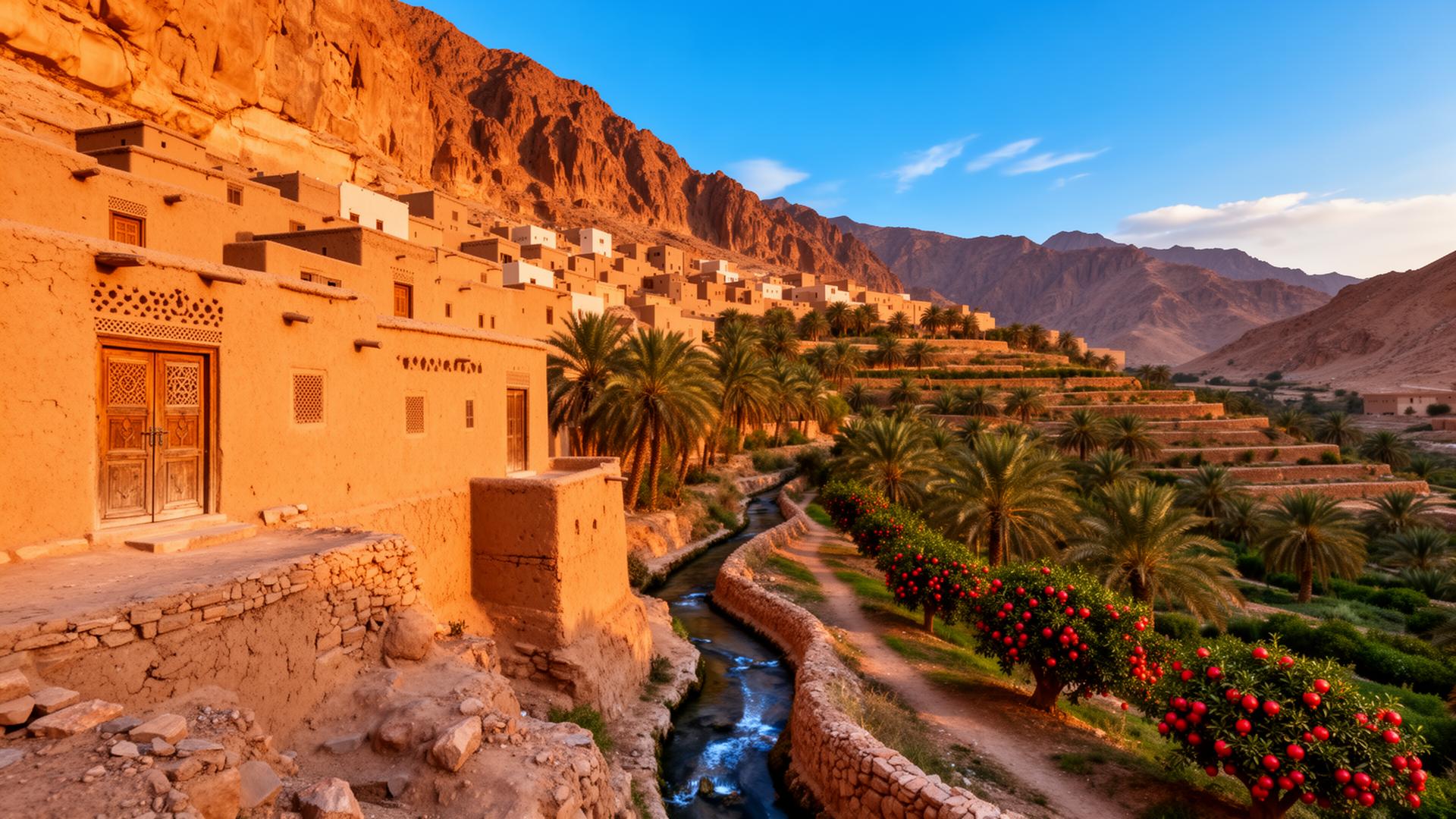
The Saiq Plateau is a green island floating above the bone-dry heat of the Omani interior — a thousand-year mosaic of stepped pomegranate and walnut groves, watered by falaj channels cut into the limestone in the sixth century and still flowing by the same gravity today. In April the plateau turns pink with damask rose, distilled in copper alembics in the courtyard of the village mosque into the rose-water that perfumes every cup of kahwa in the country. Our guide Khalfan, born to a family of falaj-keepers in Al Aqr, leads slow morning walks through the terraces — a stop at the rose-still, a glass of pomegranate juice from the press, an hour on a carpet in the shade of a four-hundred-year-old walnut.
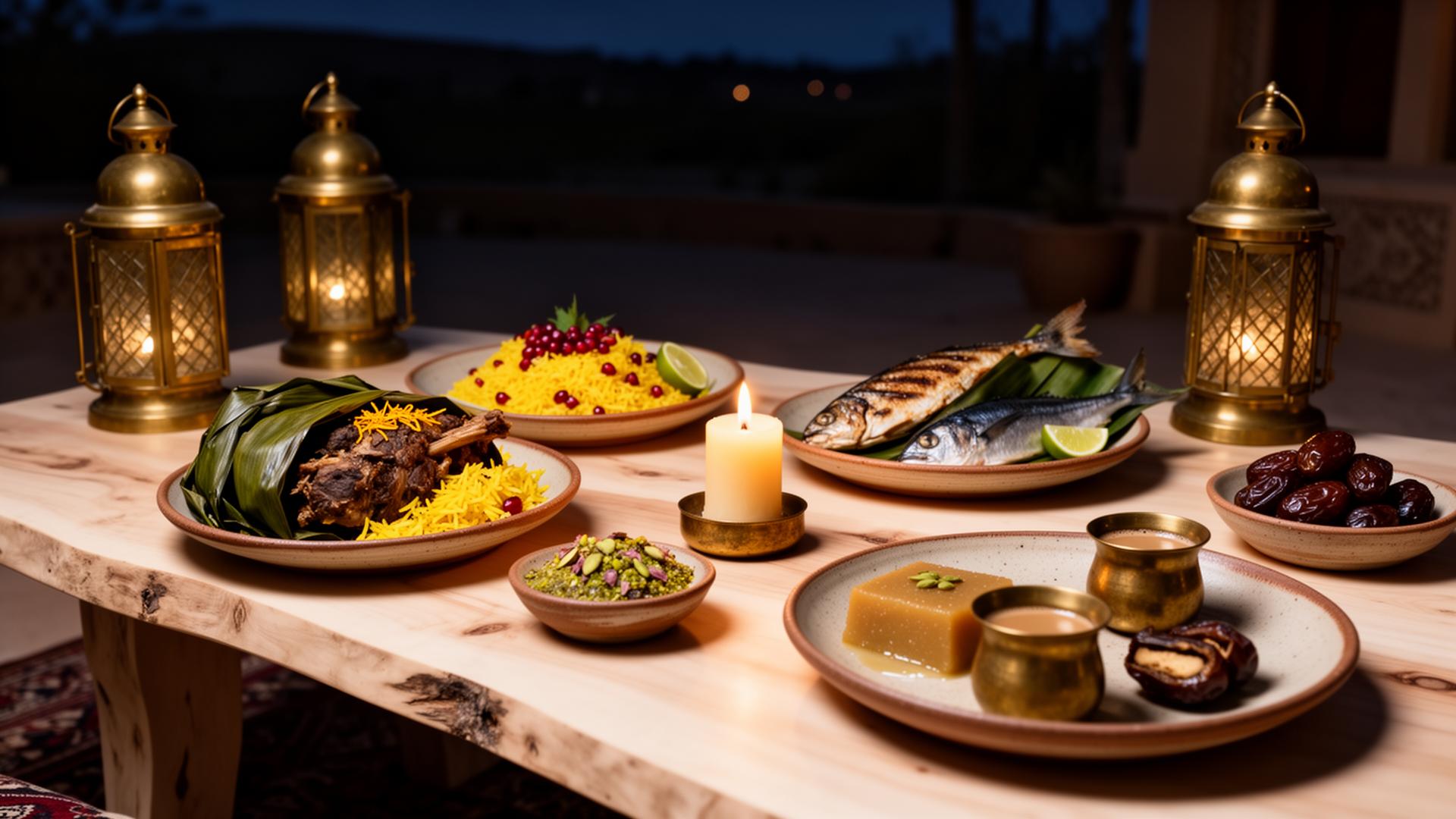
Shuwa pulled from the earth oven, kahwa poured from the brass dallah.
Chef Layla Al Hinai — born in Nizwa, trained at Noma's MAD school in Copenhagen — sets a nightly menu rooted in the plateau and the coast: shuwa lamb rubbed in our own bezar spice, wrapped in banana leaf and buried for thirty hours in a stone-lined fire pit; saffron majboos rice with pomegranate seeds from the terrace below; grilled hammour from the Sur coast with preserved Omani lime; a closing rose-and-pistachio halwa stirred in a copper kazan for four hours at the firepit; small brass cups of cardamom-and-saffron kahwa poured from a hammered dallah, with fresh khalas dates from the oasis at Al Hamra.
- 01
Dawn rim walk above Wadi Bani Habib
Five a.m. with Khalfan along the southern rim of the canyon — fog rising from the depth, a kahwa-and-dates breakfast laid on a carpet at the viewpoint as the cliffs turn from grey to rose to gold.
- 02
Frankincense in the Dhofar groves
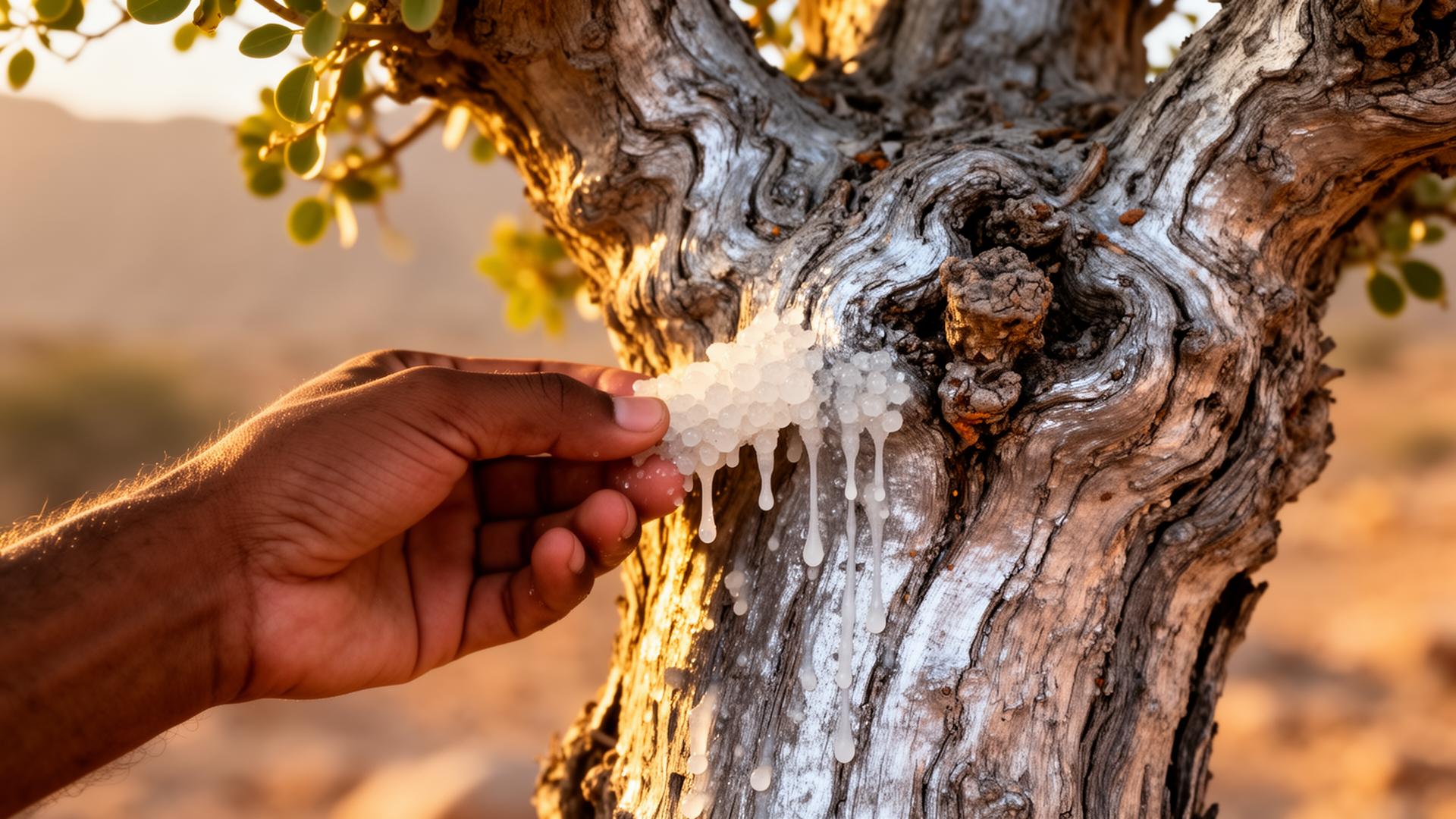
A private day by light aircraft to Salalah and the Wadi Dawkah grove — five thousand years of Boswellia sacra under UNESCO protection, the first cut of the season with the master tapper, an hour at the souq of Hafa with a glass of mint tea and a small bag of green hojari resin.
- 03
Wadi Bani Khalid pools
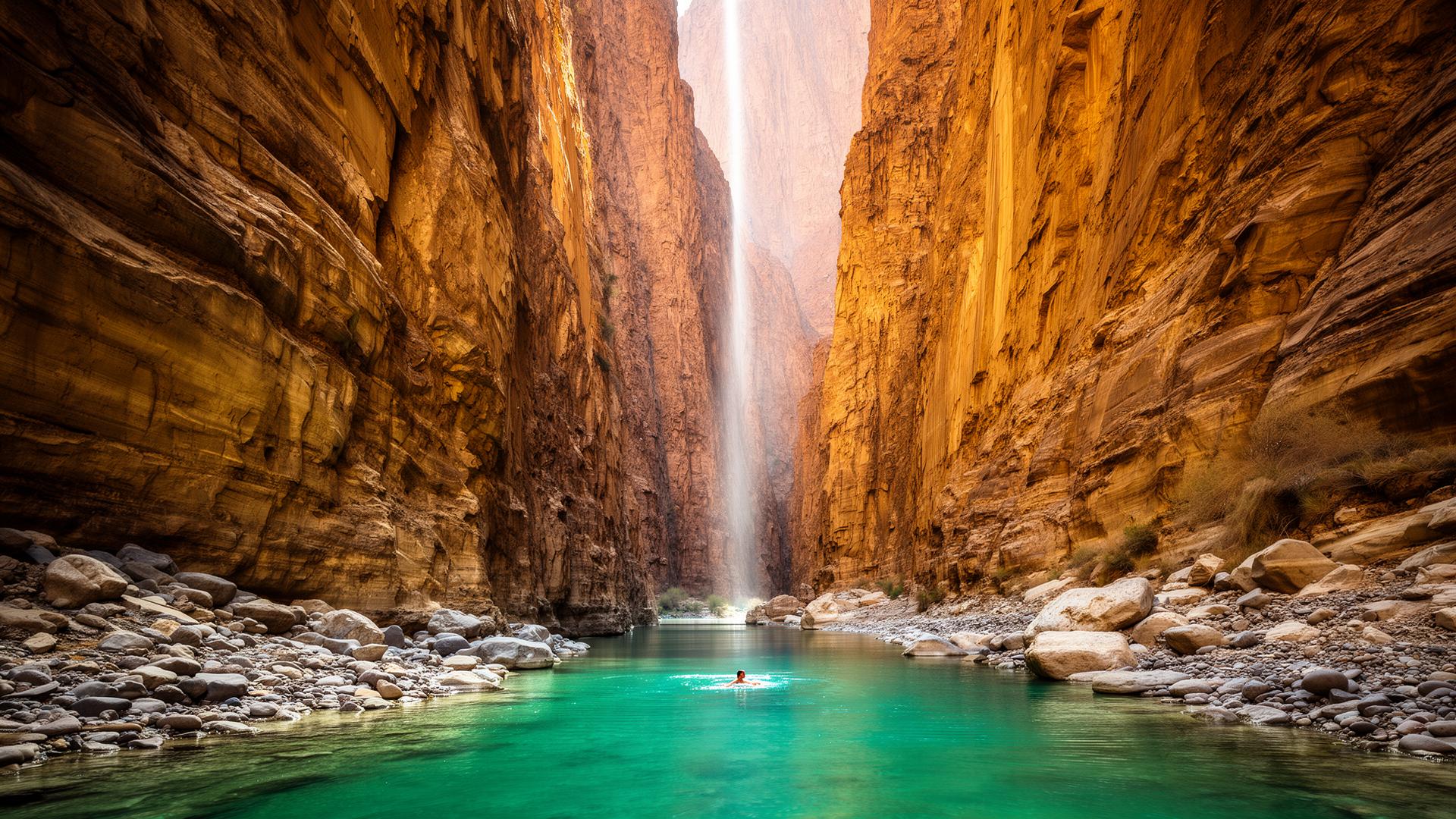
A morning's drive to the great emerald canyon pools of Wadi Bani Khalid — a long swim through the gorge to the cave at the back, a picnic of grilled hammour and Omani sourdough on the white limestone, a quiet hour reading on the canyon ledge.
- 04
Empty Quarter caravan
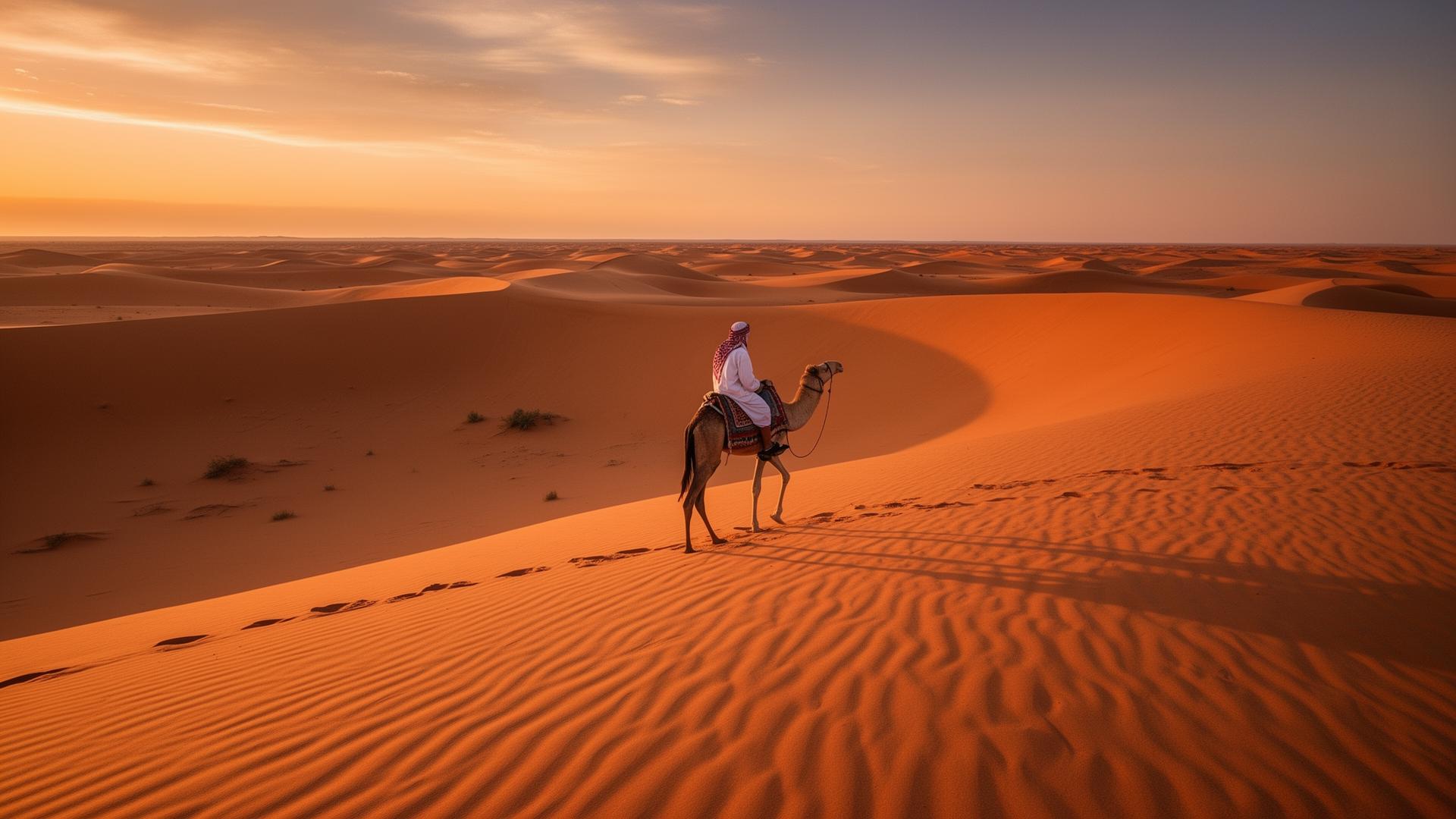
Three days by 4×4 and camel from the edge of the plateau into the Rub al Khali — wool tents at the Wahiba dunes, a Bedouin oud beside the fire, a long supper of mishwi lamb under the southern constellations, and the dawn ride out across the apricot-coloured sand sea.
- 05
Damask rose harvest
Three weeks in April when the plateau is pink to the horizon — a morning picking blooms before the heat with the women of Al Aqr, an hour in the copper still as the first rose-water of the season drips into the receiver, a small flask of attar to take home.
- 06
Misfat Al Abriyeen and the falaj walk
An afternoon in the cliff-village of Misfat with the village historian — the carved doors of the old quarter, the five-hundred-year-old falaj run, a barefoot walk along the watercourse through the date palms, a quiet supper on a rooftop at dusk.
- 07
Sur dhow harbour and the turtles of Ras al Jinz
A long private drive to the coast — the still-operating dhow yards of Sur where the great teak hulls are built without a single drawing, lunch of grilled kingfish on the harbour wall, and a midnight watch at Ras al Jinz as the green turtles return to nest on the same beach they were born on.
- 08
Stargazing on Jebel Shams
A late evening at the rim of Oman's Grand Canyon with a Muscat astronomer — a Bedouin carpet at 3,000 metres, a six-inch reflector, the spine of the Milky Way directly overhead, a thermos of cardamom kahwa for the cold hour.
How one arrives.
i. Fly to Muscat.
Direct on Oman Air from London, Frankfurt, Zurich, Paris, Singapore, Mumbai and Bangkok into Muscat International. A private night at our courtyard hostel in the Old Muttrah quarter — carved teak doors, a sea-facing roof, a supper of grilled hammour, the call to prayer carrying across the corniche at dusk.
ii. Inland to Birkat Al Mouz and the mountain road.
Two hours west by Land Cruiser through the date oases of Birkat Al Mouz and the great round fort of Nizwa, past the silver souqs and the Friday goat market, to the foot of the Saiq escarpment. A cold karak tea, a damp rose-water cloth, and the long switchback climb.
iii. Up the Jebel Akhdar to the canyon.
An hour climbing the cliff road to 2,000 metres — the air cooling thirty degrees in thirty minutes, the smell of juniper, the first sight of the terraces. A small brass bell at the gate, frankincense burning in the courtyard, kahwa and dates poured before a word is spoken.
A residency begins at six nights — eight for the Empty Quarter caravan, ten to take in the frankincense groves of Dhofar.
Our keepers compose each stay by correspondence — a single conversation, often by letter, never by form.