Essequibo
Canopy.
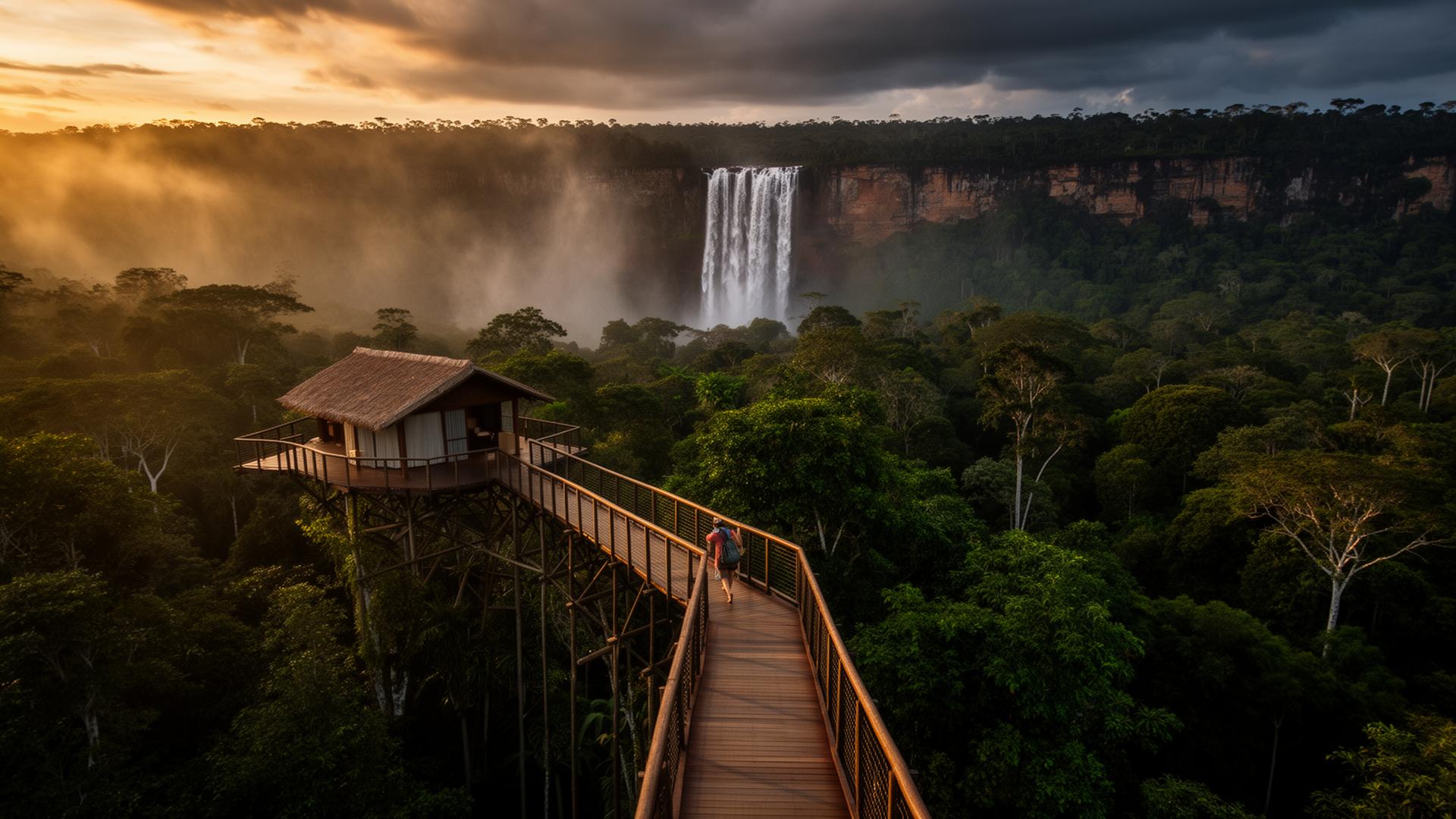
Twelve pavilions, forty metres above the forest floor. The river below is black; the night is loud with what we no longer hear at home.
Coordinates
4.3327° N, 58.7589° W
Setting
Iwokrama rainforest
Keys
12 canopy pavilions
Season
September–April
"We did not build above the trees. The trees agreed, after long correspondence, to hold us."
Essequibo Canopy was raised over five years in partnership with the North Rupununi District Development Board and the Iwokrama International Centre. Every pavilion is suspended by tensioned cable from four mature greenheart trees, touching the trunks at four small steel collars and nowhere else. Not a single canopy tree was felled. Hardwoods are reclaimed from old mining infrastructure on the lower Essequibo; thatch is ité palm cut on a four-year rotation by the village of Surama.
Twelve pavilions, all in the canopy.
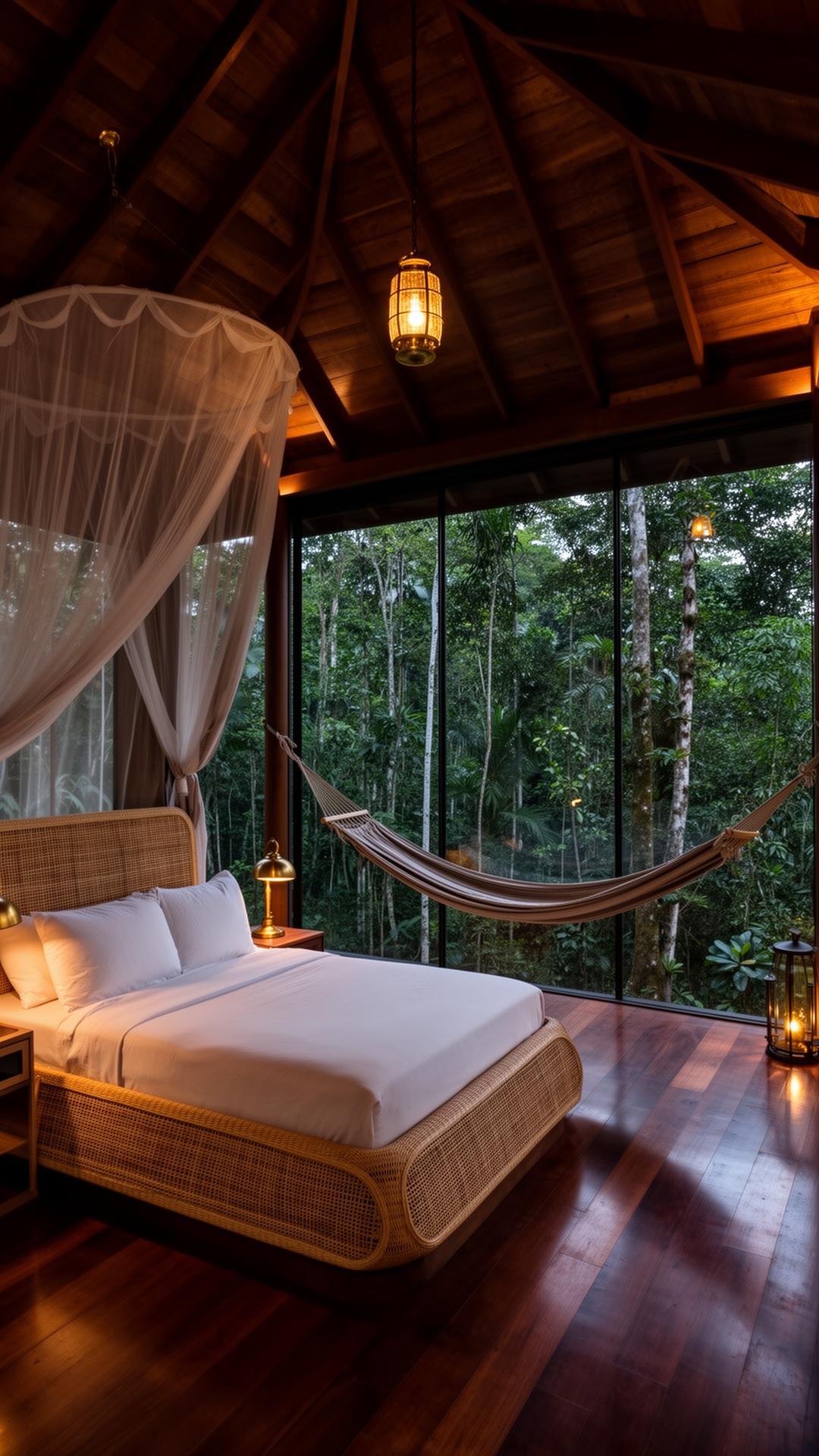
Each pavilion is a single octagonal room of oiled purpleheart with a wraparound deck, an outdoor copper rain shower, a hand-tied silk hammock, and a four-poster draped in fine cotton netting. No televisions. No locks on the doors. The only sound is the forest, which is rarely silent.
- i
Canopy Pavilion
70 m² · Mid-canopy, eastern light
from USD 1,950 - ii
Emergent Pavilion
95 m² · Above the crowns, two decks
from USD 2,600 - iii
River Pavilion
120 m² · Overlooking the black-water creek
from USD 3,200 - iv
The Greenheart
210 m² · Two rooms, library, plunge
from USD 5,400
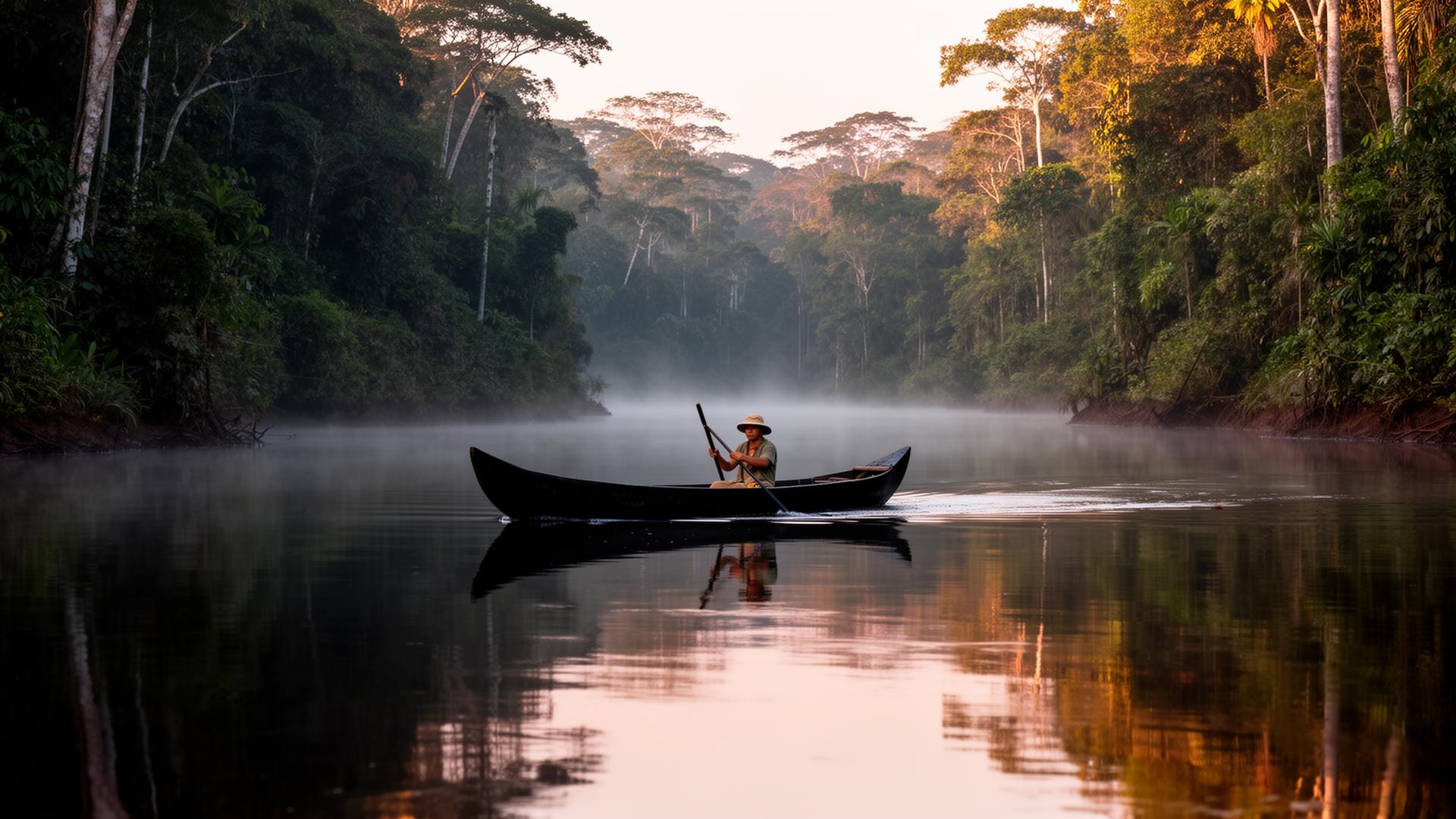
A black mirror, drawn from the Essequibo.
Each dawn a guide from Fairview poles a corial — a hand-hewn dugout — into a tributary so still it doubles the forest. You will pass giant otter, hoatzin, perhaps the broken surface of an arapaima. Conversation is rare. The river prefers it.
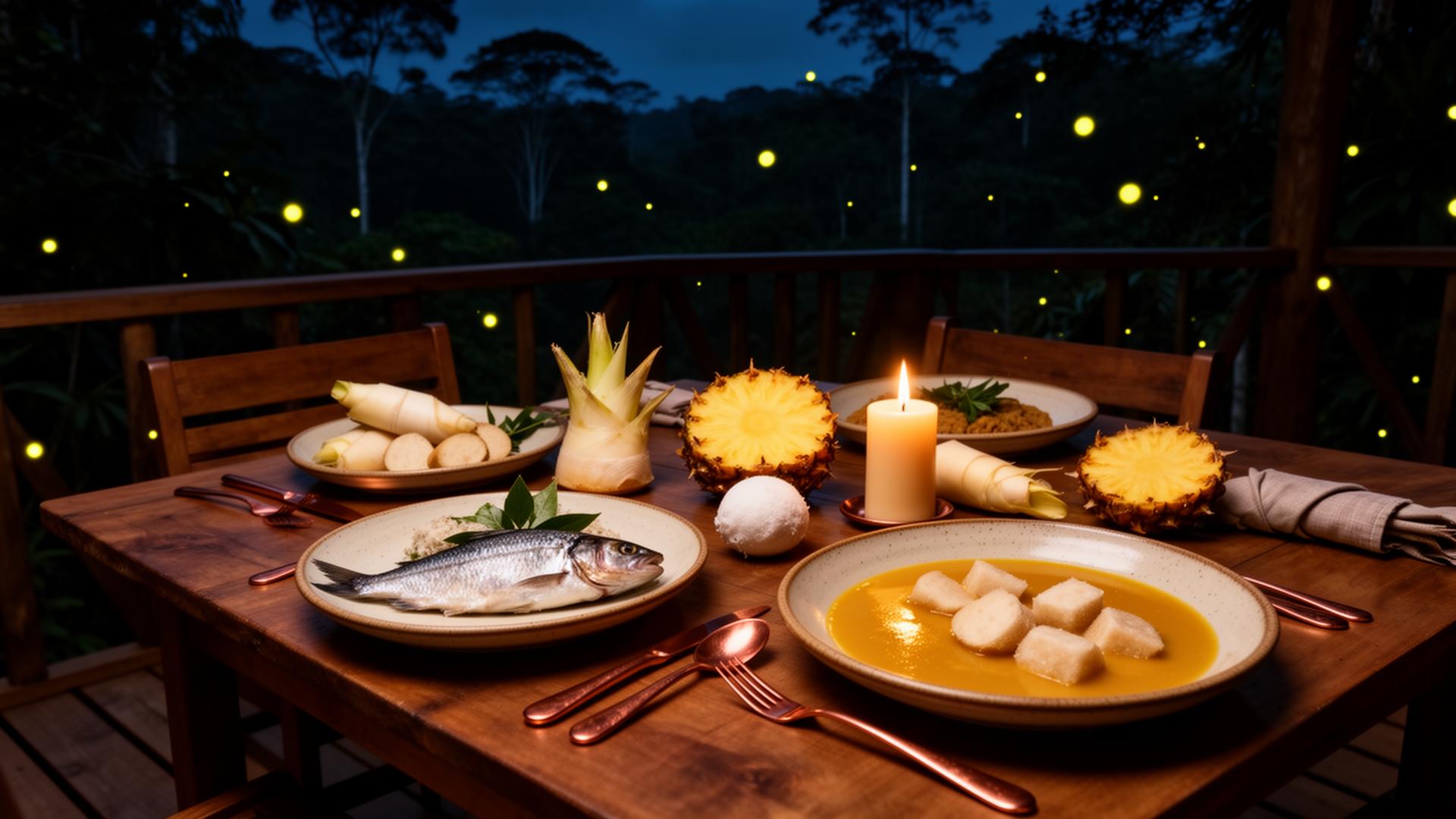
Six seats above the canopy. The forest is the larder.
Chef Delven Adams cooks a single nightly menu drawn from cassava, wild tucupi, pacu from the river, heart of palm, jamoon, smoked pineapple from the Rupununi savannah. Plates are unglazed clay fired by Wapichan potters in Aishalton. The wine list is short and entirely South American.
- 01
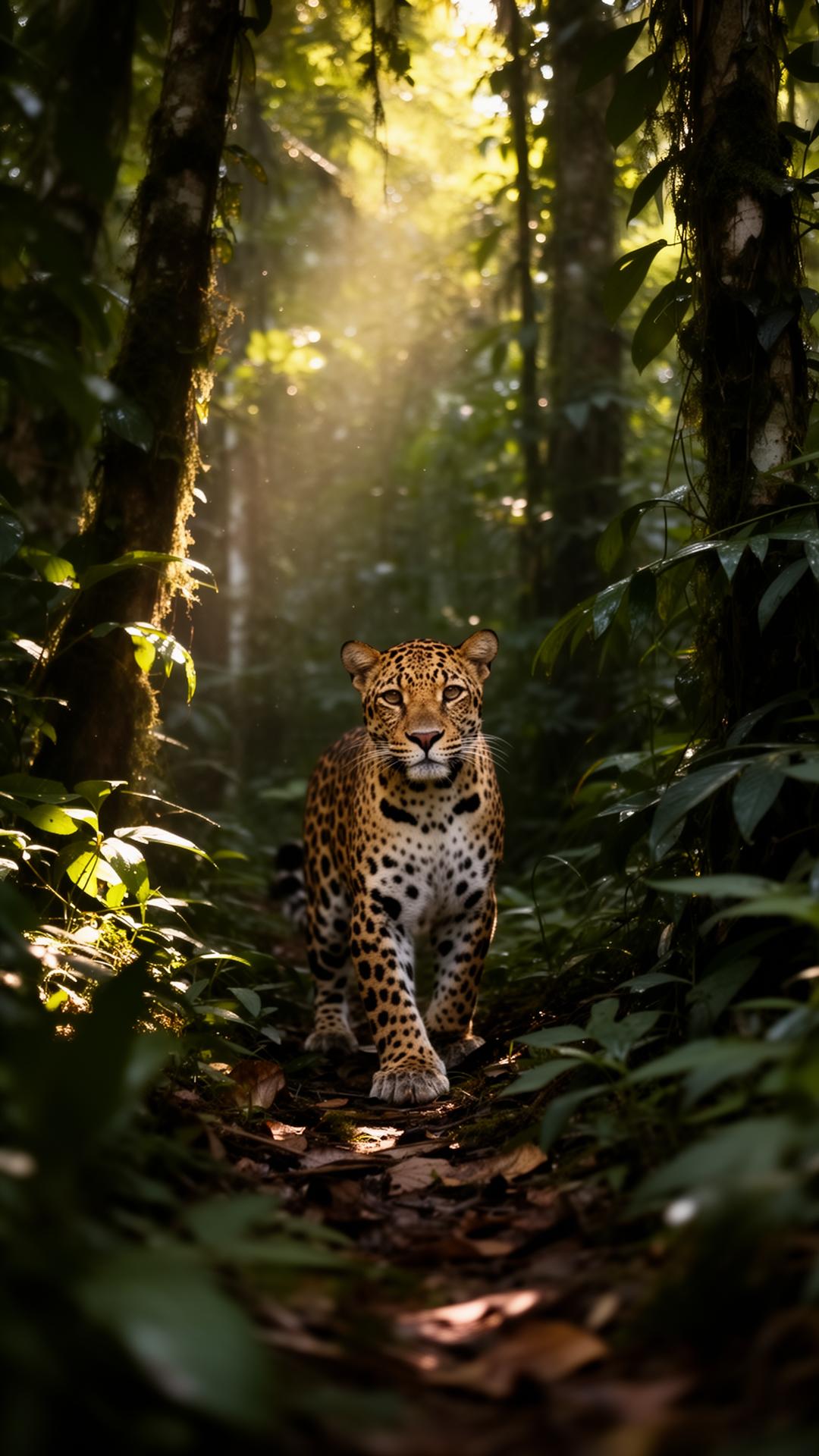
Jaguar tracking on foot
Two days with Ron Allicock, the country's most respected tracker. No promises, only respect.
- 02
Helicopter to Kaieteur Falls
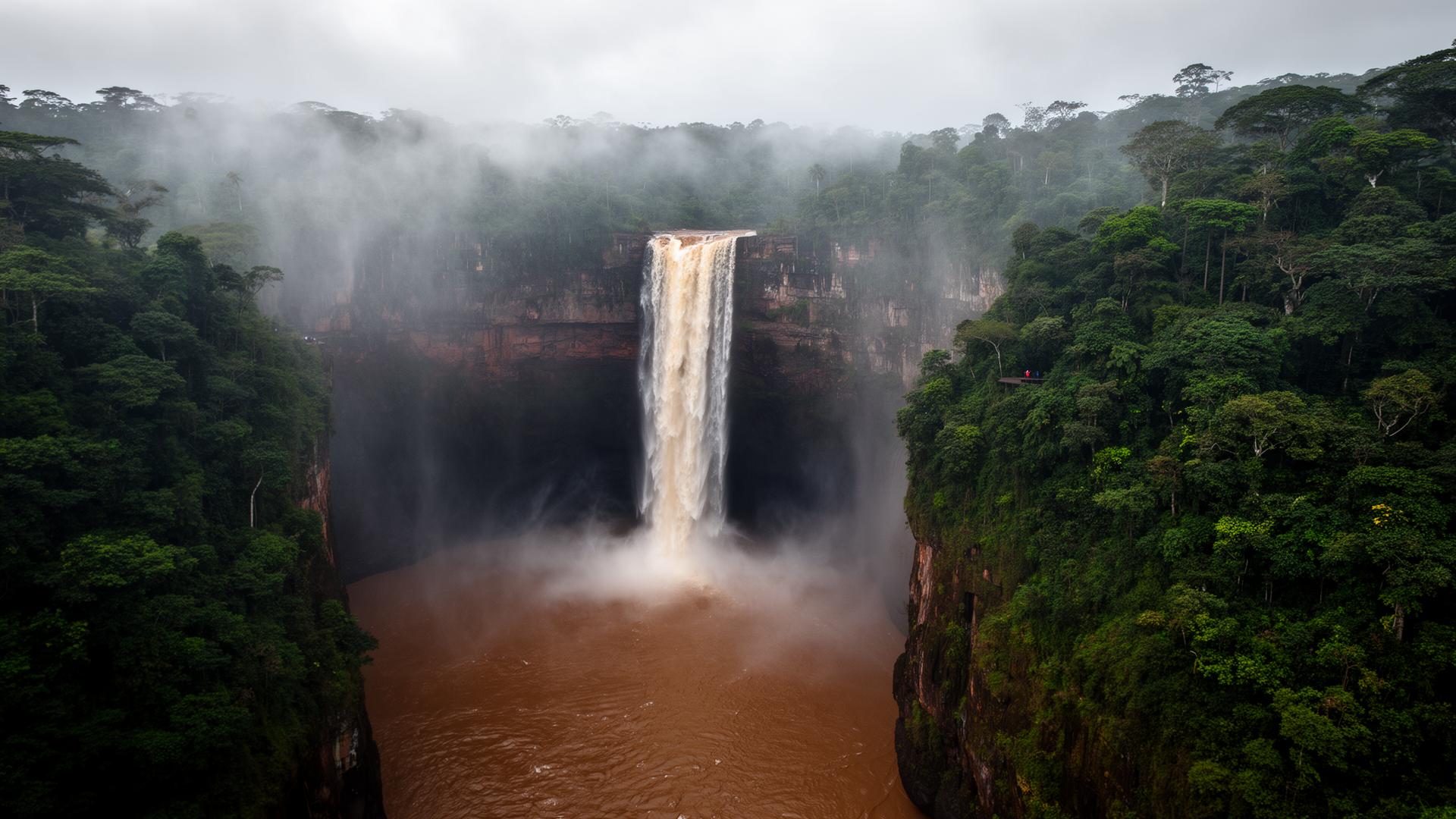
A single drop of two hundred and twenty-six metres — five times the height of Niagara. Picnic on the rim.
- 03
Night canopy walk
The forest reveals itself after dark: kinkajous, owl monkeys, the slow patrol of a tarantula.
- 04
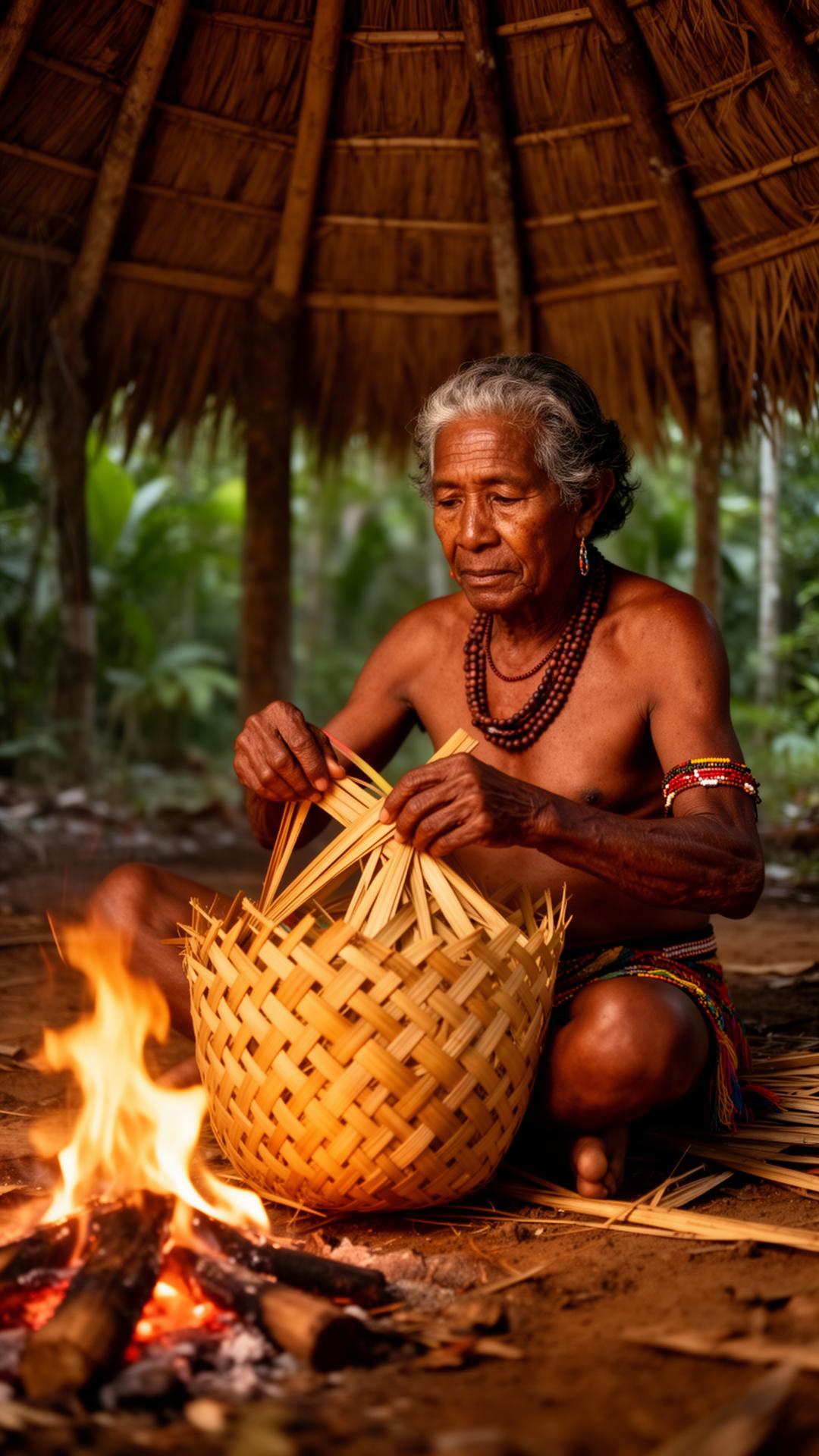
A day with Surama village
Cassava bread baked on a clay griddle, an arrow lesson with the toshao, a ceremony of return.
- 05
Black-water swim at noon
The Burro-Burro creek is warm, tannin-dark, and entirely free of caiman in its upper bend. Probably.
How one arrives.
i. Fly to Georgetown.
Direct from Miami, New York, and London via Trinidad. We meet you at Cheddi Jagan International with cold sorrel water and a change of clothes.
ii. A small plane, ninety minutes.
A nine-seat Cessna Caravan crosses the green expanse to the Fairview airstrip — a single grass cut at the edge of the Iwokrama reserve.
iii. The river, then the climb.
A motorised corial of forty minutes up the Essequibo to our landing. From there, a stair of one hundred and ninety-four hardwood treads ascends into the canopy. Luggage follows by hoist.
A residency begins at five nights.
Our keepers compose each stay by correspondence — a single conversation, often by letter, never by form.