Aysén
Fjord.
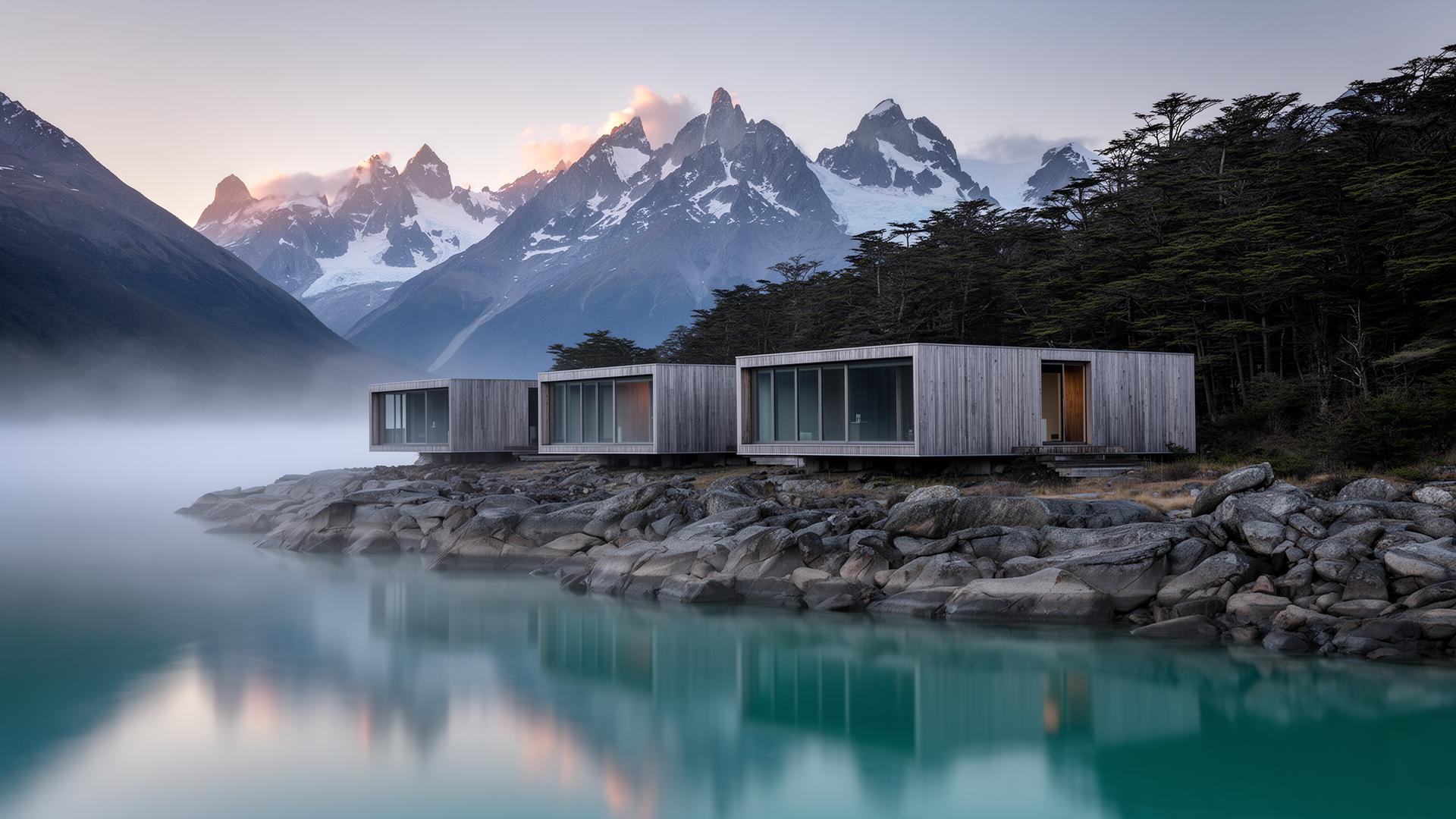
Twelve weathered-larch pavilions on a granite shoreline at the edge of the Northern Patagonian Ice Field — reached only by boat, opened only between October and April.
Coordinates
45.4031° S, 72.6918° W
Setting
Private cove, Aysén fjord, Region XI
Keys
12 larch-clad pavilions · boat-only access
Season
October–April (austral spring to autumn)
"Aysén is the last threshold. Beyond this cove the map gives up, the radio gives up, and the ice begins."
Aysén Fjord stands on a private granite shoreline two and a half hours by launch from the nearest road, inside one of the most lightly inhabited regions on earth — fewer than one human per square kilometre across a territory the size of Greece. Every pavilion is clad in unfinished Patagonian larch and roofed in standing-seam zinc, designed by the Chilean atelier Pezo von Ellrichshausen to weather to the silver of the surrounding rock. The cove is held under a thousand-hectare private conservation easement in partnership with Fundación Tompkins; ten per cent of every residency funds the long-term rewilding of huemul deer and the protection of the alerce groves further south.
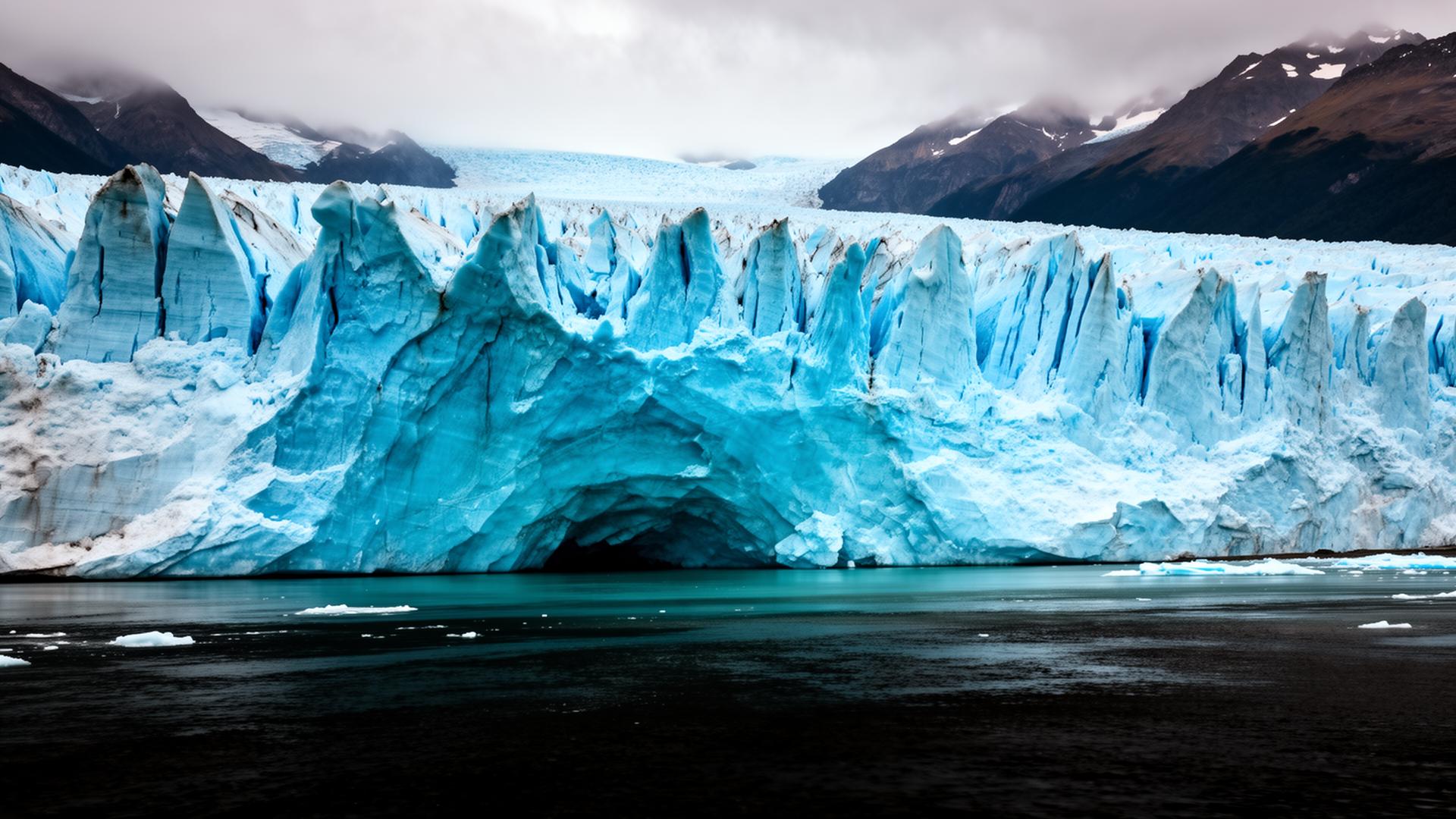
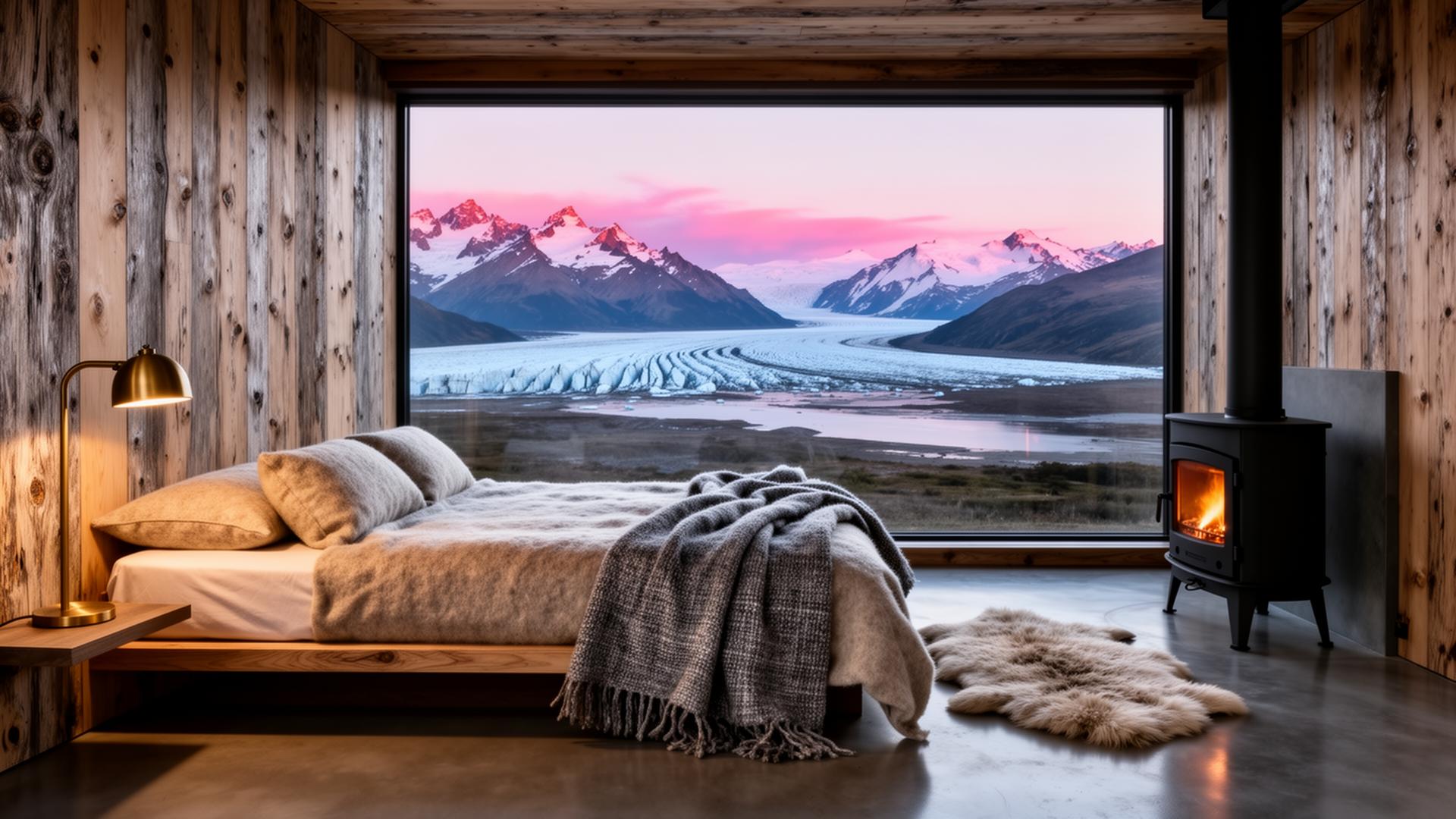
Twelve pavilions, raised between the rock and the water.
Each pavilion is a single long room — weathered-larch walls, polished concrete floor warmed below, a bed dressed in undyed Magellanic wool and a hand-loomed grey throw from the looms of Coyhaique, a black cast-iron wood stove laid every dusk by the houseman, and a single deep picture window framing the fjord. No televisions, no curtains, no neighbours within sight. A sheepskin at the foot of the bed, a copper soaking tub on the deck above the water.
- i
Shore Pavilion
75 m² · Cove waterline, lenga forest, woodstove deck
from USD 1,650 - ii
Glacier Pavilion
105 m² · Hanging glacier across the fjord, soaking tub on deck
from USD 2,400 - iii
Boat House
150 m² · Private jetty, two bedrooms, sauna over the water
from USD 3,600 - iv
The Estancia
280 m² · Standalone larch lodge, three bedrooms, library, cook
from USD 7,400
Ancient lenga, hanging glaciers, and the silence of a forgotten coast.
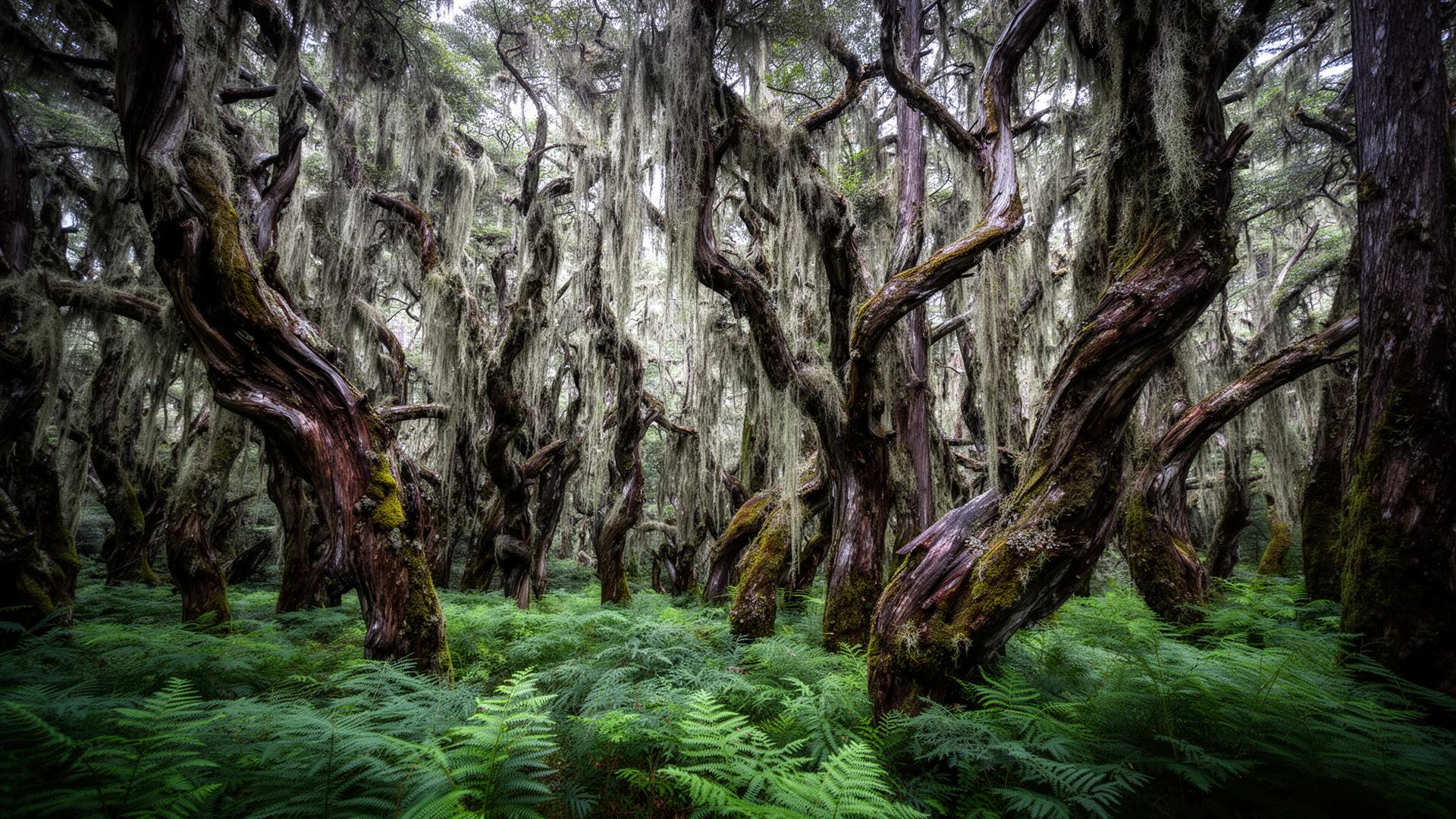
The cove sits inside a sheltered arm of the Aysén fjord, walled on three sides by primary lenga and coihue forest draped in old-man's-beard lichen and floored in waist-deep fern. Three small hanging glaciers calve into the cove from the cordillera behind; on still mornings the only sound is the report of falling ice carrying across the water. A private cedar sauna and a wood-fired hot tub sit on a low jetty at the waterline — five minutes from the steam to the 6 °C plunge. Our guide Tomás, a sixth-generation baqueano of the Aysén interior, leads every walk into the forest on foot or by hand-built wooden skiff.
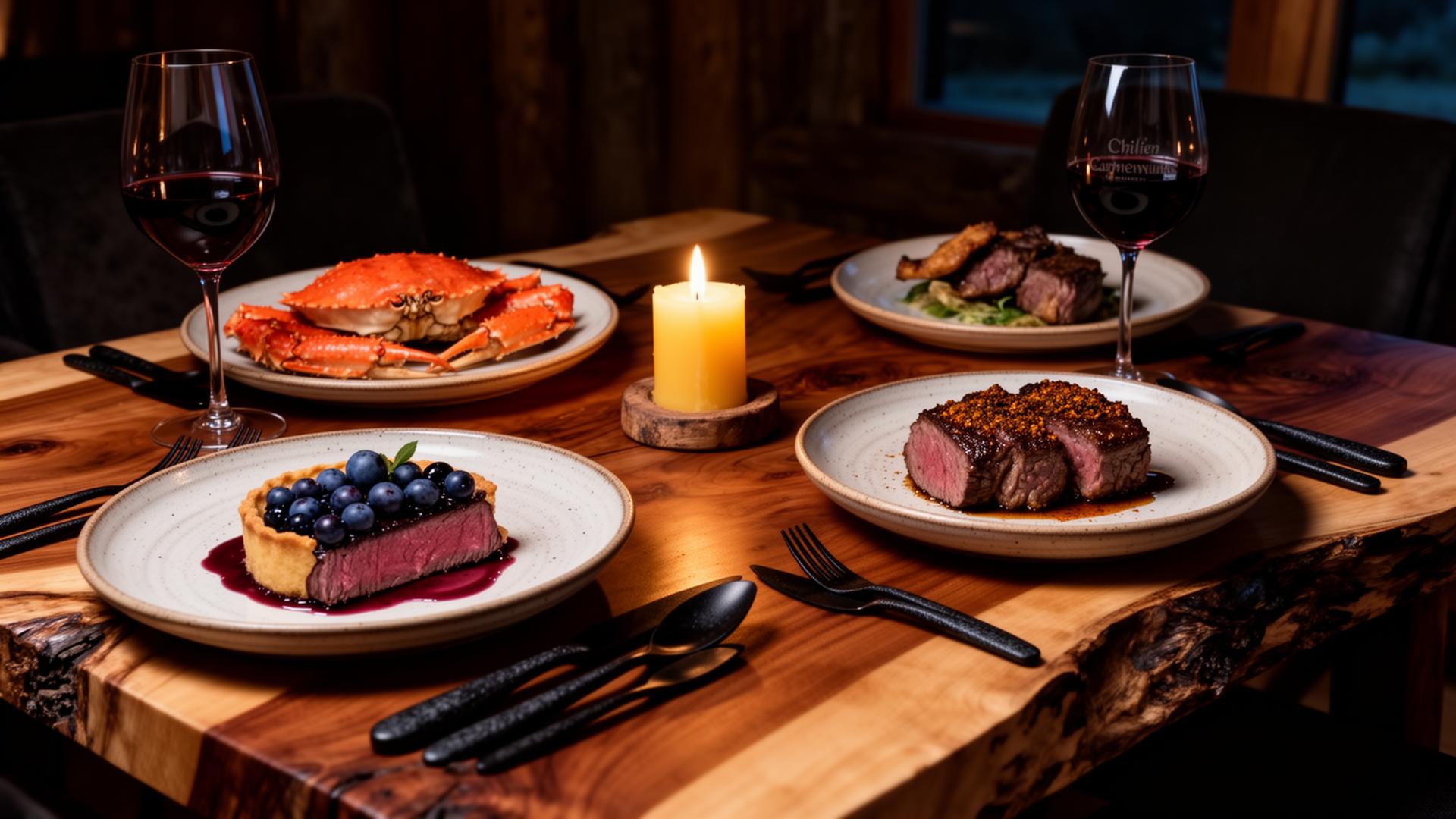
Cordero al palo over open fire, centolla pulled from the strait that morning.
Chef Camila Vera — born in Puerto Aysén, trained at Boragó in Santiago — sets a nightly menu from a thirty-kilometre radius: centolla king crab pulled from the strait at dawn and served simply with melted nalca butter; a whole lamb cooked al palo on an iron cross over a guayaba-wood fire; merken-rubbed beef from the estancia next door; a closing tart of wild calafate berries foraged from the cordillera in late summer. Sundown is a mate ceremony at the firepit and a quiet library of Chilean carmenère, syrah from the Itata, and a single Patagonian gin distilled with our own michay and notro flowers.
- 01
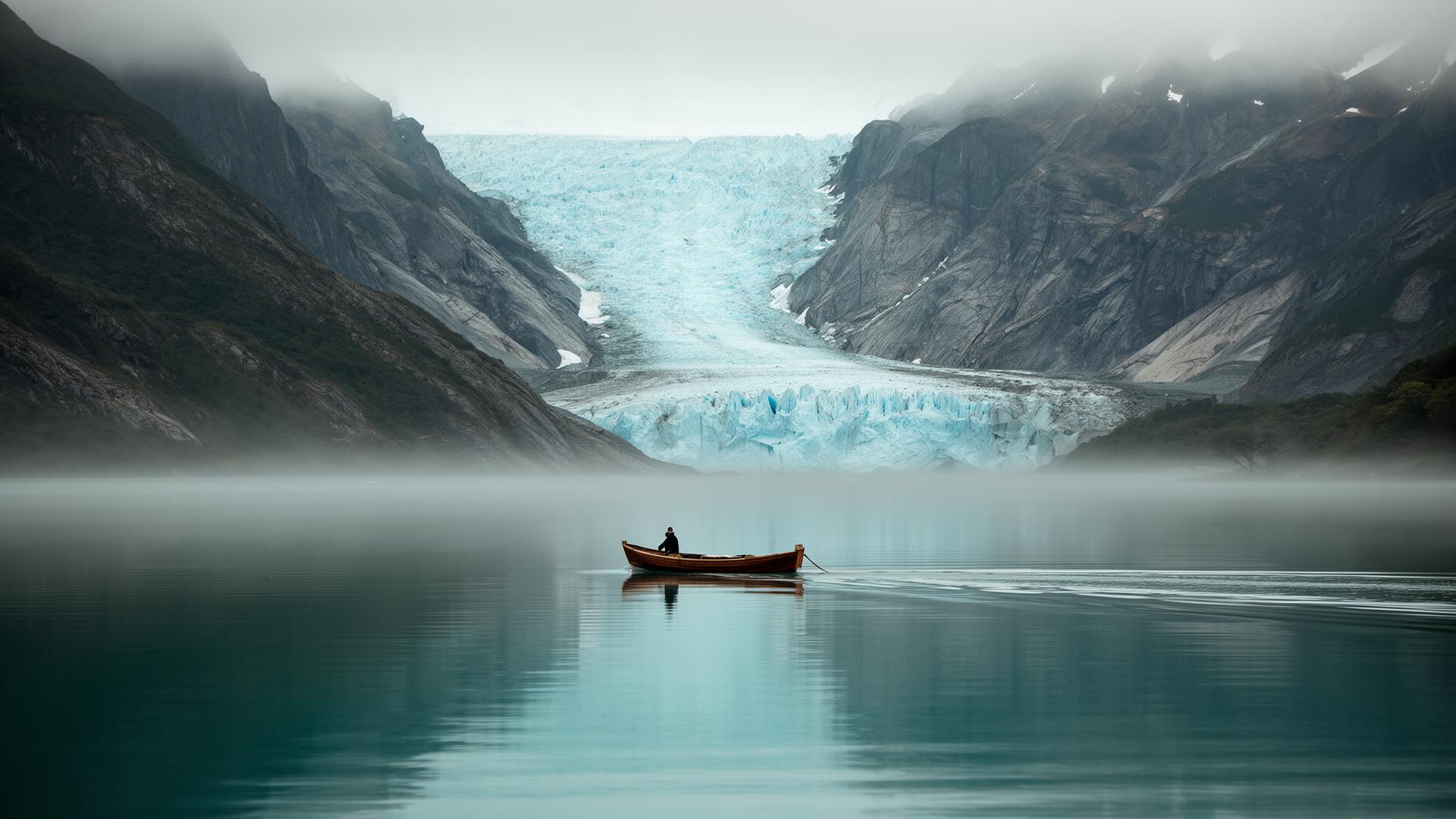
The hanging glacier by skiff
A dawn crossing in a hand-built larch skiff to the calving face of the Témpano glacier — engines cut, a thermos of mate, the cathedral sound of ice breaking under its own weight.
- 02
San Rafael ice cap by launch
A full day south by private launch to the tidewater face of the San Rafael glacier — the northern outlet of the Patagonian Ice Field, four kilometres across, a hundred metres tall, calving every twenty minutes. A picnic of cordero sandwiches on the bow.
- 03
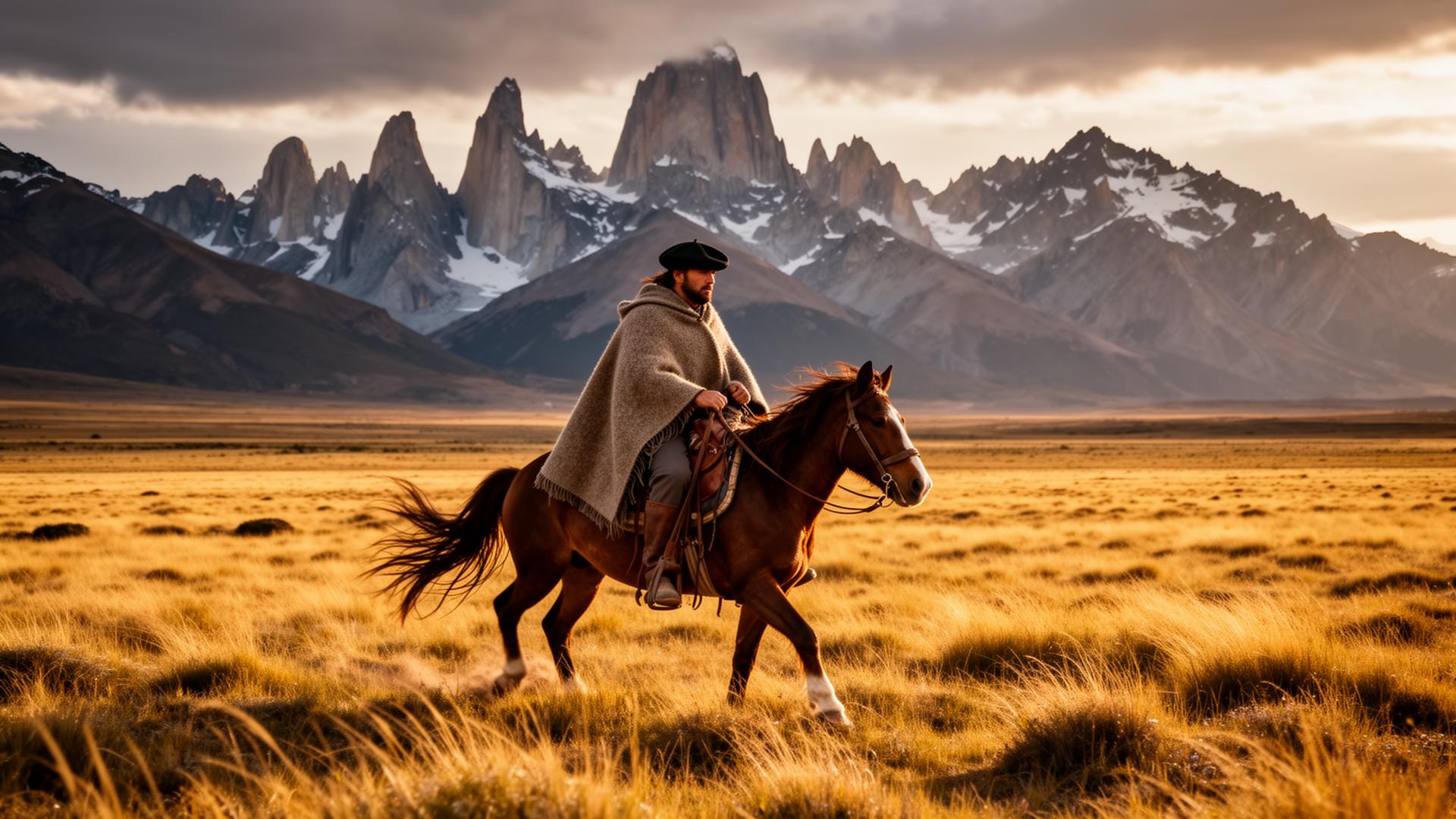
Baqueano caravan into the cordillera
Three days on horseback with Tomás and his Criollos into the high valleys behind the cove — wool tents at the Río Cisnes camp, asado over open fire, a night under the southern cross with no light for two hundred kilometres in any direction.
- 04
Sauna and fjord plunge
A long cedar sauna at the waterline, a five-second plunge into 6 °C glacial water, a second steam, and a glass of pisco sour at the firepit — every dusk, for those who want it.
- 05
The marble cathedral of General Carrera
A private day by light aircraft and launch to the Capillas de Mármol — three thousand years of glacial water polishing the marble of Lake General Carrera into vaulted blue caves. Kayaks for the closer chambers, lunch on the lake's southern shore.
- 06
Fly-fishing the Río Cisnes
A day on one of the great wild trout rivers of the world with our resident guide Felipe — brown and rainbow on the dry fly, gravel-bar lunch of grilled trout, smoked merken, sourdough and a flask of carmenère.
- 07
Huemul tracking with Fundación Tompkins
A morning in the conservation easement with the lead biologist of the huemul rewilding project — tracking one of the rarest deer on earth on foot, a quiet hour at the camera-trap line, an afternoon at the field station.
- 08
Night sky of the 47th parallel
Aysén is one of the darkest skies on the inhabited continents. A late-evening blanket by the fjord with a Coyhaique astronomer, a six-inch reflector, a flask of canelo-leaf tea, and the Magellanic Clouds directly overhead.
How one arrives.
i. Fly to Santiago, then Balmaceda.
Connecting from Santiago, Madrid, São Paulo, Buenos Aires or Lima, then a two-and-a-quarter-hour LATAM hop south over the lake district into Balmaceda airfield at the edge of the steppe. A driver, a flask of Aysén-grown coffee, the long road west.
ii. Overland to Puerto Chacabuco.
Two and a half hours by Land Cruiser through Coyhaique and down the Río Simpson valley — past the Cerro Castillo spires, the high beech forest, the last cattle estancia on the road — to the small fishing harbour of Puerto Chacabuco on the inner fjord.
iii. By launch into the cove.
Two and a half hours west by private launch — through the narrow of the Aysén fjord, past the Témpano glacier, past pods of Peale's dolphins and the occasional sei whale, into the silent cove of the lodge as the cordillera turns pink. A bell rung from the jetty, a glass of pisco at the firepit, a long quiet supper.
A residency begins at six nights — eight for the baqueano caravan, ten to take in the San Rafael ice cap and the marble cathedral.
Our keepers compose each stay by correspondence — a single conversation, often by letter, never by form.